

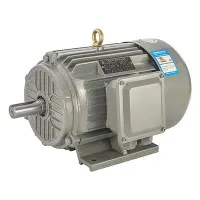
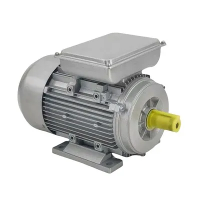
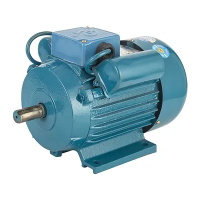
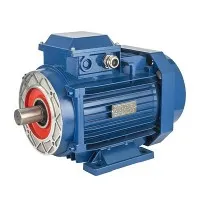
YVF Frequency Variable Motor
Why Choose Us
Quality and Reliability
Zhejiang Guangyue Motor Co., Ltd. is known for its high quality and reliable motor products. The company adopts advanced manufacturing process and strict quality control system in the production process to ensure stable performance and long life of the products.
Technological Innovation
Guangyue Electric continues to invest in research and development, and is committed to technological innovation and product upgrading. Through the introduction of new technologies and processes, the company continues to introduce new products to meet market demand and improve product competitiveness.
Rich Product Line
Zhejiang Guangyue Electric Machinery Co., Ltd. offers a wide range of motor products to meet the needs of different industries and applications. The rich product line allows customers to be more flexible in their choices and meet diversified needs.
Service and Support
The company has a perfect pre-sales, sales and after-sales service system to provide customers with a full range of support. Professional sales team and technical support team provide customers with timely advice and solutions to ensure that customers get a good experience in the process of use.
Frequency variable motor, often referring to AC induction motors in HVAC contexts, can adjust their output speed and torque to the system's needs. Unlike ECMs, which use a direct current and electronic control, variable speed AC motors rely on varying the electrical input's frequency and voltage to control motor speed.


Advantages of Frequency Variable Motor
Extended life
When each operation of a motor is managed precisely, it's very useful to extend the motor's life. When you leave all the heavy lifting onto the motor, it demands more power to work. With the increased power, the temperature of the motor increases, which accumulates over time.
On the other hand, this phenomenon also increases the strain on the windings. The VFDs allow the motor current to rise gradually without any surges. In this operation, the motor mechanism runs smoothly and keeps your motor safe.
Balanced current flow
When the current flow changes suddenly in a motor, it affects the power line feeding system of the motor. It is observed that when you provide more current, it becomes capable of handling more load. However, the drawback is that the surge power increases in such a way; that it's not good for the system. It can affect the other components in the system, such as computers, proximity switches, various sensors, and more. On the contrary, VFDs allow the current flow in a balanced manner that is not harmful to the system.
Precise speed control
The VFDs change the motor speed precisely without any surges. This system is very useful for many systems, such as conveyor systems and others. Variable speed motors are extremely useful for HVAC systems, conveyor systems, and more. You can control the speed of the motor according to your needs and requirements; that's a plus.
Design efficiency
In many systems, using VFD eliminates the use of many other components. You can drive many systems smoothly without gear usage. In short, a VFD system is economical and can reduce several components in a system. In terms of design efficiency, variable speed motors bring many benefits. For example, lower startup power requirements, reduction in power line disturbances, precise control over speed, acceleration and torque output, cost-saving procedure over time, and reduced energy consumption. All these things increase the overall efficiency of the system.
Cost-saving
Recall that the VFD system does not allow the motor to withdraw current beyond a certain limit. In such a way, all the functions are limited and controlled by threshold values making the overall system cost-effective. Yes, variable speed motors do not burden your pockets in terms of electricity bills and bring many other benefits. So, if budget is your top priority, having variable speed motors is crucial.
Frequency & Voltage Adjustment – By altering the frequency of the electrical supply using an inverter or a variable frequency drive (VFD), the speed of the motor can be precisely controlled. Adjusting the voltage in tandem with frequency ensures the motor can deliver the required torque at lower speeds.
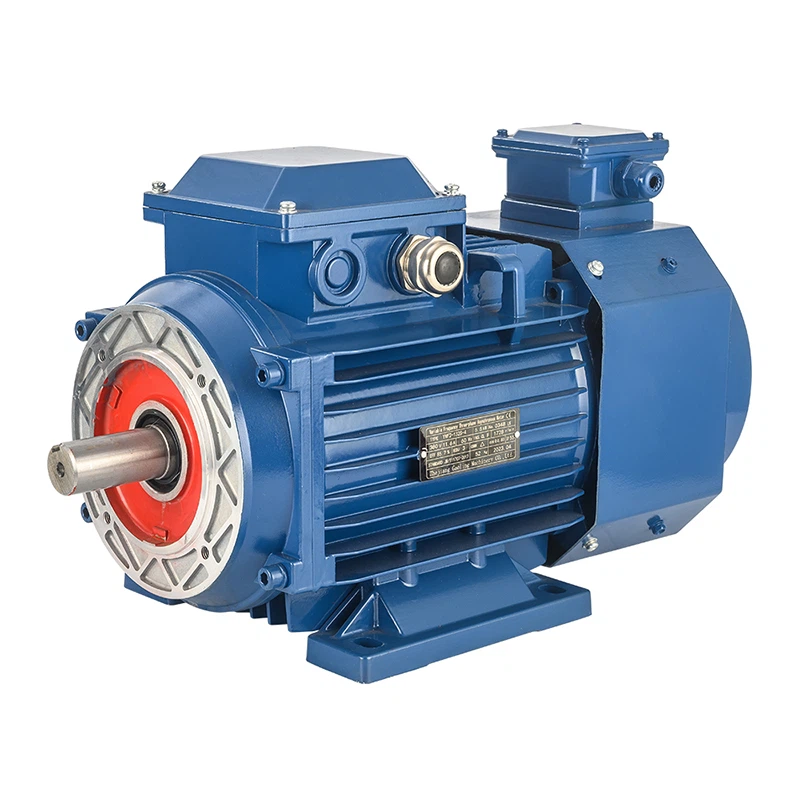
What Does a Frequency Variable Motor Do?

A variable-speed motor is a type of AC motor that is able to change its speed based on the needs of the application. These motors are most commonly used in HVAC applications, such as air conditioners and furnaces, where they can provide a number of benefits over traditional single-speed motors.
The biggest advantage of a variable speed motor is that it can help to save energy by only running at the speed necessary to meet the demands of the application. For example, in an air conditioning system, a variable speed motor will ramp up to full speed when the system first turns on in order to quickly cool down the home. However, once the desired temperature is reached, the motor will slow down to a lower speed in order to maintain that temperature. This reduces the amount of energy needed to run the system, which can lead to savings on your energy bill.
In addition to saving energy, variable speed motors can also help to improve comfort levels in your home by providing more consistent airflow. Because these motors are able to operate at lower speeds, they can provide a steadier flow of air than a traditional single-speed motor. This can help to eliminate hot and cold spots in your home and improve overall comfort levels.
Variable-speed motors also tend to be much quieter than their single-speed counterparts, so you won’t have to deal with the noise of your HVAC system running constantly in the background. In addition, because they operate at lower speeds most of the time, they can help to extend the life of your HVAC system by reducing wear and tear.
What Is the Difference Between a Variable Frequency Motor and a Normal Motor?
The variable frequency motor is a general term for the motor driven by the inverter. The variable frequency motor is an organic combination of the motor and the frequency converter, and the speed and torque of the motor are controllable. Ordinary motor speed and torque are fixed. The variable frequency motor can be arbitrarily adjusted within its speed regulation range, and the motor will not be damaged. Generally, most of the domestically produced ordinary motors can only operate under AC380V/50HZ conditions. Ordinary motors can be used for frequency reduction or upsampling, but the range Not too big, otherwise the motor will heat up or burn out.
The efficiency and temperature rise of the motor under variable frequency drive, the efficiency of the variable frequency motor will be about 10% higher, and the temperature rise will be about 20% smaller, especially in the low frequency region of vector control or direct torque control.
The cooling fan in the ordinary fan uses the same line as the fan movement, and the two of the inverter fans are separated. Therefore, when the inverter frequency is too low, it may burn out due to overheating. Ordinary motors are designed according to the frequency of the mains and the corresponding power, and can only operate stably under rated conditions. The variable frequency motor is different. The variable frequency motor has to overcome the overheating and vibration at low frequency, so the inverter motor is better in design than the ordinary motor.
Variable frequency motors are superior to ordinary motors for occasions requiring frequent start, frequent speed regulation, and frequent braking.
The stability and service life of the two are different, and the variable frequency motor is more energy efficient, and its use range is wider. The heat dissipation system of the variable frequency motor is more powerful; the variable frequency motor enhances the slot insulation. First, the insulation material is strengthened. First, the thickness of the slot insulation is increased to increase the level of high frequency voltage. At the same time, the variable frequency motor increases the electromagnetic load. The working point of the ordinary motor is basically at the magnetic saturation inflection point. If it is used for frequency conversion, it is easy to saturate and generate a high excitation current, and the variable frequency motor increases the electromagnetic load during design, making the magnetic circuit difficult to saturate.
he problem of the insulation strength of the motor. Since the variable frequency motor is designed for inverter drive, it can withstand large du/dt, so the insulation strength of the variable frequency motor is high. Especially in the DTC control mode, the insulation strength of the motor is a big test.
Because the frequency conversion motor has to bear the high frequency magnetic field, the insulation level is higher than that of the ordinary motor. In principle, the ordinary motor can not be driven by the frequency converter, but in practice, in order to save money, the ordinary motor is used in many occasions requiring speed regulation. Instead of the variable frequency motor, the speed regulation accuracy of the ordinary motor is not high, and it is often done in the energy-saving transformation of the fan and the pump. When using a normal motor instead of a variable frequency motor, the chopper frequency of the inverter should be as low as possible to reduce the insulation damage of the motor at high frequencies.
The main difference is that the variable frequency motor has additional heat dissipation (using a separate axial fan forced air), which is much better than ordinary AC asynchronous motors in low frequency, DC braking and some special applications. In summary, compared to ordinary motors, the price of variable frequency motors is not much more expensive, but the advantages are obvious. The variable frequency motor adopts the AC speed regulation mode of “special frequency induction induction motor + inverter”, which makes the mechanical automation degree and production efficiency greatly improve the miniaturization and increase the comfort of the equipment.
Why Should You Use Variable Speed Motors?
Energy efficiency: The variable speed motor can ramp up or ramp down to the necessary speed based on the load required for the home. This means extra electricity isn’t being spent during times where the temperature is milder. Secondly, since the circuitry in the system has been upgraded, it knows that after the compressor stops running, the air conditioning coil (evaporator coil) is still cold. So in order to take advantage of that, the circuit board will tell the blower motor to keep running for a little while to blow a little more air across that coil and get every last bit of cold air into the home, making the system much more efficient. The same is true on the heating side.
Comfort: When a system with a variable-speed motor starts, it starts very slowly. In most cases, the homeowner cannot even hear it start up. It also does not immediately start blowing really warm or cold air. The temperature slowly increases or decreases, so by the time the system reaches full force, the homeowner may not even realize it’s on because they have gotten used to it. This is opposed to the older systems that sounded like a freight train every time it started up.
With conventional motors: Most people do not use the “Fan On’ setting because it makes the fan run continuously and is fairly loud while using a lot of energy. With a variable speed motor, when the user sets the thermostat to the “Fan on” position, the circuit board will tell the motor to run at a very low speed continuously. This allows the system to constantly circulate air for a lower cost. That prevents warm and cool spots in the home because the air is constantly moving, creating a consistent temperature throughout the house.
Indoor air quality: When an air conditioner is on, it cycles air through an air filter, which then releases clean air. In the HVAC industry, we call this “washing the air.” Since a variable-speed motor can run constantly and efficiently, it can continuously wash the air. A frequently changed and high-quality air filter paired with a variable-speed motor will make your indoor air quality improve every minute. Of course, the best way to improve indoor air quality is to have an air purifier installed in your home.
Our Factory
Zhejiang Guangyue Motor Co., Ltd. was founded in 2016 and located in Taizhou, Zhejiang ,China.Our company is a high-tech enterprise specializing in the production of three phase asynchronous motors such as YE2 / YE3 series high efficient motors,marine motors,infrared bridge cutting motor, high pressure washer motors,variable frequency motors and brake motors.Our company ensures that all the products adhere to the IEC standards,positioning them at the forefront of global motor product standards. Products are well received by customers at home and abroad.
With well-known vibration motor engineers in the mainland as the core technology research and development team, we have successfully developed 28 series and more than 300 models of electric motors to meet the needs of different industries. Our company has 45 patents, CE and ISO9001 certificates. Strong research and development strength can meet customer customized motor varieties. The company has introduced a number of advanced production lines,with an annual output of about 200,000 units, strong production capacity and timely delivery, providing AC motors and motor control solutions to more than 2000 customers in more than 60 industries. Provide professional pre-sales and after-sales work.Sincerely welcome to visit our company,we'd like to cooperate with all the customers to create splendid future! We will do the best for you !