

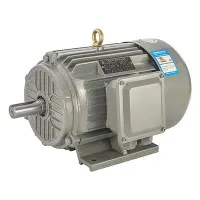
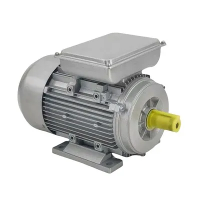
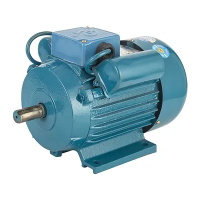
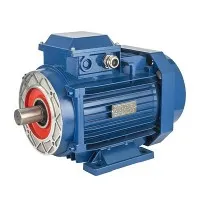
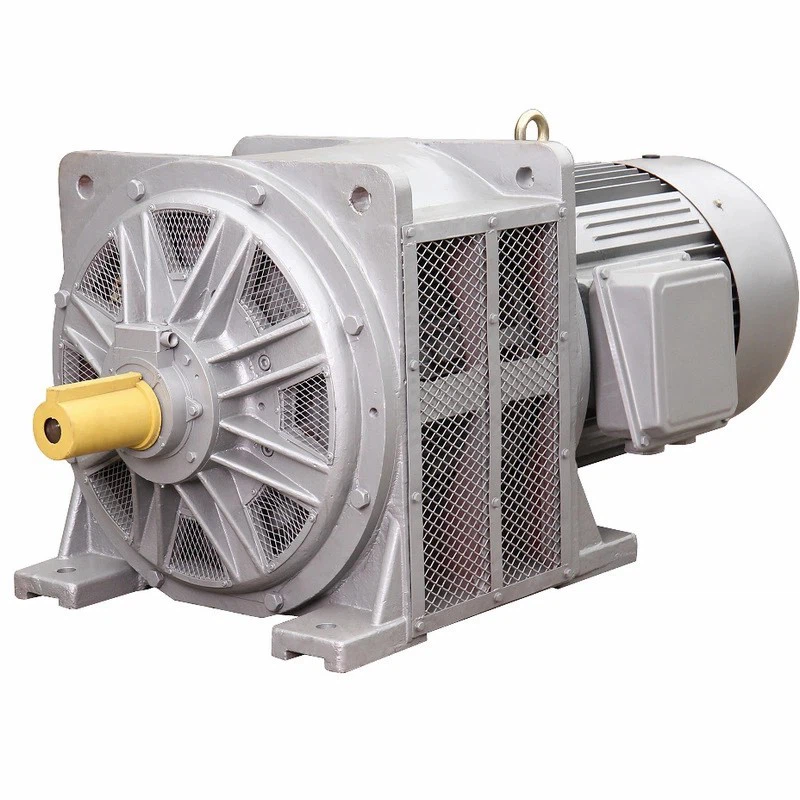
YCT YZR Electric Motor
Why Choose Us
Quality and Reliability
Zhejiang Guangyue Motor Co., Ltd. is known for its high quality and reliable motor products. The company adopts advanced manufacturing process and strict quality control system in the production process to ensure stable performance and long life of the products.
Technological Innovation
Guangyue Electric continues to invest in research and development, and is committed to technological innovation and product upgrading. Through the introduction of new technologies and processes, the company continues to introduce new products to meet market demand and improve product competitiveness.
Rich Product Line
Zhejiang Guangyue Electric Machinery Co., Ltd. offers a wide range of motor products to meet the needs of different industries and applications. The rich product line allows customers to be more flexible in their choices and meet diversified needs.
Service and Support
The company has a perfect pre-sales, sales and after-sales service system to provide customers with a full range of support. Professional sales team and technical support team provide customers with timely advice and solutions to ensure that customers get a good experience in the process of use.
An electric motor is a device that transforms electrical energy into mechanical energy. It operates by creating a magnetic field through electrical current in a wound wire, which generates torque on the motor shaft. While an electrical generator is mechanically similar to an electric motor, it works in the opposite direction, converting mechanical power into electrical power.


• The main cost of electric motors is less in contrast with fossil fuel engines, however the HP rating of both are alike.
• Electric motors have moving parts, hence the lifespan of electric motors is longer.
• The capacity of electric motors reaches 30,000 hours when maintained properly.
• Electric motors are very efficient and automatic control allows for automatic stop and start functions.
• Environmental friendly since they do not release pollutants.
Construction of an YCT·YZR Electric Motor
Bearings support the rotor and enable it to rotate smoothly on its axis. The motor housing provides support for these bearings.
The rotor is the moving component responsible for delivering mechanical power. It typically contains conductors that carry current, which interact with the magnetic field of the stator to generate rotational force on the shaft. In some motors, however, the rotor may consist of permanent magnets, with the conductors located in the stator. Permanent magnets can enhance efficiency across a wider range of power and operating speeds.
The air gap between the rotor and stator enables the rotor to spin. The size of this gap significantly impacts the motor's electrical performance. Ideally, the gap should be as narrow as possible, as a larger gap can lead to reduced efficiency and a lower power factor. A wider gap increases the energizing current and decreases the power factor. However, excessively narrow gaps can lead to mechanical issues, additional losses, and increased noise.
The motor shaft extends through the bearings to the exterior of the motor, where the load is applied. This setup results in an overhung load since the force is applied beyond the outermost bearing.
The stator encases the rotor and typically contains the field magnets, which may be either electromagnets with wound wire on a ferromagnetic iron core or permanent magnets. These magnets generate a magnetic field that interacts with the rotor winding, creating force on the winding. The stator's iron core is constructed from multiple thin, insulated metallic sheets, known as laminations, to reduce energy losses.
Lamination is used to minimize energy losses that occur with a solid core. In resin-packed motors, often found in appliances like air conditioners and washing machines, plastic is used to dampen vibrations and reduce noise.
The armature consists of wire wound around a ferromagnetic core. When current flows through the wire, it generates a magnetic field that exerts a Lorentz force on the armature, causing the rotor to rotate and produce mechanical output. The windings are coils of wire, typically wrapped around a soft, laminated iron core, which creates magnetic poles when current is applied.
Electric motors can be categorized into non-salient and salient-pole types. In salient-pole motors, both the stator and rotor have cores with projections called poles. Each pole is wound with wire, which creates north or south poles when current flows through it. In non-salient-pole motors (also known as round-rotor or distributed field motors), the core is cylindrical, and the winding is evenly distributed in slots around its circumference. Alternating current in these windings produces continuously rotating magnetic poles. Shaded-pole motors, a variation, have windings that cover only part of each pole, causing a delay in the magnetic field phase for that pole.
A commutator is a rotary switch used to supply either alternating or direct current to the rotor. It reverses the current flow in the rotor winding periodically as the shaft rotates. The commutator consists of a cylinder with several metal segments on the armature. Brushes made of a soft conductive material, such as carbon, press against the commutator. These brushes maintain sliding electrical contact with the rotating commutator segments, delivering current to the rotor.
The rotor windings are connected to the commutator segments, which periodically reverse the current direction every half turn (180°) of the rotor. This ensures that the torque applied to the rotor remains in a consistent direction. Without this reversal, the torque direction would switch with each half turn, causing the rotor to stall. Due to their inefficiency, commutator-based motors have largely been supplanted by brushless DC motors, induction motors, and permanent magnet motors.
Electric motors convert electrical power (AC or DC) into mechanical power to produce motion. This process involves the interaction between the electrical current flowing through the windings and a magnetic field. As the strength of the current increases, the magnetic field strength also increases. According to Ohm's Law (V = R*I), if resistance rises, the voltage must increase to maintain a constant current.

Considerations When Choosing YCT·YZR Electric Motors
Voltage – Determine whether the motor will be powered by a wall socket or needs to operate on batteries. For wall sockets, the standard voltage could be 230VAC or higher for industrial applications.
Frequency – Motors in the United States typically operate at 60Hz. For use outside the U.S., you may need a motor that operates at 50Hz.
Speed – Consider the required speed range for the motor. If precise or adjustable speeds are needed, ensure that the motor has suitable control options.
Torque – Assess the starting torque required for your application and whether the torque needs will vary during operation. Consider the maximum torque needed under the worst-case scenario.
Power – Specify if the motor will be running at its maximum power rating.
Duty Cycle – Understand the motor’s duty cycle. For continuous operation, ensure the motor can handle prolonged use without overheating. For intermittent use, a smaller motor with similar torque and speed may be sufficient, provided it can cool down completely between cycles.
Life Cycle – Applications with intermittent or infrequent use may be suitable for Universal or DC motors, though these often have shorter lifespans and higher maintenance requirements. For applications that run continuously for extended periods, consider brushless DC or AC motors, which generally offer longer lifespans and require less maintenance.
What Are the Different Types of YCT·YZR Electric Motors?
A DC motor is a type of rotary electrical machine that converts electrical energy from direct current (DC) into mechanical energy. These motors operate based on the force generated by magnetic fields. Most DC motors incorporate internal mechanisms—either electronic or electromechanical—that periodically change the direction of the current in a part of the motor to facilitate its operation.
DC motors were the first kind of motor commonly utilized, as they can be powered from present direct current lighting energy distributing systems. DC motor speed may be controlled over a broad range, utilizing either a variable voltage supply or by altering the current strength in its field winding. Small DC motors are applied in appliances, toys, and tools. The universal DC motor can work on direct current but it is a light brushed motor utilized for portable appliances and power tools. Large DC motors are presently utilized in the propulsion of elevators and hoists, electric vehicles, and in drives for rolling mills for steel. With the arrival of power electronics replacement of DC motors with AC motors has been made conceivable in many applications.
A 12V DC motor is compact and affordable, yet it provides sufficient power for a wide range of uses. Its operating voltage is a notable feature, with lower voltages generally being preferable when using batteries, as fewer cells are needed to reach the desired voltage. Nonetheless, higher voltages often offer better efficiency in electronic motor drives. While DC motors can operate from as low as 1.5V up to 100V, the 12V, 6V, and 24V variants are among the most common. Important specifications for a 12V DC motor include its torque, speed, current consumption, and power output.
Typically, 12V DC motors are brushless, meaning they operate without the need for brushes to transfer electrical current. In contrast, brushed motors can encounter issues due to their more complex design. The brushless design of the 12V DC motor has resolved many of these problems. Key components of a 12V brushless DC motor include an external rotor with permanent magnets and either a single coil or multiple coils (usually three). Additional components might include drive electronics and various sensors.
Rather than using brushes, 12V DC brushless motors use sensors, such as Hall Effect sensors, to manage the current. Although some 12V DC motors might refer to AC types, this is rare compared to the predominance of 12V DC motors.
A brushless motor, commonly known as a BL motor or BLDC motor, and sometimes referred to as an electronically commutated motor (ECM), is a type of DC motor. It may also be called a synchronous DC motor. This motor operates using direct current (DC) power and relies on an electronic controller to manage the current flowing through the windings. This process generates a magnetic field that rotates in space, causing the rotor with permanent magnets to follow suit. The electronic controller regulates the amplitude and phase of the DC current pulses to control the motor’s torque and speed. This system replaces the traditional brushes and mechanical commutators found in many conventional electric motors.
Brushless DC motors are manufactured in a manner akin to permanent magnet DC motors, but they can also be designed as asynchronous or induction motors, or as switched reluctance motors. They may incorporate neodymium magnets and come in various configurations, including out-runners (where the rotor encloses the stator), in-runners (where the stator encloses the rotor), or axial motors (where the stator and rotor are aligned parallel and flat).
A stepper motor, also known as a stepping motor or step motor, is a type of brushless DC motor that divides a full rotation into discrete steps. Unlike traditional brushed DC motors, which rotate continuously when a direct voltage is applied, a stepper motor moves in precise increments based on input pulses. These motors can be controlled to move and maintain their position at each step without requiring feedback from a positional sensor, provided the motor is correctly matched to the application’s speed and torque requirements. Each pulse results in a specific rotational movement of the motor shaft, enabling highly accurate control.
Stepper motors consist of several toothed electromagnets arranged around a central rotor, which is typically a gear-shaped iron core. These electromagnets are activated by a microcontroller or an external driver circuit.
An AC motor operates on alternating current (AC) and consists of two main components: the stator and the rotor. The stator is the outer part of the motor and contains coils that are energized by AC to produce a rotating magnetic field. Inside, the rotor is connected to the shaft and generates its own magnetic field, which may be created by various means including reluctance saliency, permanent magnets, or AC/DC windings.
AC linear motors, though less common, function on principles similar to those of rotating AC motors. However, instead of creating rotational movement, AC linear motors are designed with their moving and stationary parts arranged in a linear configuration, resulting in linear motion rather than rotation.The two primary kinds of AC motors are synchronous motors and induction motors. The induction or asynchronous motor always depends on a small variance in speed between the rotor shaft speed and the stator spinning magnetic field called slip which induces rotor current in the AC winding of the rotor. Therefore, the induction motor can’t create torque close to synchronous speed where slip (induction) ceases to exist or is irrelevant. In comparison, a synchronous motor doesn’t depend on induction of slip for functioning and utilizes either salient poles (projecting magnetic poles), permanent magnets, or an individually excited rotor winding. The synchronous motor creates its ranked torque at accurately synchronous speed. The brushless wound-rotor double supplied synchronous motor mechanism has an individually excited rotor winding which does not depend on the rules of slip induced current. The brushless wound-rotor double supplied motor is a synchronous motor which can work exactly at the power source frequency. Other kinds of motors involve eddy current motors and DC and AC mechanically commutated machinery where speed relies on winding connection and voltage.
Horsepower (HP) is a commonly used unit to measure the rate at which mechanical energy is used. One horsepower is approximately equivalent to 746 watts (W) or 0.746 kilowatts (kW). Although horsepower and kilowatts can be converted to comparable units, horsepower is predominantly used for measuring mechanical power and is rarely used for other forms of power measurement.
Electric motors typically have nameplates that show their output power, not the input power. This refers to the power delivered at the shaft, rather than the power required to operate the motor. Output power is usually measured in watts or kilowatts. In the United States, however, output power is often expressed in horsepower, with one horsepower defined as exactly 746 watts. Motors rated at 1 HP can be either AC or DC types and are commonly used in applications such as vehicles and electric boats.
• Work area must always be kept well-lit and clean.
• All motors have many small components; young children must be kept away from the work area.
• Motors rotate very fast; PPE must always be worn.
• Motor must not be left unattended.
• If a battery is left shorted for long durations of time it might rupture or explode.
• Rated operating voltage must not be exceeded. High voltages might cause overheating and create fires.
• Motors must be operated by qualified personnel.
Maintenance of YCT·YZR Electric Motor
Cleaning and maintenance routine
It's crucial for every organization to establish a cleaning routine for their motors. Regularly cleaning a motor enhances both its longevity and efficiency. Ensuring that a motor remains free from excessive dust, grease, and other debris is essential for optimal performance.
Motor lubrication
It’s possible to over lubricate an electric motor, which may lead to internal issues. However, a motor needs lubrication to work at maximum performance level. Every electric motor needs a different amount of lubrication. Lubricating a motor very early or very late may lead to premature tear and wear. Also, manufacturers generally recommend specific lubricants designed for their electric motor.
Bearing inspection
Motor bearings experience the most wear and tear, making them prone to issues over time. To prevent premature bearing failure, it's crucial to ensure proper motor alignment, as misalignment can place excessive stress on the bearings. Additionally, using the wrong type of lubricant can lead to early bearing wear. A common indicator of bearing problems is an overheating motor.
Reducing or eliminating vibrations
All motors produce some level of vibration, but excessive vibrations can lead to serious damage. If a motor begins to vibrate excessively, it should be shut down immediately. Common causes of abnormal vibrations include mechanical misalignment, damaged bearings, or excessive belt tension.
Rotor and stator inspection
The rotor and stator are crucial components of the motor. It’s essential to check the gaps around these parts and measure the diameter clearance. The required clearance can vary depending on the specific motor and bearing design.
Recording findings
Tracking maintenance activities is vital for monitoring the motor’s lifespan and wear. Every inspection, bearing replacement, belt adjustment, and lubrication addition should be recorded. Proper documentation helps in forecasting future maintenance needs and managing related expenses more effectively.
Our Factory
Zhejiang Guangyue Motor Co., Ltd. was founded in 2016 and located in Taizhou, Zhejiang ,China.Our company is a high-tech enterprise specializing in the production of three phase asynchronous motors such as YE2 / YE3 series high efficient motors,marine motors,infrared bridge cutting motor, high pressure washer motors,variable frequency motors and brake motors.Our company ensures that all the products adhere to the IEC standards,positioning them at the forefront of global motor product standards. Products are well received by customers at home and abroad.
With well-known vibration motor engineers in the mainland as the core technology research and development team, we have successfully developed 28 series and more than 300 models of electric motors to meet the needs of different industries. Our company has 45 patents, CE and ISO9001 certificates. Strong research and development strength can meet customer customized motor varieties. The company has introduced a number of advanced production lines,with an annual output of about 200,000 units, strong production capacity and timely delivery, providing AC motors and motor control solutions to more than 2000 customers in more than 60 industries. Provide professional pre-sales and after-sales work.Sincerely welcome to visit our company,we'd like to cooperate with all the customers to create splendid future! We will do the best for you !
FAQ