

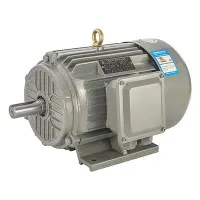
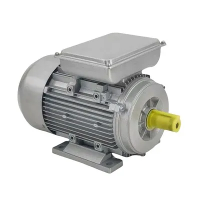
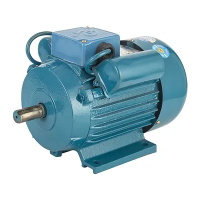
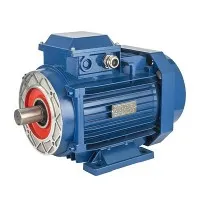

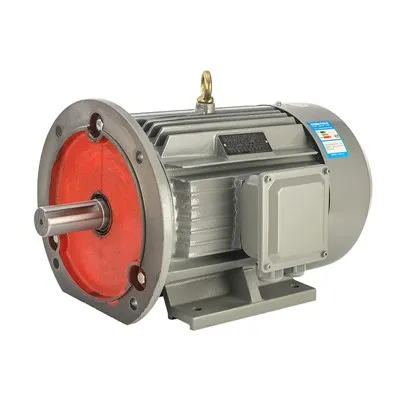
Electric Inboard Boat Motor Y90L-2-H
Quality and Reliability
Zhejiang Guangyue Motor Co., Ltd. is known for its high quality and reliable motor products. The company adopts advanced manufacturing process and strict quality control system in the production process to ensure stable performance and long life of the products.
Technological Innovation
Guangyue Electric continues to invest in research and development, and is committed to technological innovation and product upgrading. Through the introduction of new technologies and processes, the company continues to introduce new products to meet market demand and improve product competitiveness.
Rich Product Line
Zhejiang Guangyue Electric Machinery Co., Ltd. offers a wide range of motor products to meet the needs of different industries and applications. The rich product line allows customers to be more flexible in their choices and meet diversified needs.
Service and Support
The company has a perfect pre-sales, sales and after-sales service system to provide customers with a full range of support. Professional sales team and technical support team provide customers with timely advice and solutions to ensure that customers get a good experience in the process of use.
What is Electric Inboard Boat Motor Y90L-2-H
Inboard electric motors are good options for large boats. Mariners typically use electric inboard motors for cruising sailboats and motorboats, where the motor is integrated with the design of the boat itself. They take up less space than outboard motors and provide excellent balance and weight distribution.
Related Productiption

High Precision IMB35 Three Phase Induction Motor for Boat
Marine motors mainly include marine motors and marine generators, among which marine motors are widely used in various systems of ships, including propulsion systems, auxiliary mechanical drives etc.The characteristics and types of marine motors are diverse to meet the operational needs of ships in different environments.

Three Phase High Efficiency 380V Electric Boat Motor
Marine motors mainly include marine motors and marine generators, among which marine motors are widely used in various systems of ships, including propulsion systems, auxiliary mechanical drives etc.The characteristics and types of marine motors are diverse to meet the operational needs of ships in different environments.

Axial Flux Electric Motor Insulation Class F IP55
YE2-H series three-phase asynchronous motors for marine axial fans are special motors designed for marine fans. Except for the shape and mounting dimensions, other performance indexes are the same as those of YE2-H series motors.

Electric Inboard Boat Motor Y90L-2-H
The YE2-H series is fully enclosed, self-cooling, marine three-phase cage asynchronous motors, suitable for driving various machinery on the ship, such as pumps, ventilators, separators, hydraulic machinery and other auxiliary equipment.
Advantages of Electric Inboard Boat Motor
Environmental impact: A leap towards sustainability
One of the most compelling reasons to embrace electric inboard boat motors is their minimal environmental impact. Unlike traditional gasoline-powered engines, electric motors produce zero emissions. This change is crucial in preserving our waterways and reducing air pollution, benefiting the ecosystems we enjoy while boating. By choosing an electric inboard boat motor, boaters consciously decide to protect the natural environments that make boating so enjoyable.
Noise reduction: Enhancing the serenity of boating
Electric inboard boat motors significantly reduce noise compared to their gasoline counterparts. This quieter operation enhances the tranquillity of boating, allowing boaters to immerse themselves fully in the peace of the water without the constant hum of an engine. This not only improves the boating experience but also reduces noise pollution, benefiting both marine wildlife and our enjoyment of natural spaces.
Performance and efficiency: The power to impress
When it comes to performance, electric inboard boat motors are no slouch. They provide instant torque, which means quicker acceleration and a smooth, responsive boating experience. Additionally, these motors are highly efficient, converting more electrical energy into propulsion than traditional engines. This efficiency makes them more economical in the long run and ensures a more extended boating range and reduced energy waste.
Maintenance and longevity: Ease and reliability
Another significant advantage of electric inboard boat motors is their low maintenance requirements. With fewer moving parts and no need for oil changes or fuel filters, these motors drastically reduce the time and money spent on upkeep. This reliability and ease of maintenance make boat ownership more convenient and increase the motor's longevity, ensuring a better investment over time.
Electric marine motors convert electrical energy into mechanical energy to drive a propeller, using one or more electric motors powered by batteries. The batteries charge onshore or in operation with solar panels, generators, or hydrogeneration. With the third option, the propellor moves in the water and generates electricity that is stored in the electric motor's battery.
One of the main advantages of electric marine motors is their simplicity. With fewer moving parts than a traditional diesel or gasoline model, electric motors are more reliable and require less maintenance. They also produce zero exhaust emissions, making them environmentally friendly for boaters.

Comforts with Electric Inboard Boat Motors
How fantastic it would be if we were just able to sail and not have to worry about being a diesel mechanic. A green boat with an electric inboard motor can make this come true.
As opposed to complex gas motor boats, an electric inboard motor has dramatically fewer moving parts to break, much less vibration from the propeller, no fuel filters, no oil leaks, no water contamination, no service headaches, and no rusting exhaust elbows or diesel bugs to be concerned about.
Electric Inboard Motor is so quiet that sometimes you don't even notice its existence. While you take pleasure in journeys on the water with electric drives, like fishing, skiing, cleaning, cruising, and so on, what you can hear is peaceful, soothing, and gentle ocean waves, birdsongs, and gulls rather than bothersome noise that may scare off fishes and birds.
If you would like more power, in addition to having high-quality batteries, you can also convert the motor to create hydro-power, which is turned on by a switch, or just charge it with solar power.
Things to Consider When Fitting an Electric Inboard Boat Motor
Voltage
The usual voltage for a sailing yacht installation is 48V DC, giving plenty of torque but unlikely to prove lethal if you get a shock from an open circuit. The voltage is also easy to step up or step down via inverters or DC converters for 240V mains and 12V appliances on board.
Regeneration
Some DIY-sourced motors, such as from scrapped fork-lift trucks, work fine for propulsion but can't be used as a generator. This is all to do with the internal design, where field coils instead of permanent magnets are used. For full regen, you need a motor type that can also operate as a generator, especially if you wish to harness a freewheeling propeller.
Cooling
Electric boat motors can run from warm to fairly hot, which builds up internal resistance and reduces efficiency. As a result, many will have a simple cooling system already installed that will need hooking up to a suitable skin fitting. The saildrive units tend to have all this already built into the leg so no additional plumbing is required.
Electric prop
With the torque available usually less than from a diesel, the role of the propeller becomes more critical.
Some steps for repairing an inboard boat engine may include:
1. Identifying the problem by performing a thorough inspection of the engine and its components. This may include checking for leaks, worn or damaged parts, and other signs of malfunction.
2. Removing the engine from the boat and disassembling it to access the problem area. This may require specialized tools and expertise, so it is often best to consult a professional for this step.
3. Cleaning and inspecting the engine components for damage or wear, and replacing any faulty or worn parts.
4. Reassembling the engine and installing it back into the boat, ensuring that all connections are properly tightened and sealed.
5. Testing the engine to ensure that it is functioning properly and providing the necessary power and performance.
How Maintain a Electric Inboard Marine Motors
Follow the manufacturer's recommended maintenance schedule for the boat engine and ensure that all required maintenance and repairs are performed on time.
Keep the boat engine clean and free of debris, including the air filter, spark plugs, and other parts that are prone to build-up.
Perform regular checks on the boat engine's oil and coolant levels, and replace them as needed according to the manufacturer's specifications.
Inspect the boat engine's belts and hoses regularly for signs of wear or damage, and replace them as needed.
Check the boat engine's fuel filter and replace it as needed to ensure the engine is receiving clean fuel.
Perform regular checks on the boat engine's ignition system, including the spark plugs and ignition wires, and replace them as needed.
Keep the boat engine's battery charged and in good working order, and clean the terminals and connections as needed.
Use a high-quality fuel additive to keep the boat engine running smoothly and efficiently.
If the boat engine is not in use for an extended period of time, store it properly and follow the manufacturer's recommendations for winterization.
Consider hiring a professional mechanic to perform regular maintenance and repairs on the boat engine to ensure it stays in good working condition.
How Does an Electric Inboard Boat Motor Work?
An electric inboard boat motor, typically fixed inside the hull of a boat, functions in much the same way as other inboard boat motors but uses energy sourced from a battery rather than traditional fuel.
Depending on the use and design of the boat, various types of batteries are available, most notably lead acid or lithium-based versions.
The battery is connected to an electric charger which regulates and manages the electric current flowing from the battery. The voltage and amperage of this current determines the type of electric charger that's required.
Finally, a transformer controller transfers the electrical energy by electromagnetic induction or between two circuits where it is converted by the motor's controller from a direct current into an alternating current. This then powers the boat's propeller.
Our Factory
Zhejiang Guangyue Motor Co., Ltd. was founded in 2016 and located in Taizhou, Zhejiang ,China.Our company is a high-tech enterprise specializing in the production of three phase asynchronous motors such as YE2 / YE3 series high efficient motors,marine motors,infrared bridge cutting motor, high pressure washer motors,variable frequency motors and brake motors.Our company ensures that all the products adhere to the IEC standards,positioning them at the forefront of global motor product standards. Products are well received by customers at home and abroad.
With well-known vibration motor engineers in the mainland as the core technology research and development team, we have successfully developed 28 series and more than 300 models of electric motors to meet the needs of different industries. Our company has 45 patents, CE and ISO9001 certificates. Strong research and development strength can meet customer customized motor varieties. The company has introduced a number of advanced production lines,with an annual output of about 200,000 units, strong production capacity and timely delivery, providing AC motors and motor control solutions to more than 2000 customers in more than 60 industries. Provide professional pre-sales and after-sales work.Sincerely welcome to visit our company,we'd like to cooperate with all the customers to create splendid future! We will do the best for you !
FAQ
Hot Tags: electric inboard boat motor y90l-2-h, China electric inboard boat motor y90l-2-h manufacturers, suppliers, factory, marine motor, YBX3 Three Phase Explosion Proof Motor, YVF2 Frequency Control Three phase Asynchronous Motor, Low Rpm Electric Motor Three Phase Electric Motor, single phase motor, YY 220V 0 75KW 1 5KW Single Phase Motor
Previous
No InformationYou Might Also Like



Send Inquiry