

As a supplier of YE2 series electric motors, I often encounter inquiries from customers about various technical aspects of these motors. One of the frequently asked questions is, "What is the starting current of a YE2 series electric motor?" In this blog post, I'll delve into this topic in detail, providing you with comprehensive insights into the starting current of YE2 series electric motors.
Understanding the Basics of Starting Current
Before we specifically discuss the starting current of YE2 series electric motors, it's essential to understand what starting current is. Starting current, also known as inrush current, is the instantaneous high current drawn by an electric motor when it is first started. This high current is necessary to overcome the inertia of the motor's rotor and to establish the magnetic field within the motor.
The starting current is typically much higher than the motor's rated current. For most electric motors, the starting current can be 5 - 8 times the rated current. This high current can cause several issues, such as voltage dips in the power supply system, overheating of the motor windings, and stress on the electrical components connected to the motor. Therefore, understanding and managing the starting current is crucial for the proper operation and longevity of the motor.
Factors Affecting the Starting Current of YE2 Series Electric Motors
Several factors can influence the starting current of YE2 series electric motors. Let's take a closer look at some of the most significant factors:
Motor Design
The design of the YE2 series electric motor plays a vital role in determining its starting current. These motors are designed with specific winding configurations, core materials, and rotor geometries to achieve optimal performance. For example, the number of turns in the motor windings can affect the magnetic field strength and, consequently, the starting current. A motor with more turns in the windings will generally have a higher starting current.
Load Characteristics
The type of load connected to the motor also has a significant impact on the starting current. If the load has a high inertia, such as a large fan or a heavy conveyor belt, the motor will need to draw more current to overcome the inertia and start the load. On the other hand, if the load has a low inertia, the starting current will be relatively lower.
Supply Voltage
The supply voltage is another critical factor that affects the starting current. A higher supply voltage will result in a higher starting current, while a lower supply voltage will reduce the starting current. However, it's important to note that operating the motor at a voltage significantly lower than its rated voltage can also cause problems, such as reduced motor efficiency and increased torque ripple.
Motor Size
The size of the YE2 series electric motor, typically measured in horsepower (HP) or kilowatts (kW), also influences the starting current. Larger motors generally have higher starting currents than smaller motors. This is because larger motors have more mass and require more energy to start.
Measuring the Starting Current of YE2 Series Electric Motors
Measuring the starting current of a YE2 series electric motor can be done using a variety of methods. One of the most common methods is to use a clamp-on ammeter. This type of ammeter can be easily clamped around one of the motor's power supply conductors to measure the current flowing through it.
When measuring the starting current, it's important to take the measurement at the moment the motor is started. This can be challenging, as the starting current is only present for a short period of time. Therefore, it's recommended to use a data logger or an oscilloscope to record the current waveform during the starting process.
Managing the Starting Current of YE2 Series Electric Motors
As mentioned earlier, the high starting current of YE2 series electric motors can cause several issues. Therefore, it's important to manage the starting current to ensure the proper operation and longevity of the motor. Here are some common methods for managing the starting current:
Star-Delta Starter
A star-delta starter is a commonly used method for reducing the starting current of three-phase electric motors, including YE2 series motors. This starter connects the motor windings in a star configuration during the starting process, which reduces the voltage applied to the windings and, consequently, the starting current. Once the motor has reached a certain speed, the starter switches the motor windings to a delta configuration for normal operation.
Soft Starter
A soft starter is another effective method for managing the starting current of YE2 series electric motors. This device gradually increases the voltage applied to the motor during the starting process, which reduces the starting current and provides a smooth start. Soft starters can also be used to control the motor's acceleration and deceleration, which can help to reduce stress on the motor and the load.
Variable Frequency Drive (VFD)
A variable frequency drive (VFD) is a sophisticated device that can be used to control the speed and torque of an electric motor. VFDs can also be used to manage the starting current of YE2 series electric motors. By gradually increasing the frequency and voltage applied to the motor during the starting process, VFDs can reduce the starting current and provide a smooth start.
Examples of YE2 Series Electric Motors and Their Starting Currents
Let's take a look at some examples of YE2 series electric motors and their starting currents. For instance, the YE2-80M2-4 1HP Three Phase Electric Motor has a rated current of approximately 2.7 A. When started, the starting current of this motor can be around 13.5 - 21.6 A, which is 5 - 8 times the rated current.
Another example is the Low Rpm Electric Motor Three Phase Electric Motor. The starting current of this motor will also depend on its specific design, load characteristics, and supply voltage. Generally, the starting current of low RPM motors can be slightly lower than that of high RPM motors, as they have less inertia to overcome.
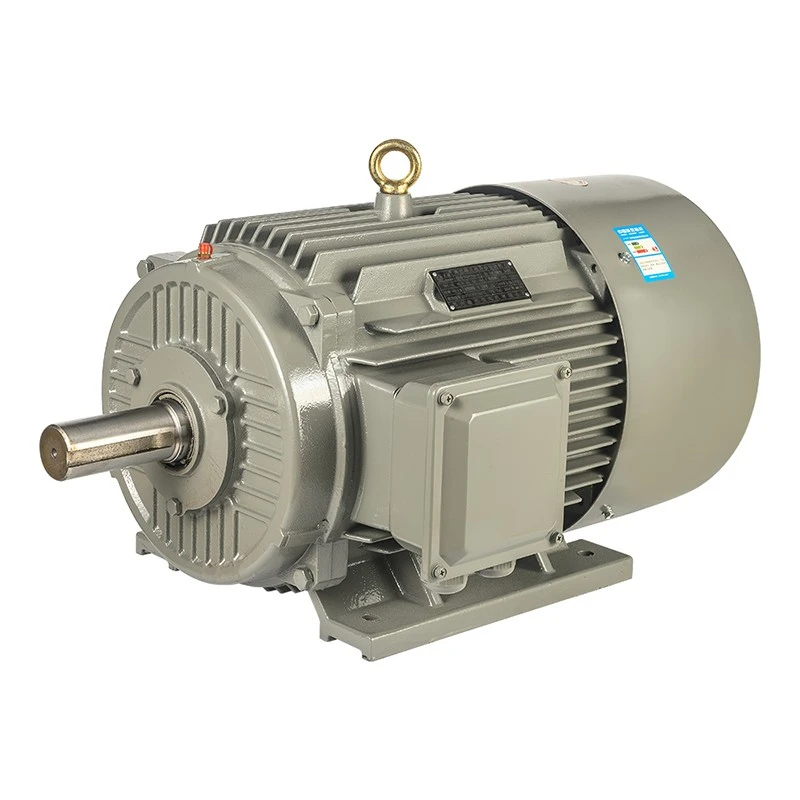

The Three Phase Engine Shaded Pole Asynchronous Motor is another type of YE2 series electric motor. The starting current of this motor will also vary depending on its size, load, and other factors.
Conclusion
In conclusion, the starting current of a YE2 series electric motor is an important technical parameter that needs to be understood and managed properly. By considering the factors that affect the starting current, measuring it accurately, and using appropriate methods to manage it, you can ensure the proper operation and longevity of your YE2 series electric motor.
If you're interested in purchasing YE2 series electric motors or have any questions about their starting current or other technical aspects, please feel free to contact us for further discussion and negotiation. We're committed to providing you with high-quality products and professional technical support.
References
- Chapman, S. J. (2012). Electric Machinery Fundamentals. McGraw-Hill Education.
- Fitzgerald, A. E., Kingsley Jr, C., & Umans, S. D. (2003). Electric Machinery. McGraw-Hill Education.


