

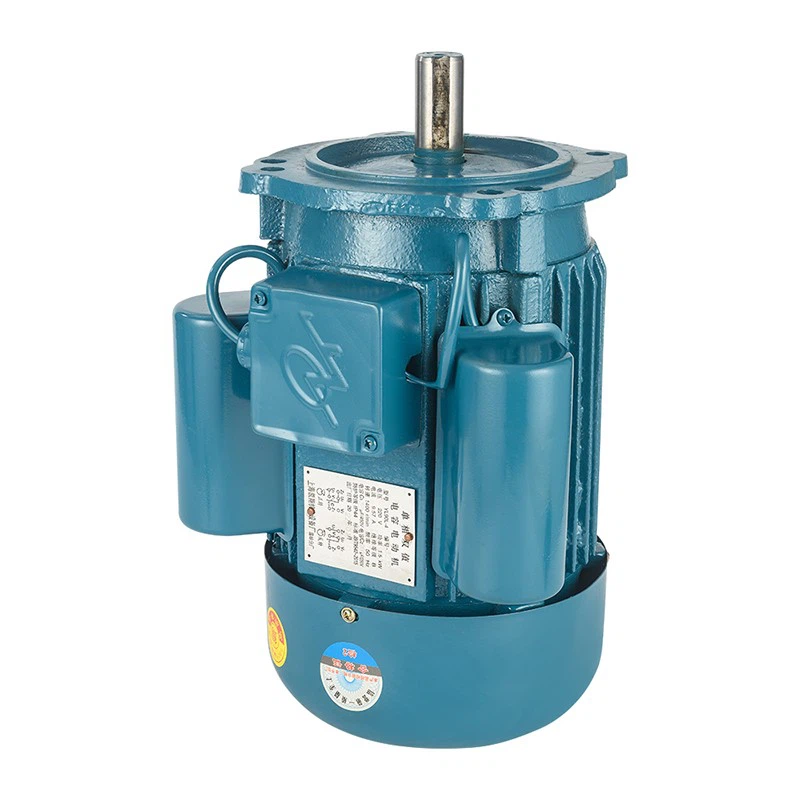
As a supplier of the YY 220V 0.75KW 1.5KW Single Phase Motor, I often receive inquiries from customers about the acoustic noise sources of our motors. Understanding these noise sources is crucial for both improving the motor's performance and meeting the users' requirements for a quiet working environment. In this blog post, I will delve into the various acoustic noise sources of the YY 220V 0.75KW 1.5KW Single Phase Motor.

Electromagnetic Noise
One of the primary sources of acoustic noise in single - phase motors is electromagnetic noise. This type of noise is generated due to the interaction between the magnetic fields in the motor.
In the YY 220V 0.75KW 1.5KW Single Phase Motor, the stator winding creates a magnetic field when an alternating current is applied. This magnetic field interacts with the rotor's magnetic field, causing forces to act on the stator and rotor laminations. These forces can cause the laminations to vibrate, which in turn generates acoustic noise.
The magnitude of electromagnetic noise is highly dependent on the motor's design and operating conditions. For example, if the air - gap between the stator and the rotor is not uniform, it can lead to uneven magnetic forces. This unevenness will result in increased vibration and, consequently, louder electromagnetic noise. Additionally, harmonic currents in the power supply can also contribute to electromagnetic noise. Harmonics can cause additional magnetic forces at frequencies other than the fundamental frequency, which may excite mechanical resonances in the motor structure.
Mechanical Noise
Mechanical noise is another significant source of acoustic noise in the YY 220V 0.75KW 1.5KW Single Phase Motor. It can be caused by several factors related to the motor's mechanical components.
Bearing Noise
The bearings in the motor play a crucial role in supporting the rotor and allowing it to rotate smoothly. However, over time, bearings can wear out due to factors such as normal usage, improper lubrication, or contamination. When bearings start to wear, they can produce noise. The noise from worn - out bearings is often characterized by a high - pitched screeching or grinding sound.
Bearing noise can also be affected by the installation process. If the bearings are not installed correctly, for example, if they are misaligned or over - tightened, it can cause additional stress on the bearings and lead to increased noise levels.
Fan Noise
Most single - phase motors, including the YY 220V 0.75KW 1.5KW model, are equipped with a cooling fan to dissipate heat. The fan rotates at high speeds, and as it moves air, it can generate aerodynamic noise. The design of the fan, such as the blade shape, number of blades, and rotational speed, has a significant impact on the noise level.
A poorly designed fan can create turbulent airflow, which results in louder noise. Additionally, if the fan is not balanced properly, it can cause vibrations in the motor, further increasing the overall noise level.
Rotor Imbalance
If the rotor in the YY 220V 0.75KW 1.5KW Single Phase Motor is not balanced correctly, it can cause vibrations during rotation. These vibrations are transmitted through the motor's structure and can generate acoustic noise. Rotor imbalance can occur due to manufacturing tolerances, uneven mass distribution on the rotor, or damage to the rotor during operation.
Aerodynamic Noise
Aerodynamic noise is generated by the movement of air within and around the motor. In addition to the fan noise mentioned above, there are other factors that contribute to aerodynamic noise.
The motor's enclosure design can affect the airflow around the motor. If the enclosure has sharp edges or irregular shapes, it can disrupt the smooth flow of air, creating turbulence and generating noise. Also, the ventilation openings in the enclosure need to be designed carefully. If the openings are too small or have a complex shape, they can cause restrictions in the airflow, leading to increased aerodynamic noise.
Reducing Acoustic Noise
As a supplier, we are constantly working on reducing the acoustic noise of our YY 220V 0.75KW 1.5KW Single Phase Motor. For electromagnetic noise, we optimize the motor's magnetic circuit design to ensure a more uniform magnetic field distribution. This includes precise control of the air - gap between the stator and the rotor and using high - quality electrical steel for the laminations.
To address mechanical noise, we use high - quality bearings and ensure proper installation procedures. We also balance the rotors to a high degree of accuracy during the manufacturing process. For the cooling fan, we conduct extensive research and development to design fans with optimized blade shapes and balanced structures to minimize aerodynamic noise.
In terms of the enclosure design, we use smooth and aerodynamic shapes to reduce air turbulence. The ventilation openings are designed to provide sufficient airflow while minimizing noise generation.
Our Product Range
In addition to the YY 220V 0.75KW 1.5KW Single Phase Motor, we also offer a wide range of other single - phase motors. You can check out our Hot Selling YL Single Phase Asynchronous Motor and YC Capacitor Start Single Phase Induction Motor IP44. These motors are designed with high - quality materials and advanced manufacturing techniques to ensure reliable performance and low noise levels.
If you are interested in our YY 220V 0.75KW 1.5KW Single Phase Motor or other products, please feel free to contact us for more information and to start a procurement negotiation. We are committed to providing you with the best - quality products and excellent customer service.
References
- Fitzgerald, A. E., Kingsley, C., & Umans, S. D. (2003). Electric Machinery. McGraw - Hill.
- Chapman, S. J. (2012). Electric Machinery Fundamentals. McGraw - Hill.
- Krause, P. C., Wasynczuk, O., & Sudhoff, S. D. (2013). Analysis of Electric Machinery and Drive Systems. Wiley.


