

Hey there! As a supplier of YE2 series electric motors, I often get asked about how to select the appropriate fuse for these motors. It's a crucial question because using the wrong fuse can lead to all sorts of problems, from motor damage to safety hazards. So, let's dive right in and talk about the key factors you need to consider when picking the right fuse for your YE2 series electric motor.
Understanding the Basics of Fuses
First things first, let's quickly go over what a fuse is and what it does. A fuse is a simple but essential electrical safety device. It's designed to protect an electrical circuit from overcurrent. When the current flowing through the circuit exceeds a certain level (the fuse's rated current), the fuse's element melts, breaking the circuit and preventing further damage.
There are different types of fuses, but for YE2 series electric motors, we're mainly looking at time-delay fuses. These fuses can handle short-term current surges, like those that happen when a motor starts up, without blowing. But if there's a sustained overcurrent, they'll do their job and cut the power.
Motor Ratings: The Starting Point
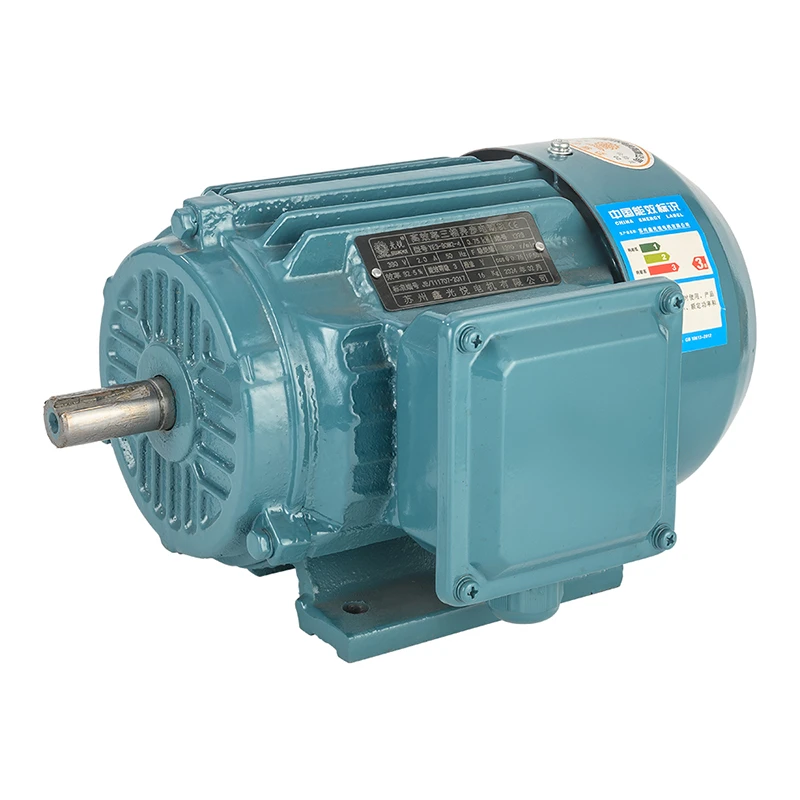
The first step in selecting a fuse is to know your motor's ratings. Every YE2 series electric motor comes with a nameplate that lists important information, such as the motor's power rating (in horsepower or kilowatts), voltage, full-load current (FLC), and service factor.
Let's take the YE2-80M2-4 1HP Three Phase Electric Motor as an example. Its nameplate will tell you the exact full-load current it draws when running at its rated power. This FLC value is super important because the fuse you choose should be able to handle this normal operating current without blowing.
Calculating the Fuse Rating
Once you have the motor's FLC, you can start calculating the appropriate fuse rating. As a general rule of thumb, for a three-phase motor like the ones in the YE2 series, the fuse rating should be around 175% to 225% of the motor's FLC.
Let's say you have a Three-phase Ac Motor 7.5 Hp 1440 Rpm 5.5 Kw with an FLC of 10 amps. Using the 175% - 225% guideline, you'd calculate the fuse rating as follows:
- Lower end: 10 amps x 1.75 = 17.5 amps
- Upper end: 10 amps x 2.25 = 22.5 amps
In this case, you'd want to choose a fuse with a rating between 17.5 and 22.5 amps. You'll usually find standard fuse ratings, so you might end up choosing a 20-amp fuse, which falls within this range.
Considering the Motor's Starting Current
Motors draw a much higher current when they start up compared to their normal running current. This is called the starting current or inrush current. For YE2 series motors, the starting current can be 5 to 8 times the FLC.
That's why we use time-delay fuses. They can withstand these short-term high currents during startup without blowing. If you choose a fuse with a rating that's too close to the FLC, it might blow every time the motor starts, which is not only annoying but can also be a sign that you've chosen the wrong fuse.
Other Factors to Consider
- Ambient Temperature: The temperature of the environment where the motor is operating can affect the fuse's performance. In high-temperature environments, the fuse might blow at a lower current than its rated value. So, if your motor is in a hot place, you might need to choose a slightly higher-rated fuse.
- Service Factor: The service factor on the motor's nameplate indicates how much overload the motor can handle for short periods. If your motor has a service factor greater than 1.0, you might need to adjust the fuse rating accordingly.
- Cable Size: The size of the cables connecting the motor to the power source also matters. If the cables are too small, they can cause a voltage drop, which can increase the motor's current draw. This, in turn, can affect the fuse selection.
Selecting the Right Fuse Type
As I mentioned earlier, time-delay fuses are the way to go for YE2 series electric motors. But there are different classes of time-delay fuses, such as Class RK1 and Class J.

- Class RK1 Fuses: These fuses are more common and are suitable for most general-purpose applications. They offer good protection against overcurrent and can handle motor starting surges well.
- Class J Fuses: These are more precise and have a higher interrupting rating. They're often used in more critical applications where a higher level of protection is required.
Safety First
When working with fuses and electric motors, safety should always be your top priority. Make sure you follow all the safety guidelines and regulations when installing and replacing fuses. Always turn off the power before working on the electrical circuit to avoid getting shocked.
Conclusion
Selecting the appropriate fuse for a YE2 series electric motor is a process that requires careful consideration of several factors. By understanding the motor's ratings, calculating the fuse rating based on the FLC and starting current, and taking into account other factors like ambient temperature and cable size, you can choose the right fuse to protect your motor and ensure its safe and efficient operation.
If you're still not sure which fuse is right for your YE2 series electric motor, don't hesitate to reach out. We're here to help you make the best choice. Whether you're interested in the YE2-80M2-4 1HP Three Phase Electric Motor, the Three-phase Ac Motor 7.5 Hp 1440 Rpm 5.5 Kw, or any other Low Rpm Electric Motor Three Phase Electric Motor in our YE2 series, we can provide you with the expert advice you need. Contact us today to discuss your requirements and start the procurement process.
References
- National Electrical Code (NEC)
- Motor manufacturer's documentation for YE2 series electric motors
- Electrical safety standards and guidelines


