

Hey there! As a supplier of Yej brake motors, I often get asked about all sorts of technical aspects of these motors. One question that pops up quite a bit is, "What is the rotor resistance of a Yej brake motor?" So, I thought I'd take a few minutes to break it down for you in a way that's easy to understand.
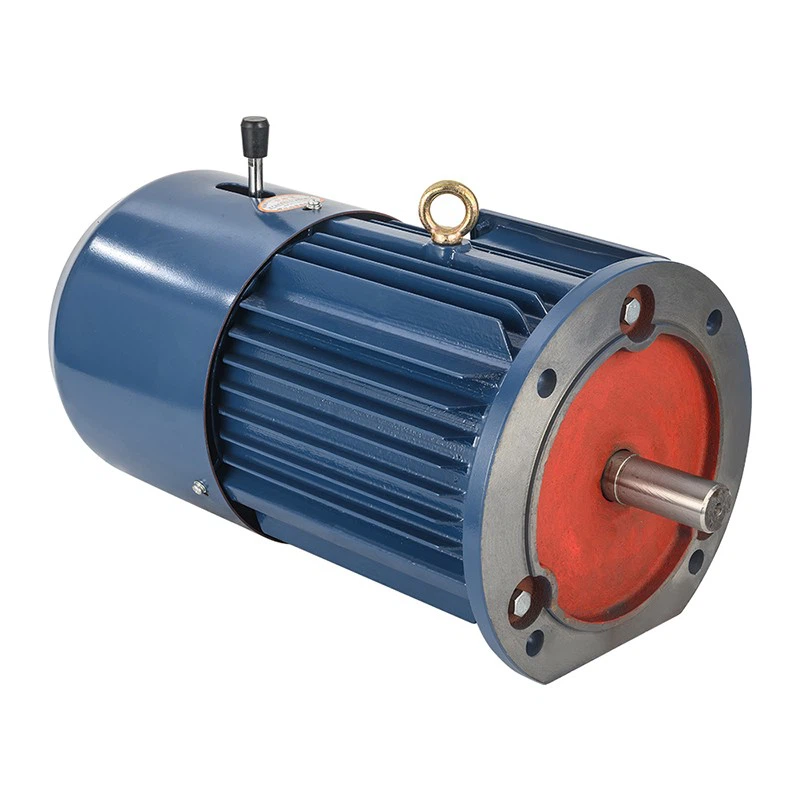
First off, let's talk a bit about what a Yej brake motor is. A Yej brake motor is a type of three - phase asynchronous motor with an electromagnetic brake. It's commonly used in all kinds of machinery where you need quick and reliable stopping, like in conveyor systems, hoists, and driving machines.
Now, onto the rotor resistance. The rotor in a Yej brake motor is a crucial part. It's the rotating component inside the motor, and its resistance plays a big role in how the motor performs. Rotor resistance is basically the opposition that the rotor offers to the flow of electric current.
Why does rotor resistance matter? Well, it affects several key aspects of the motor's operation. For starters, it impacts the motor's torque - speed characteristics. Torque is the rotational force that the motor can produce, and speed is how fast the rotor spins. By adjusting the rotor resistance, we can change the shape of the torque - speed curve.
A higher rotor resistance generally means that the motor will have a higher starting torque. This is super useful in applications where you need to get heavy loads moving from a standstill. For example, in a hoist that's lifting a large amount of weight, a motor with higher rotor resistance can provide the extra oomph needed to start the load moving.
On the other hand, a lower rotor resistance is better for applications where you need high - speed operation and good efficiency at normal running conditions. Motors with lower rotor resistance can run more smoothly and use less energy when they're up and running.
In a Yej brake motor, the rotor resistance is carefully designed to balance these different requirements. The engineers take into account the typical applications of the motor and try to find the sweet spot where the motor can start heavy loads when needed and still operate efficiently during normal use.
Let me give you an example to illustrate this. Suppose you're using a YEJ 460V 1700rpm Electric Motor for Driving Machine. This motor is designed for driving machines, which might need to start and stop frequently. The rotor resistance of this motor is set in such a way that it can provide enough starting torque to get the machine moving quickly, but it also runs efficiently during the normal driving operation.
Another example is the Electromagnetic Brake Induction Motor 5.5KW. This motor is often used in various industrial applications where a balance of starting torque and running efficiency is crucial. The rotor resistance is tuned to give the motor the right performance characteristics for these types of jobs.
The Three Phase IMB5 Aluminum Frame Brake AC Motor is yet another example. With its aluminum frame, it's lightweight and efficient. The rotor resistance in this motor is optimized to work well with the overall design of the motor, ensuring that it can handle different loads and operating conditions.
Rotor resistance also has an impact on the braking performance of the Yej brake motor. The electromagnetic brake in these motors works by quickly stopping the rotation of the rotor. The rotor resistance affects how fast the motor can come to a stop. A motor with higher rotor resistance might be able to stop a bit more quickly in some cases because the electrical losses in the rotor can help dissipate the kinetic energy of the rotating parts faster.
However, there's a trade - off here. If the rotor resistance is too high, it can also cause the motor to overheat during normal operation. That's why finding the right balance is so important. The manufacturers use advanced design techniques and materials to ensure that the rotor resistance is just right for the motor's intended use.
Now, you might be wondering how the rotor resistance is actually adjusted or measured. Well, during the manufacturing process, the design of the rotor is carefully planned. The materials used for the rotor conductors, their cross - sectional area, and the overall shape of the rotor all contribute to the rotor resistance.
Measuring the rotor resistance is a bit more complicated. It usually involves specialized testing equipment. Technicians can use techniques like the DC test method to measure the resistance of the rotor. This involves applying a direct current to the rotor and measuring the voltage drop across it. From there, they can calculate the resistance using Ohm's law (R = V / I, where R is resistance, V is voltage, and I is current).
As a Yej brake motor supplier, we take great care in ensuring that the rotor resistance of our motors is within the optimal range. We conduct rigorous testing on all of our motors to make sure they meet the highest standards of performance and reliability.
If you're in the market for a Yej brake motor, it's important to consider the rotor resistance based on your specific application. Think about whether you need high starting torque, high - speed operation, or a balance of both. And if you're not sure, don't hesitate to reach out to us. We're here to help you choose the right motor for your needs.
Whether you're working on a small - scale project or a large industrial application, having the right Yej brake motor with the appropriate rotor resistance can make a huge difference in how well your machinery performs. So, take the time to understand these technical details, and if you have any questions, just let us know.

If you're interested in discussing your motor requirements further or would like to start a procurement process, feel free to get in touch. We're always happy to have a chat and find the best solution for you.
References
- Electric Machinery Fundamentals by Stephen J. Chapman
- Principles of Electric Machines and Power Electronics by P. C. Sen


