

Frequency fluctuation is a common phenomenon in electrical power systems, and it can have significant effects on the performance and lifespan of electric motors. As a supplier of the YE2 - 80M2 - 4 1HP Three Phase Electric Motor, I have witnessed firsthand how frequency variations can impact these motors. In this blog, I will explore the various effects of frequency fluctuation on the YE2 - 80M2 - 4 1HP Three Phase Electric Motor and discuss the implications for users and maintenance.
Understanding the YE2 - 80M2 - 4 1HP Three Phase Electric Motor
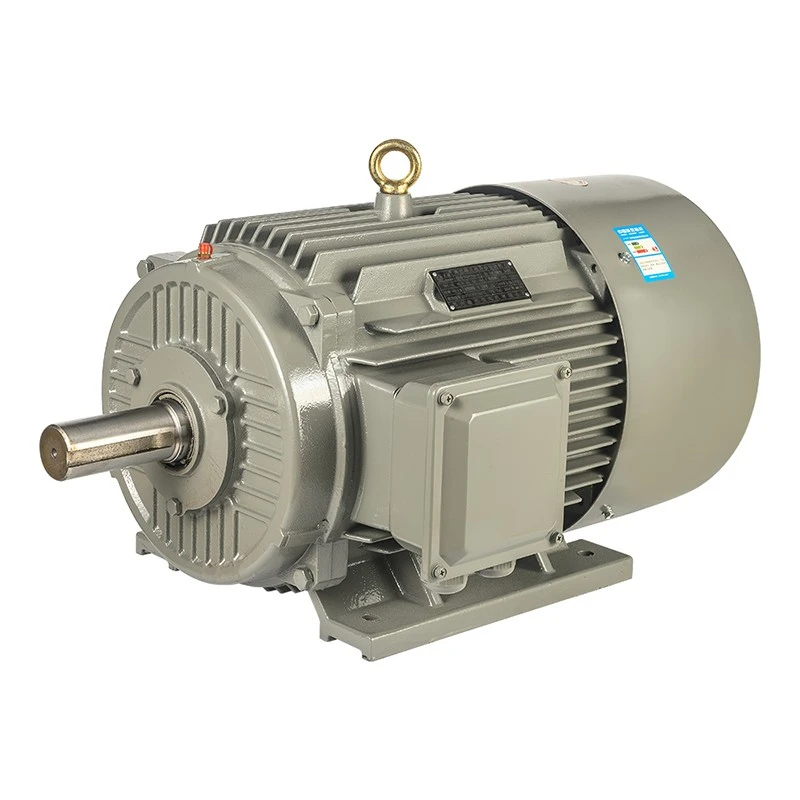
Before delving into the effects of frequency fluctuation, it is essential to understand the basic characteristics of the YE2 - 80M2 - 4 1HP Three Phase Electric Motor. This motor is a high - efficiency, three - phase asynchronous motor designed for a wide range of industrial applications. With a power rating of 1HP (approximately 746 watts), it operates at a standard frequency of 50Hz or 60Hz, depending on the regional power supply.
The YE2 series motors are known for their energy - saving features, reliable performance, and long service life. They are widely used in machinery such as High Efficiency Copper Winding Washing Machine Motor, Three Phase Engine Shaded Pole Asynchronous Motor, and Three - phase Ac Motor 7.5 Hp 1440 Rpm 5.5 Kw. However, frequency fluctuations can disrupt the normal operation of these motors.
Effects of Frequency Fluctuation on Motor Speed
One of the most direct effects of frequency fluctuation on the YE2 - 80M2 - 4 1HP Three Phase Electric Motor is the change in motor speed. The synchronous speed of a three - phase asynchronous motor is given by the formula:
[n_s=\frac{120f}{p}]
where (n_s) is the synchronous speed in revolutions per minute (RPM), (f) is the frequency of the power supply in Hertz (Hz), and (p) is the number of poles of the motor. For the YE2 - 80M2 - 4 motor, which has 4 poles ((p = 4)), the synchronous speed at 50Hz is (n_{s1}=\frac{120\times50}{4}=1500) RPM, and at 60Hz is (n_{s2}=\frac{120\times60}{4}=1800) RPM.
When the frequency increases, the synchronous speed of the motor increases proportionally. This means that if the frequency of the power supply goes above the rated frequency, the motor will run faster. Conversely, if the frequency decreases, the motor speed will decrease. A significant change in motor speed can have a detrimental impact on the machinery driven by the motor. For example, in a conveyor system, an increase in motor speed can cause the conveyor to move too fast, leading to product spillage or damage. On the other hand, a decrease in speed can result in reduced productivity.
Impact on Motor Torque
Frequency fluctuation also affects the torque - speed characteristics of the YE2 - 80M2 - 4 motor. The starting torque, maximum torque, and running torque of the motor are all related to the frequency. Generally, the starting torque of a three - phase asynchronous motor is proportional to the square of the voltage and inversely proportional to the frequency.
When the frequency decreases, the starting torque increases, but this is often accompanied by an increase in current. If the frequency drops too low, the motor may draw excessive current, leading to overheating and potential damage to the motor windings. Conversely, when the frequency increases, the starting torque decreases. This can make it difficult for the motor to start heavy loads, especially in applications where a high starting torque is required.
The maximum torque of the motor also changes with frequency. At frequencies above the rated value, the maximum torque may decrease, which can limit the motor's ability to handle sudden load changes. In industrial applications where the load can vary significantly, such as in a machine tool, a decrease in maximum torque can result in poor performance and even machine breakdown.
Influence on Motor Efficiency
Motor efficiency is another critical parameter affected by frequency fluctuation. The YE2 - 80M2 - 4 motor is designed to operate at its highest efficiency at the rated frequency. When the frequency deviates from the rated value, the motor efficiency decreases.
At lower frequencies, the core losses in the motor increase due to the increase in magnetic flux density. The core losses include hysteresis losses and eddy - current losses. Hysteresis losses are caused by the repeated magnetization and demagnetization of the motor core, while eddy - current losses are due to the induced currents in the core. As the frequency decreases, the magnetic flux density increases, leading to higher core losses and lower efficiency.
At higher frequencies, the copper losses in the motor increase. Copper losses are proportional to the square of the current. When the frequency increases, the motor speed increases, and the load on the motor may change, causing an increase in current. This results in higher copper losses and a decrease in overall motor efficiency. A decrease in efficiency not only leads to increased energy consumption but also generates more heat, which can further affect the motor's lifespan.
Thermal Effects of Frequency Fluctuation
Frequency fluctuation can cause significant thermal stress on the YE2 - 80M2 - 4 motor. As mentioned earlier, changes in frequency can lead to changes in current, torque, and efficiency, all of which contribute to heat generation in the motor.
When the frequency is lower than the rated value, the motor may draw more current to maintain the required torque. This increased current flow through the motor windings generates more heat. If the motor is not properly cooled, the temperature of the windings can rise above the rated temperature, which can damage the insulation of the windings. Over time, this can lead to insulation breakdown, short - circuits, and motor failure.
At higher frequencies, the increased copper losses also result in more heat generation. Additionally, the faster rotation of the motor may cause mechanical friction to increase, further contributing to heat production. Excessive heat can accelerate the aging process of the motor components, reducing the motor's service life and reliability.
Vibration and Noise
Frequency fluctuation can also cause increased vibration and noise in the YE2 - 80M2 - 4 motor. When the frequency changes, the magnetic forces acting on the motor's rotor and stator change, which can lead to unbalanced forces. These unbalanced forces cause the motor to vibrate more than normal.
Excessive vibration can damage the motor bearings, shaft, and other mechanical components. It can also cause loose connections in the motor, leading to electrical problems. Moreover, the increased vibration can generate more noise, which is not only a nuisance but can also be an indication of potential motor problems.
Mitigation Measures
To minimize the effects of frequency fluctuation on the YE2 - 80M2 - 4 motor, several mitigation measures can be taken. One of the most effective ways is to use a frequency converter. A frequency converter, also known as a variable - frequency drive (VFD), can adjust the frequency and voltage supplied to the motor according to the load requirements. This allows the motor to operate at a constant speed and torque, regardless of the frequency fluctuations in the power supply.
Regular maintenance of the motor is also crucial. This includes checking the motor's temperature, current, and vibration levels. Any abnormal readings should be investigated promptly to prevent further damage. Additionally, ensuring proper ventilation and cooling of the motor can help dissipate the heat generated during operation, reducing the risk of overheating.
Conclusion
Frequency fluctuation can have a wide range of effects on the YE2 - 80M2 - 4 1HP Three Phase Electric Motor, including changes in speed, torque, efficiency, and thermal performance. These effects can lead to reduced productivity, increased energy consumption, and potential motor failure. As a supplier of these motors, I understand the importance of providing customers with reliable products and solutions to address these issues.
If you are in the market for high - quality YE2 - 80M2 - 4 motors or need advice on how to mitigate the effects of frequency fluctuation, please feel free to contact us for procurement and further discussions. Our team of experts is ready to assist you in finding the best solutions for your specific needs.

References
- Chapman, S. J. (2012). Electric Machinery Fundamentals. McGraw - Hill Education.
- Fitzgerald, A. E., Kingsley, C., Jr., & Umans, S. D. (2003). Electric Machinery. McGraw - Hill Education.


