

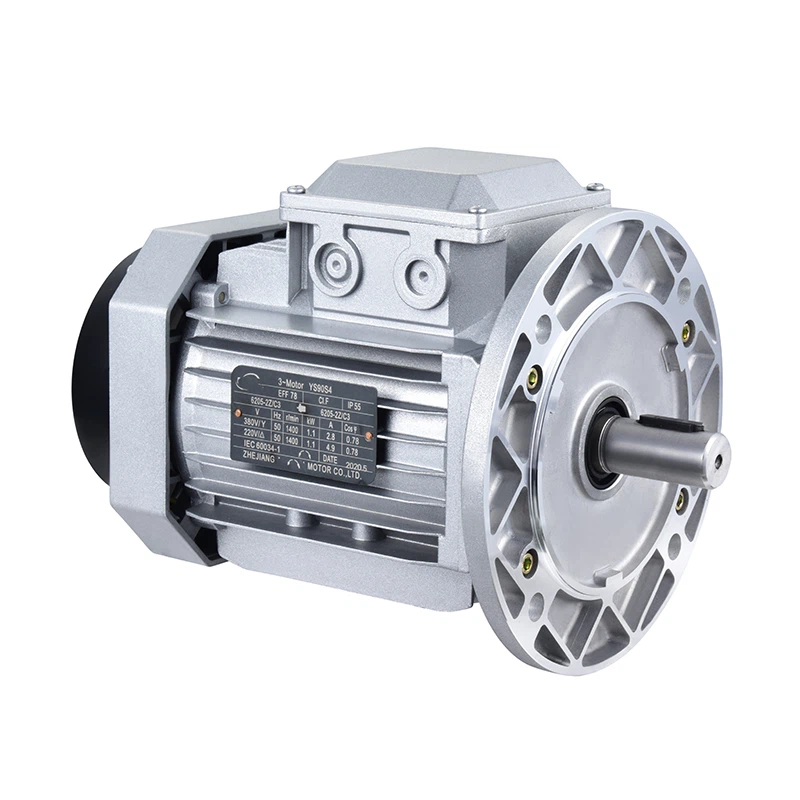
In the world of electric motors, the choice of housing material is a crucial factor that significantly impacts the motor's performance, durability, and overall functionality. As a supplier of 1/2 Hp electric motor aluminum housings, I've witnessed firsthand the unique advantages that aluminum brings to the table compared to other materials commonly used for motor housings. In this blog post, I'll delve into the key differences between 1/2 Hp electric motor aluminum housings and those made from other materials, exploring aspects such as weight, heat dissipation, corrosion resistance, and cost.

Weight
One of the most notable differences between aluminum housings and those made from other materials, such as cast iron or steel, is their weight. Aluminum is a lightweight metal, with a density approximately one-third that of steel. This makes aluminum housings much lighter than their steel or cast-iron counterparts. For 1/2 Hp electric motors, which are often used in applications where weight is a concern, such as portable equipment or applications with limited space, the lightweight nature of aluminum housings offers significant advantages.
The reduced weight of aluminum housings not only makes the motors easier to handle and install but also reduces the overall weight of the equipment in which they are used. This can lead to energy savings, as less energy is required to move or operate the equipment. Additionally, the lighter weight can improve the mobility and maneuverability of the equipment, making it more suitable for applications where portability is essential.
Heat Dissipation
Another critical difference between aluminum housings and other materials is their ability to dissipate heat. Aluminum is an excellent conductor of heat, with a thermal conductivity approximately three times that of cast iron and twice that of steel. This means that aluminum housings can effectively transfer heat away from the motor's internal components, helping to keep the motor cool during operation.
Efficient heat dissipation is crucial for the performance and longevity of electric motors. When a motor operates, it generates heat due to the electrical resistance in its windings and the friction in its bearings. If this heat is not dissipated effectively, it can cause the motor's temperature to rise, leading to reduced efficiency, increased wear and tear on the motor's components, and even premature failure. By using aluminum housings, which can dissipate heat more effectively, the motor's temperature can be kept within a safe operating range, improving its performance and reliability.
Corrosion Resistance
Corrosion is a major concern for electric motors, especially those used in harsh or corrosive environments. Aluminum has excellent corrosion resistance, thanks to the formation of a thin, protective oxide layer on its surface. This oxide layer acts as a barrier, preventing the underlying aluminum from coming into contact with moisture and other corrosive agents.
In contrast, cast iron and steel are more susceptible to corrosion, especially in the presence of moisture or chemicals. Corrosion can cause the motor's housing to deteriorate over time, leading to structural weakness, leaks, and other problems. By using aluminum housings, which are more resistant to corrosion, the motor's lifespan can be extended, and the need for maintenance and replacement can be reduced.
Cost
The cost of the housing material is also an important consideration when choosing an electric motor. While aluminum is generally more expensive than cast iron or steel on a per-pound basis, the overall cost of an aluminum housing may be comparable to or even lower than that of a steel or cast-iron housing, depending on the specific application and design requirements.
The lightweight nature of aluminum housings can reduce the cost of transportation and installation, as less energy and labor are required to handle and install the motors. Additionally, the improved heat dissipation and corrosion resistance of aluminum housings can reduce the need for maintenance and replacement, leading to long-term cost savings.
Applications
The unique properties of aluminum housings make them suitable for a wide range of applications. Some common applications for 1/2 Hp electric motors with aluminum housings include:
- Portable Equipment: The lightweight nature of aluminum housings makes them ideal for portable equipment, such as power tools, lawn mowers, and generators. The reduced weight makes the equipment easier to carry and maneuver, improving its usability and convenience.
- HVAC Systems: In heating, ventilation, and air conditioning (HVAC) systems, the efficient heat dissipation of aluminum housings helps to keep the motors cool, improving their performance and reliability. Additionally, the corrosion resistance of aluminum makes it suitable for use in HVAC systems, which may be exposed to moisture and other corrosive agents.
- Food and Beverage Industry: In the food and beverage industry, where hygiene and cleanliness are essential, the corrosion resistance and ease of cleaning of aluminum housings make them a popular choice. Aluminum housings can be easily cleaned and sanitized, helping to prevent the growth of bacteria and other contaminants.
Our Products
As a supplier of 1/2 Hp electric motor aluminum housings, we offer a wide range of products to meet the diverse needs of our customers. Our products include the MS Series IMB5 Aluminum Asynchronous Motor, the YS 2800RPM 2 Poles Aluminum Frame AC Motor, and the 100L-4 2.2KW Squirrel Cage Aluminum Electric Motor. These motors are designed to provide reliable performance, energy efficiency, and long service life, making them suitable for a variety of applications.
Conclusion
In conclusion, the choice of housing material can have a significant impact on the performance, durability, and cost of 1/2 Hp electric motors. Aluminum housings offer several advantages over other materials, including lightweight, excellent heat dissipation, corrosion resistance, and cost-effectiveness. These advantages make aluminum housings an ideal choice for a wide range of applications, especially those where weight, heat dissipation, or corrosion resistance are concerns.
If you're in the market for 1/2 Hp electric motors with aluminum housings, we invite you to contact us to discuss your specific requirements. Our team of experts can help you select the right motor for your application and provide you with the support and service you need to ensure its successful operation.
References
- ASM Handbook, Volume 2: Properties and Selection: Nonferrous Alloys and Special-Purpose Materials. ASM International, 1990.
- Electric Motors and Drives: Fundamentals, Types, and Applications. Austin Hughes, 2005.
- Handbook of Electric Motors. Irving L. Kosow, 2007.


