

Hey there! As a supplier of Yej brake motors, I often get asked about how to test the performance of these motors. It's a crucial aspect, whether you're a technician looking to ensure everything's running smoothly or a business owner wanting to make sure you're getting the best bang for your buck. In this blog, I'll walk you through the key steps and methods to test the performance of a Yej brake motor.
Understanding the Basics of Yej Brake Motors
Before we dive into the testing process, let's quickly go over what a Yej brake motor is. A Yej brake motor is a type of three - phase asynchronous motor with an electromagnetic brake. The brake is used to quickly stop the motor when the power is cut off, which is essential in many industrial applications where precision and safety are top priorities.
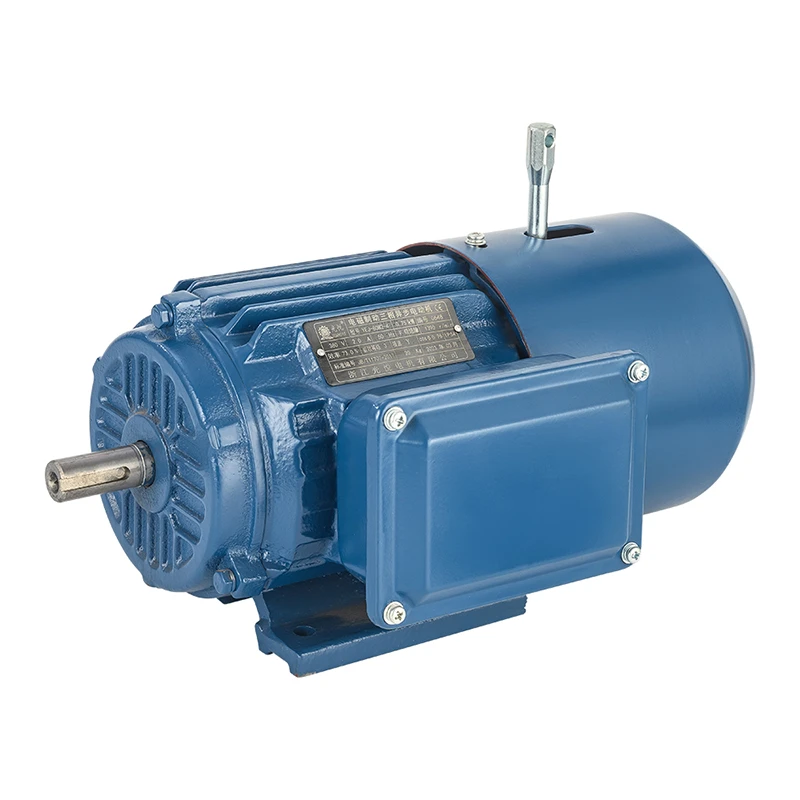

We offer a range of Yej brake motors, like the YEJ 460V 1700rpm Electric Motor for Driving Machine, the Electromagnetic Brake Induction Motor 5.5KW, and the Braking Motor YEJ Series Cast Iron Frame 100HP. Each of these motors has its own unique features and specifications, but the general testing principles remain the same.
Pre - Test Checks
Before you start any performance tests, it's important to do some pre - test checks. First, visually inspect the motor. Look for any signs of physical damage, such as cracks in the housing, loose wires, or damaged connectors. Make sure all the mounting bolts are tight and that the motor is properly aligned.
Next, check the electrical connections. Ensure that the power supply is correct and that all the wires are securely connected. A loose connection can lead to inaccurate test results or even cause damage to the motor. Also, check the insulation resistance of the motor windings. You can use a megohmmeter for this. A low insulation resistance could indicate a problem with the windings, such as moisture or a short circuit.
Performance Testing
1. No - Load Test
The no - load test is a simple yet important test. It helps you understand the basic performance of the motor without any external load. First, connect the motor to the power supply and let it run at its rated voltage and frequency. Measure the input power, current, and voltage using a power analyzer.
During the no - load test, pay attention to the motor's speed. It should be close to the synchronous speed of the motor. Any significant deviation could indicate a problem with the motor, such as a mechanical issue or an electrical fault. Also, listen to the motor. It should run smoothly and quietly. Any unusual noises, like rattling or grinding, could be a sign of a problem.
2. Load Test
The load test is where you really put the motor to the test. You'll need to apply a load to the motor, which can be done using a dynamometer. The dynamometer measures the torque and speed of the motor under load.
Start by gradually increasing the load on the motor while monitoring the input power, current, voltage, torque, and speed. Plot these values on a graph to get a better understanding of the motor's performance characteristics. The motor should be able to maintain a relatively stable speed and torque under load. If the speed drops significantly or the current increases too much, it could mean that the motor is overloaded or there's a problem with its efficiency.
3. Braking Performance Test
One of the key features of a Yej brake motor is its braking performance. To test this, run the motor at its rated speed and then suddenly cut off the power. The brake should engage quickly and stop the motor within a short period of time.
Measure the braking time, which is the time it takes for the motor to come to a complete stop after the power is cut off. The braking time should be within the specifications provided by the manufacturer. Also, check the braking torque. You can use a torque sensor to measure the torque applied by the brake. A low braking torque could mean that the brake is not working properly, which could be due to a problem with the electromagnetic coil or the brake pads.
Temperature Testing
Temperature is another important factor to consider when testing the performance of a Yej brake motor. High temperatures can reduce the efficiency of the motor and even cause damage to its components.
You can use a temperature sensor to measure the temperature of the motor windings, the brake, and the housing. Run the motor under load for a certain period of time and then measure the temperature. The temperature should not exceed the maximum allowable temperature specified by the manufacturer. If it does, it could be a sign of overloading, poor ventilation, or a problem with the motor's cooling system.
Post - Test Analysis
After you've completed all the tests, it's time to analyze the results. Compare the test results with the manufacturer's specifications. If the results are within the acceptable range, then the motor is performing well. However, if there are any significant deviations, you'll need to further investigate the problem.
For example, if the no - load current is higher than normal, it could indicate a problem with the motor's magnetic circuit. If the braking time is too long, it could be due to a worn - out brake or a problem with the electromagnetic coil.
Conclusion
Testing the performance of a Yej brake motor is a crucial step to ensure its reliability and efficiency. By following the steps outlined in this blog, you can accurately assess the performance of the motor and identify any potential problems.
If you're in the market for a high - quality Yej brake motor or need more information about our products, don't hesitate to reach out. We're here to help you find the right motor for your application and answer any questions you may have.
References
- General electrical engineering textbooks on motor testing and performance analysis.
- Manufacturer's manuals for Yej brake motors.


