

As a supplier of YCT and YZR electric motors, I've had the privilege of witnessing the widespread use and importance of these motors in various industrial applications. One of the most frequently asked questions from our customers is about the speed regulation methods of YCT and YZR electric motors. In this blog, I'll delve into the details of these methods, providing you with a comprehensive understanding of how these motors achieve speed control.
YCT Electric Motors: Electromagnetic Speed Regulation
YCT electric motors, also known as electromagnetic speed - adjustable induction motors, are designed to offer smooth and efficient speed control. The key to their speed regulation lies in the electromagnetic coupling principle.
Principle of Electromagnetic Speed Regulation
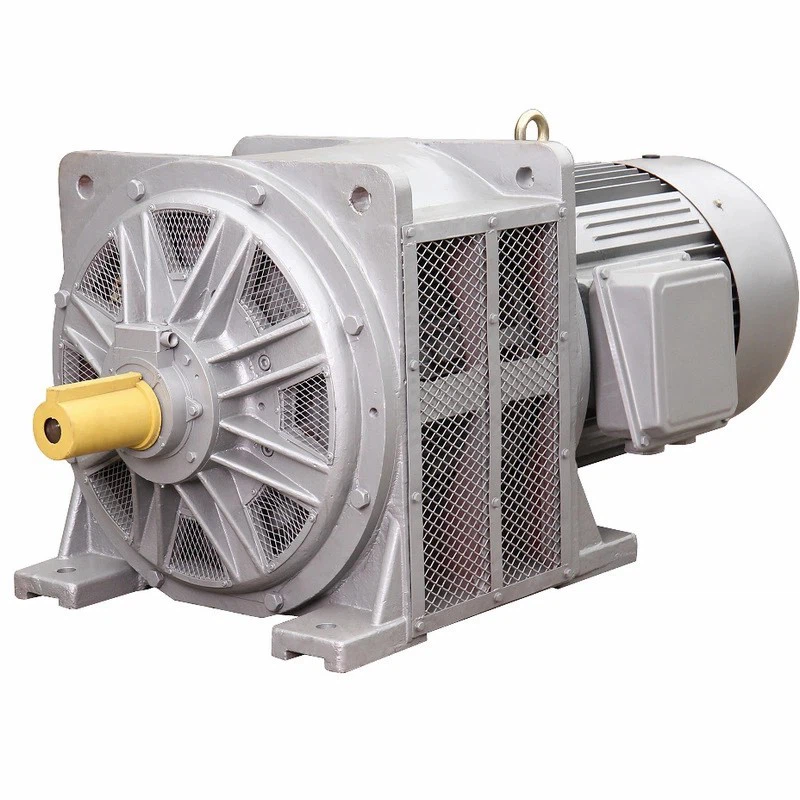
The YCT motor consists of a three - phase asynchronous motor and an electromagnetic slip clutch. The three - phase asynchronous motor provides the basic mechanical power, while the electromagnetic slip clutch is responsible for speed control.
The electromagnetic slip clutch has two main parts: the armature and the magnetic pole. The armature is connected to the output shaft of the three - phase asynchronous motor and rotates at the motor's speed. The magnetic pole is connected to the load and can rotate freely relative to the armature. When direct current is supplied to the excitation coil of the magnetic pole, a magnetic field is generated. The interaction between the rotating armature and the magnetic field of the magnetic pole creates an electromagnetic torque, which drives the load to rotate.
By adjusting the magnitude of the direct current supplied to the excitation coil, the strength of the magnetic field can be changed. A stronger magnetic field results in a larger electromagnetic torque, causing the load to rotate at a higher speed. Conversely, a weaker magnetic field leads to a lower speed. This way, the speed of the YCT motor can be continuously adjusted within a certain range.
Advantages of Electromagnetic Speed Regulation in YCT Motors
- Smooth Speed Control: The speed can be adjusted steplessly, which is very suitable for applications that require precise speed control, such as textile machinery, printing machinery, and food processing equipment.
- Simple Structure: Compared with some other speed - regulation methods, the structure of the YCT motor is relatively simple, which means lower maintenance costs and higher reliability.
- Good Starting Performance: The motor can start with a large load at a low speed, reducing the impact on the power grid and the mechanical system.
For example, our YCT200 - 4A Electromagnetic Speed 3 Phase Motor uses this electromagnetic speed - regulation method, providing excellent performance in various industrial scenarios.
YZR Electric Motors: Resistance Speed Regulation
YZR electric motors are mainly used in hoisting and metallurgical industries, where they need to operate under heavy - load and variable - speed conditions. The most common speed - regulation method for YZR motors is resistance speed regulation.
Principle of Resistance Speed Regulation
YZR motors are wound - rotor asynchronous motors. The rotor winding of a YZR motor is connected to an external resistance through slip rings. When the motor is running, the rotor current generates a magnetic field, which interacts with the stator magnetic field to produce electromagnetic torque.
By changing the value of the external resistance, the rotor current and the electromagnetic torque can be adjusted. According to the torque - speed characteristic of the asynchronous motor, when the external resistance is increased, the rotor current decreases, and the electromagnetic torque also decreases. As a result, the motor speed drops. Conversely, when the external resistance is decreased, the motor speed increases.
Steps of Resistance Speed Regulation
- Initial State: When the motor starts, a large external resistance is connected to the rotor circuit. This limits the starting current and provides a large starting torque, allowing the motor to start smoothly with a heavy load.
- Speed Adjustment: As the motor accelerates, the external resistance is gradually reduced in steps. Each step of resistance reduction increases the motor speed until the desired operating speed is reached.
- Steady - State Operation: Once the motor reaches the required speed, the external resistance is adjusted to maintain a stable operating state.
Advantages of Resistance Speed Regulation in YZR Motors
- High Torque at Low Speed: Resistance speed regulation allows the YZR motor to provide a large torque at low speed, which is crucial for hoisting and lifting applications.
- Suitability for Heavy - Load Applications: The motor can handle heavy loads and variable - speed operations, making it ideal for use in metallurgical cranes, mine hoists, and other heavy - duty equipment.
Comparison between YCT and YZR Motor Speed Regulation Methods
- Speed - Regulation Range: YCT motors generally have a wider speed - regulation range, which can be adjusted steplessly from a relatively low speed to a high speed. YZR motors, on the other hand, usually have a more limited speed - regulation range, and the speed adjustment is in steps.
- Application Scenarios: YCT motors are more suitable for applications that require smooth speed control and precise speed adjustment, such as in light - industrial machinery. YZR motors are mainly used in heavy - industrial applications where high torque at low speed and the ability to handle heavy loads are essential.
- Efficiency: In terms of efficiency, YCT motors are relatively efficient during normal operation, especially when the speed is close to the rated speed. YZR motors may have lower efficiency during speed regulation due to the power loss in the external resistance.
Considerations for Choosing the Right Speed - Regulation Method
When choosing between YCT and YZR motors and their respective speed - regulation methods, several factors need to be considered:

- Load Characteristics: If the load requires smooth and precise speed control, a YCT motor with electromagnetic speed regulation may be a better choice. For heavy - load applications that need high torque at low speed, a YZR motor with resistance speed regulation is more suitable.
- Cost: The cost of the motor and the speed - regulation system should also be taken into account. YCT motors usually have a relatively simple speed - regulation system, which may result in lower overall costs. However, for some large - scale heavy - industrial applications, the cost of a YZR motor and its associated control equipment may be justified by its performance.
- Maintenance Requirements: YCT motors generally have lower maintenance requirements due to their simple structure. YZR motors may require more frequent maintenance of the slip rings and external resistance devices.
Conclusion
In conclusion, both YCT and YZR electric motors offer effective speed - regulation methods to meet different industrial needs. YCT motors with electromagnetic speed regulation provide smooth and precise speed control, while YZR motors with resistance speed regulation are well - suited for heavy - load and high - torque applications.
If you are looking for high - quality YCT or YZR electric motors, or if you have any questions about speed regulation methods, please feel free to contact us for procurement and further discussion. We are committed to providing you with the best products and solutions to meet your specific requirements.
References
- Electric Machinery Fundamentals, Stephen J. Chapman
- Industrial Electric Motor Control, Thomas H. Miller


