

As a supplier of Electromagnetic Brake Induction Motors with a 5.5KW power rating, I've received numerous inquiries about the response time of the electromagnetic brake in these motors. Understanding this parameter is crucial for many applications, as it directly impacts the safety, efficiency, and performance of the machinery where these motors are installed.
The Basics of Electromagnetic Brakes in 5.5KW Induction Motors
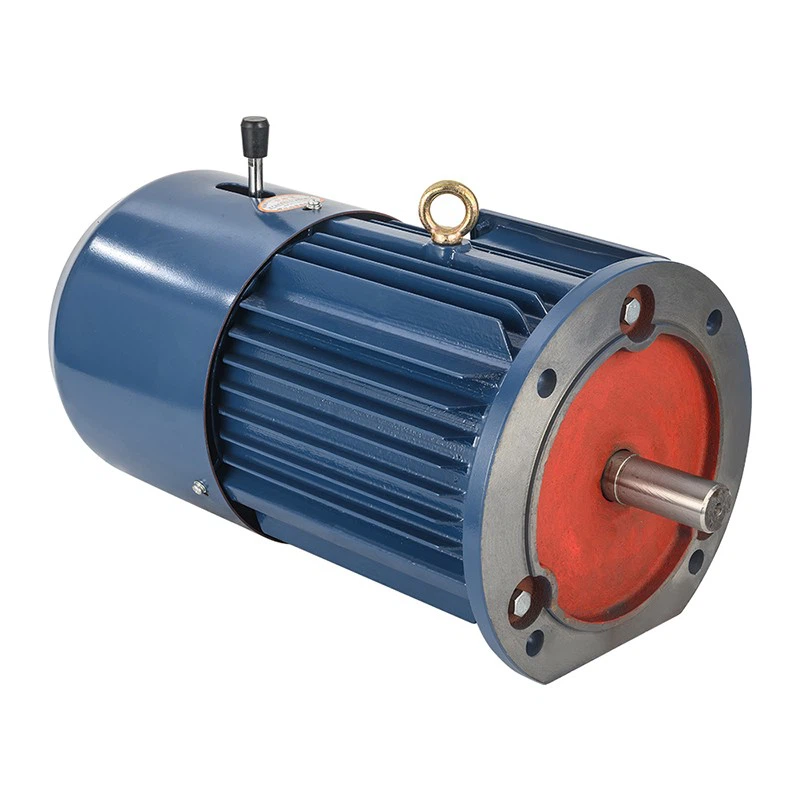
Electromagnetic brakes in induction motors work on the principle of electromagnetic force. When the motor is powered on, the electromagnetic field generated by the brake coil overcomes the spring force, releasing the brake and allowing the motor shaft to rotate freely. Conversely, when the power is cut off, the spring force engages the brake, stopping the motor shaft almost immediately.
The response time of an electromagnetic brake refers to the time it takes for the brake to engage or disengage from the moment the control signal is sent. In a 5.5KW Electromagnetic Brake Induction Motor, this response time is influenced by several factors, including the design of the brake, the quality of the electrical components, and the mechanical structure of the motor.
Factors Affecting Response Time
Electrical Factors
The electrical characteristics of the brake coil play a significant role in determining the response time. A higher voltage or current applied to the coil can generate a stronger electromagnetic field more quickly, reducing the time it takes to disengage the brake. However, this also needs to be balanced with the power consumption and heat generation of the coil.
The resistance and inductance of the coil are also important factors. A coil with lower resistance and inductance will have a faster response time, as it can build up the magnetic field more rapidly. Modern brake designs often use advanced materials and winding techniques to optimize these electrical parameters.
Mechanical Factors
The mechanical design of the brake, including the type of friction material, the spring force, and the clearance between the brake components, can also affect the response time. High - quality friction materials with good wear resistance and high coefficient of friction can ensure a quick and reliable braking action.
The spring force needs to be carefully calibrated. A too - weak spring may result in a slow engagement of the brake, while a too - strong spring can cause excessive wear on the brake components and may also affect the disengagement time.
The clearance between the brake disc and the friction pads is another critical factor. If the clearance is too large, it will take longer for the brake to engage, while a too - small clearance may cause the brake to drag even when it is supposed to be disengaged.
Typical Response Times in 5.5KW Electromagnetic Brake Induction Motors
In general, for a well - designed 5.5KW Electromagnetic Brake Induction Motor, the disengagement response time is typically in the range of 10 - 30 milliseconds. This means that within this short period, the brake can release and allow the motor to start rotating after the power is applied.
The engagement response time, on the other hand, is usually slightly longer, ranging from 20 - 50 milliseconds. This is because the mechanical parts need to move and the friction force needs to build up to stop the rotating shaft.
However, these are just typical values, and the actual response time can vary depending on the specific design and application requirements of the motor. For example, in applications where high - speed stopping is required, such as in some industrial automation equipment, the response time may be optimized to be even shorter.
Importance of Response Time in Different Applications
Industrial Automation
In industrial automation, where precision and speed are of utmost importance, the response time of the electromagnetic brake can significantly affect the productivity and quality of the manufacturing process. For example, in a conveyor belt system, a quick - acting brake can stop the belt precisely at the desired position, reducing the risk of product damage and improving the overall efficiency of the production line.
Elevators and Hoists
In elevator and hoist applications, the safety of passengers and goods depends on the reliable operation of the electromagnetic brake. A short response time ensures that the elevator or hoist can stop quickly in case of an emergency, preventing accidents and protecting lives and property.
Machine Tools
Machine tools, such as lathes and milling machines, require accurate control of the motor's rotation. A fast - responding brake can help in quickly changing the direction of rotation or stopping the spindle, improving the accuracy of machining operations and reducing the wear on the cutting tools.
Our Product Offerings
We offer a wide range of 5.5KW Electromagnetic Brake Induction Motors with different specifications to meet the diverse needs of our customers. Our motors are designed with high - quality materials and advanced manufacturing processes to ensure reliable performance and short response times.
For example, our Braking Motor YEJ Series Cast Iron Frame 100HP is a popular choice for heavy - duty industrial applications. It features a robust cast - iron frame and a high - performance electromagnetic brake, providing a fast and reliable braking action.
Our Three Phase IMB5 Aluminum Frame Brake AC Motor is another option, which is lightweight and suitable for applications where space and weight are critical factors. Despite its compact design, it still offers excellent braking performance with a short response time.
We also have the Motor 2.2kw Three Phase Induction Brake Motor, which is ideal for smaller - scale applications. It combines energy efficiency with reliable braking, making it a cost - effective solution for many customers.

Contact Us for Procurement
If you are interested in our 5.5KW Electromagnetic Brake Induction Motors or have any questions about the response time and other technical parameters, we encourage you to contact us for procurement discussions. Our team of experts is ready to provide you with detailed information and support to help you make the right choice for your specific application.
References
- "Electrical Machines and Drives" by Stephen J. Chapman
- "Industrial Motor Control" by Thomas L. Floyd


