

Hey there! As a supplier of Yej brake motors, I often get asked about the power loss of these motors. So, I thought I'd write this blog to break it down for you.
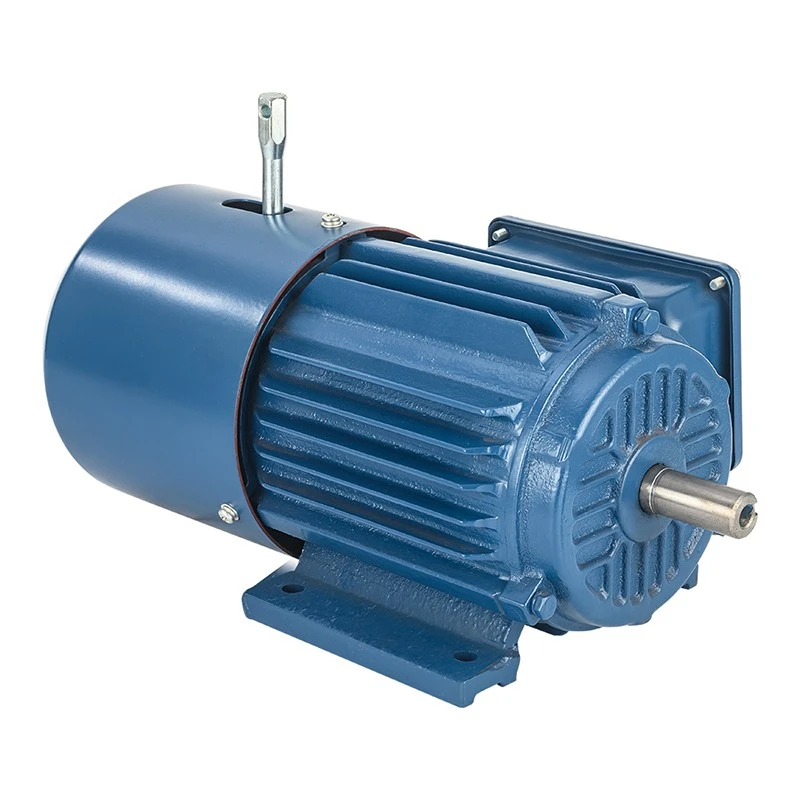
Let's start with the basics. A Yej brake motor is a type of three - phase asynchronous motor with an electromagnetic brake. It's widely used in various industrial applications where quick stopping and accurate positioning are required, like in driving machines, conveyor systems, and hoisting equipment.
What Causes Power Loss in a Yej Brake Motor?
1. Copper Loss
Copper loss is one of the main culprits when it comes to power loss in a Yej brake motor. It occurs in the stator and rotor windings. The current flowing through the copper wires of the windings creates resistance, and according to Joule's law (P = I²R), this resistance leads to power dissipation in the form of heat. The more current the motor draws and the higher the resistance of the windings, the greater the copper loss. For example, if the motor is overloaded, it will draw more current, and the copper loss will increase significantly.
2. Iron Loss
Iron loss, also known as core loss, happens in the motor's magnetic core. It consists of two components: hysteresis loss and eddy - current loss. Hysteresis loss occurs because the magnetic domains in the core material need to be realigned as the magnetic field changes during the motor's operation. This realignment requires energy, which is dissipated as heat. Eddy - current loss, on the other hand, is caused by the induced currents (eddy currents) in the core. These currents flow in circular paths within the core and generate heat due to the core's resistance. To reduce eddy - current loss, the core is usually made of laminated sheets.
3. Mechanical Loss
Mechanical loss includes friction and windage loss. Friction loss occurs at the bearings and the brushes (if the motor has them). The moving parts of the motor rub against each other, and this friction requires energy to overcome. Windage loss is due to the air resistance encountered by the rotating parts of the motor, such as the rotor and the cooling fan. The faster the motor rotates, the greater the windage loss.
4. Brake - related Loss
In a Yej brake motor, the electromagnetic brake also contributes to power loss. When the brake is engaged or disengaged, there is an electrical current flowing through the brake coil. This current creates a magnetic field to operate the brake, and the resistance in the coil causes power dissipation. Additionally, there is some mechanical energy loss when the brake pads come into contact with the braking surface during braking.
How to Minimize Power Loss
1. Proper Sizing
Selecting the right - sized motor for the application is crucial. An oversized motor will run at a lower load factor, which can increase the copper and iron losses. On the other hand, an undersized motor will be overloaded, leading to even higher power losses and potential damage to the motor. You can check out our YEJ 460V 1700rpm Electric Motor for Driving Machine to find a well - sized option for your driving machine needs.
2. High - quality Materials
Using high - quality copper for the windings can reduce the resistance and thus lower the copper loss. For the core, materials with low hysteresis and eddy - current losses should be chosen. Our Three Phase IMB5 Aluminum Frame Brake AC Motor is designed with high - quality materials to minimize power loss and ensure efficient operation.
3. Regular Maintenance
Regular maintenance can help reduce mechanical loss. This includes lubricating the bearings, checking the alignment of the motor shaft, and replacing worn - out parts. Keeping the motor clean also helps reduce windage loss as it ensures smooth airflow around the rotating parts.
4. Efficient Brake Design
For the brake part, an efficient brake design can reduce the power consumption during its operation. Our Electromagnetic Brake Induction Motor 5.5KW features an optimized brake system that minimizes power loss while providing reliable braking performance.

Impact of Power Loss on the Motor and the Application
Power loss in a Yej brake motor has several negative impacts. Firstly, it reduces the motor's efficiency. A less - efficient motor consumes more electricity to produce the same amount of mechanical output, which means higher operating costs. Secondly, the heat generated due to power loss can increase the temperature of the motor. If the temperature rises too high, it can damage the insulation of the windings, shorten the motor's lifespan, and even cause a motor failure.
In industrial applications, power loss can also affect the overall performance of the equipment. For example, in a conveyor system, a motor with high power loss may not be able to maintain a consistent speed, leading to uneven product movement. In hoisting equipment, it may cause slower lifting or lowering speeds and reduce the accuracy of positioning.
Conclusion
Understanding the power loss of a Yej brake motor is essential for both motor suppliers like us and end - users. By knowing the causes of power loss and how to minimize it, we can ensure that the motors operate more efficiently, last longer, and perform better in various applications.
If you're interested in our Yej brake motors or have any questions about power loss and motor efficiency, feel free to contact us for a procurement discussion. We're here to help you find the best motor solutions for your specific needs.
References
- Electric Machinery Fundamentals by Stephen J. Chapman
- Motors and Drives: A Practical Technology Guide by Austin Hughes


