Hey there! I'm a supplier of the Electromagnetic Brake Induction Motor 5.5KW, and today I wanna chat about how altitude can affect the performance of these motors.
Let's start by getting a basic understanding of what an Electromagnetic Brake Induction Motor 5.5KW is. This type of motor is a workhorse in many industrial applications. It combines the features of an induction motor, which is known for its reliability and simplicity, with an electromagnetic brake. The brake allows for quick and precise stopping of the motor, which is super important in applications where safety and accuracy are key. You can check out our Electromagnetic Brake Induction Motor 5.5KW for more details.
Now, let's dive into the influence of altitude on the performance of these motors. Altitude can have several significant impacts, and I'll break them down one by one.
Cooling Efficiency
One of the most important factors affected by altitude is the cooling efficiency of the motor. At higher altitudes, the air density decreases. You see, air plays a crucial role in cooling the motor. The motor generates heat during operation, and it relies on the surrounding air to carry that heat away. When the air density is lower, there are fewer air molecules to absorb and transfer the heat.
Think of it like this: If you're trying to move a pile of hot coals, you'd want a big bucket to carry them away quickly. When the air density is high, it's like having a big bucket; you can move a lot of heat at once. But at high altitudes, with lower air density, it's like having a tiny cup. You can only move a little bit of heat at a time.
As a result, the motor may run hotter at higher altitudes. This increase in temperature can lead to a decrease in the motor's efficiency and potentially reduce its lifespan. Overheating can cause the insulation of the motor windings to degrade faster, leading to electrical failures. So, if you're operating our Electromagnetic Brake Induction Motor 5.5KW at high altitudes, you might need to take extra measures to ensure proper cooling.
Power Output
Altitude also affects the power output of the motor. The power output of an induction motor is related to the magnetic field generated inside the motor. This magnetic field is influenced by the electrical current flowing through the motor windings and the properties of the surrounding air.
At higher altitudes, due to the lower air density, the dielectric strength of the air decreases. The dielectric strength is the ability of the air to resist electrical breakdown. When the dielectric strength is lower, there's a higher risk of electrical arcing inside the motor. Electrical arcing can disrupt the normal operation of the motor and reduce its power output.
Moreover, the lower air density can also affect the ventilation inside the motor. The ventilation helps to maintain a uniform temperature distribution and provides oxygen for the electrical components. With poor ventilation at high altitudes, the motor may experience uneven heating, which can further impact its power output. So, you might notice that the Electromagnetic Brake Induction Motor 5.5KW doesn't perform as well in terms of power at higher altitudes.
Brake Performance
The electromagnetic brake in the motor can also be affected by altitude. The brake relies on electromagnetic forces to engage and disengage. These forces are influenced by the electrical current and the magnetic properties of the surrounding environment.
At high altitudes, the lower air density can affect the magnetic permeability of the air. Magnetic permeability is a measure of how easily a magnetic field can pass through a material. When the air density changes, the magnetic permeability also changes, which can impact the strength of the electromagnetic brake.

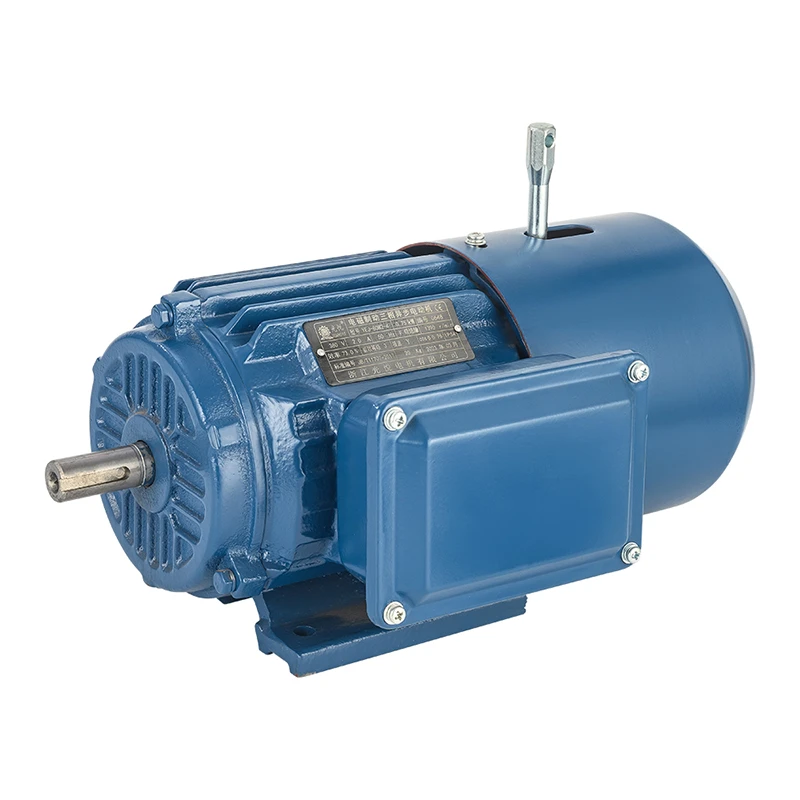
A weaker brake can be a safety hazard, especially in applications where quick and reliable stopping is required. For example, in a conveyor system, if the brake doesn't engage properly, the conveyor may continue to move, causing damage to the products or even endangering the workers. So, it's crucial to consider the altitude when using our Electromagnetic Brake Induction Motor 5.5KW with its integrated brake.
Adaptation and Solutions
So, what can you do to deal with these altitude-related issues? Well, there are a few things.
First, you can consider derating the motor. Derating means reducing the power output of the motor to compensate for the reduced cooling efficiency and other altitude-related factors. By running the motor at a lower power level, you can reduce the heat generation and ensure that the motor operates within a safe temperature range.
Second, you can improve the cooling system. This could involve adding external cooling fans or using liquid cooling systems. External cooling fans can increase the airflow around the motor, helping to carry away the heat more effectively. Liquid cooling systems, on the other hand, can provide even better cooling performance by circulating a coolant through the motor.
Third, for the brake performance, you may need to adjust the electrical parameters of the brake. This can be done by consulting with an electrical engineer or referring to the motor's technical documentation. By making these adjustments, you can ensure that the brake engages and disengages properly at high altitudes.
Our Product Range
We offer a variety of motors suitable for different applications, including those at high altitudes. For example, our Three Phase IMB5 Aluminum Frame Brake AC Motor is designed with a lightweight aluminum frame, which can help with heat dissipation. And our YEJ 460V 1700rpm Electric Motor for Driving Machine is a powerful option that can be adapted for various industrial driving needs.
Conclusion
In conclusion, altitude can have a significant influence on the performance of the Electromagnetic Brake Induction Motor 5.5KW. It affects the cooling efficiency, power output, and brake performance. But with the right knowledge and appropriate solutions, you can still use these motors effectively at high altitudes.
If you're in the market for a reliable Electromagnetic Brake Induction Motor 5.5KW or any of our other products, don't hesitate to reach out. We're here to help you find the best motor for your specific application, whether it's at sea level or high up in the mountains. Let's have a chat and see how we can work together to meet your needs.
References
- Electrical Engineering Handbook: Motor Performance and Environmental Factors
- Industrial Motor Application Guide: Altitude Effects and Mitigation Strategies