As a supplier of YE2 series electric motors, I am often asked about the braking methods available for these motors. The YE2 series electric motors are widely used in various industrial applications due to their high efficiency, reliability, and durability. Understanding the different braking methods can help users choose the most suitable option for their specific needs. In this blog post, I will introduce the common braking methods for YE2 series electric motors.
1. Mechanical Braking
Mechanical braking is one of the most straightforward methods for stopping an electric motor. It involves using a mechanical device to physically stop the rotation of the motor shaft. One of the common types of mechanical brakes used with YE2 series electric motors is the electromagnetic brake.
Electromagnetic Brake
An electromagnetic brake consists of a stationary part (the stator) and a rotating part (the rotor). When the brake is energized, an electromagnetic field is created, which causes the stator and rotor to engage. This engagement generates friction, which slows down and eventually stops the rotation of the motor shaft.
The advantage of using an electromagnetic brake is its quick response time. It can stop the motor within a short period, which is crucial in applications where rapid stopping is required, such as in conveyor systems or hoisting equipment. However, electromagnetic brakes require an external power source to operate, and they may generate some heat during operation.
2. Dynamic Braking
Dynamic braking is a method that uses the motor itself as a generator to dissipate the kinetic energy of the rotating shaft. When the power supply to the motor is cut off, the motor continues to rotate due to its inertia. By connecting a resistor across the motor terminals, the motor acts as a generator, converting the mechanical energy into electrical energy, which is then dissipated as heat in the resistor.
How Dynamic Braking Works
In a YE2 series electric motor, dynamic braking can be achieved by using a dynamic braking unit. This unit typically consists of a braking resistor and a control circuit. When the motor needs to be stopped, the control circuit disconnects the motor from the power supply and connects the braking resistor across the motor terminals.
The main advantage of dynamic braking is its simplicity and cost - effectiveness. It does not require any additional mechanical components, and it can be easily integrated into the motor control system. However, dynamic braking may not be suitable for applications where very precise stopping is required, as the braking torque decreases as the motor speed decreases.
3. Regenerative Braking
Regenerative braking is a more advanced braking method that not only stops the motor but also recovers the energy generated during the braking process. Similar to dynamic braking, the motor acts as a generator when the power supply is cut off. However, instead of dissipating the electrical energy as heat in a resistor, the energy is fed back into the power supply system.
Advantages of Regenerative Braking
Regenerative braking is highly efficient, as it can save energy by returning the braking energy to the power grid. This is particularly beneficial in applications where frequent starting and stopping are required, such as in elevators or electric vehicles. In addition, regenerative braking can reduce the heat generated during braking, which can extend the lifespan of the motor and other components.
However, regenerative braking requires a more complex control system and additional equipment, such as an inverter with regenerative capabilities. This makes it more expensive to implement compared to dynamic braking.
4. Plugging Braking
Plugging braking, also known as reverse - current braking, is a method that involves reversing the phase sequence of the power supply to the motor. When the phase sequence is reversed, the motor generates a torque in the opposite direction of the rotation, which quickly stops the motor.

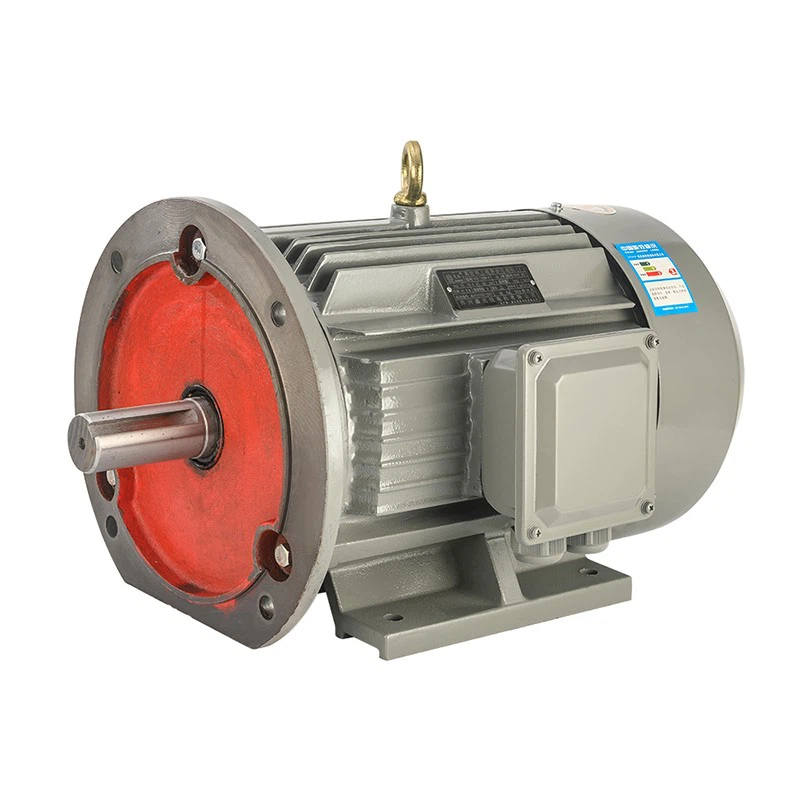
Process of Plugging Braking
In a YE2 series three - phase electric motor, plugging braking can be achieved by using a special control circuit. When the motor needs to be stopped, the control circuit reverses the connection of two of the three phases of the power supply. This creates a reverse torque, which opposes the rotation of the motor shaft.
The advantage of plugging braking is its high braking torque, which can stop the motor very quickly. However, plugging braking can cause a large current surge in the motor and the power supply system, which may damage the motor and other electrical components. Therefore, it is usually used in applications where the motor has a high inertia and the braking time needs to be very short.
Choosing the Right Braking Method
When choosing a braking method for a YE2 series electric motor, several factors need to be considered:
Application Requirements
The nature of the application is the most important factor. For example, if the application requires rapid and precise stopping, such as in a machine tool, an electromagnetic brake or plugging braking may be more suitable. If energy saving is a priority, regenerative braking should be considered.
Motor Characteristics
The power rating, speed, and inertia of the motor also affect the choice of braking method. Larger motors with high inertia may require more powerful braking methods, such as plugging braking or regenerative braking.
Cost
The cost of implementing the braking method, including the cost of the braking device and the control system, is also an important consideration. Dynamic braking is usually the most cost - effective option, while regenerative braking is the most expensive.
Conclusion
As a supplier of YE2 series electric motors, I understand the importance of choosing the right braking method for different applications. Each braking method has its own advantages and disadvantages, and the choice depends on various factors such as application requirements, motor characteristics, and cost.
If you are interested in our Three - phase Ac Motor 7.5 Hp 1440 Rpm 5.5 Kw, Three Phase Engine Shaded Pole Asynchronous Motor or YE2 - 80M2 - 4 1HP Three Phase Electric Motor, or if you have any questions about the braking methods for YE2 series electric motors, please feel free to contact us for procurement and negotiation. We have a professional team that can provide you with detailed technical support and solutions.
References
- Electric Motor Handbook, Second Edition, by Paul C. Krause, Oleg Wasynczuk, and Scott D. Sudhoff.
- Industrial Electric Motor Control, by Thomas G. Habecker.