

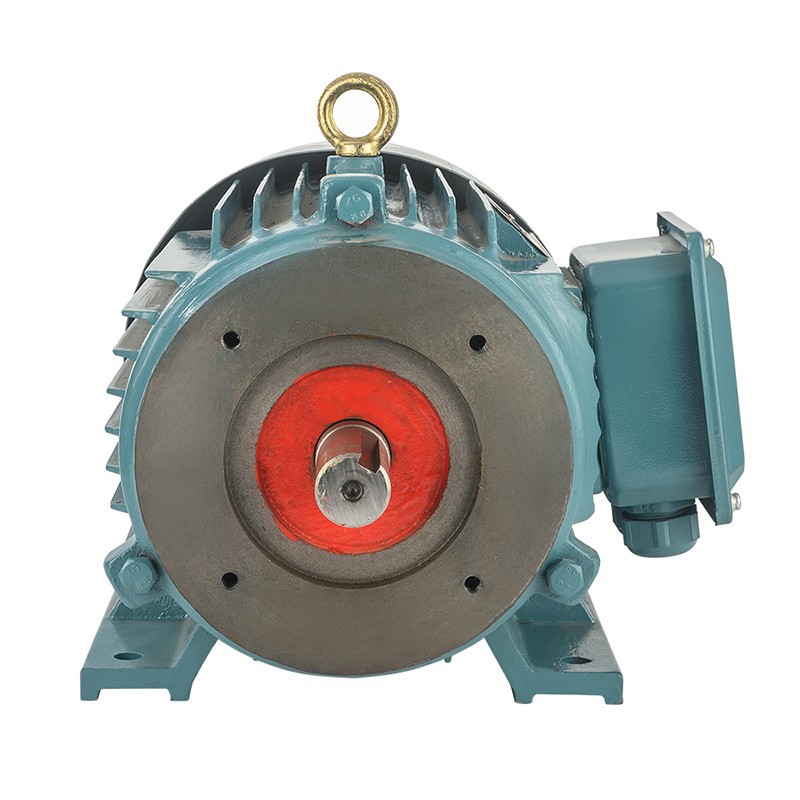
Hey there! As a supplier of Squirrel Cage Three Phase Asynchronous Motors, I often get asked about the bearing types used in these motors. So, I thought I'd share some insights on this topic to help you understand what goes into these workhorses of the industrial world.
Why Bearings Matter in Squirrel Cage Three Phase Asynchronous Motors
First off, let's talk about why bearings are so important. Bearings are like the joints in our bodies. They allow the moving parts of the motor, like the shaft, to rotate smoothly with minimal friction. In a Squirrel Cage Three Phase Asynchronous Motor, the bearings play a crucial role in ensuring the motor runs efficiently, quietly, and with a long lifespan.
Without proper bearings, the motor would experience excessive wear and tear, leading to increased energy consumption, frequent breakdowns, and ultimately, a shorter operational life. So, choosing the right bearing type is essential for the overall performance and reliability of the motor.
Common Bearing Types in Squirrel Cage Three Phase Asynchronous Motors
There are several types of bearings commonly used in Squirrel Cage Three Phase Asynchronous Motors. Each type has its own unique characteristics, advantages, and disadvantages, making them suitable for different applications and operating conditions.
Ball Bearings
Ball bearings are one of the most widely used bearing types in Squirrel Cage Three Phase Asynchronous Motors. They consist of a series of small balls held in place by a cage, which separates the balls and allows them to roll freely between the inner and outer races.
One of the main advantages of ball bearings is their low friction coefficient, which means they can operate at high speeds with minimal energy loss. They also have a relatively high load-carrying capacity, making them suitable for applications where the motor needs to handle moderate to heavy loads.
Another advantage of ball bearings is their ability to handle both radial and axial loads. Radial loads are those that act perpendicular to the shaft, while axial loads act parallel to the shaft. Ball bearings can handle a combination of these loads, making them versatile and suitable for a wide range of applications.
However, ball bearings also have some limitations. They are more sensitive to misalignment and shock loads than other bearing types, which can cause premature wear and failure. They also require regular lubrication to maintain their performance and prevent damage.
Roller Bearings
Roller bearings are another common bearing type used in Squirrel Cage Three Phase Asynchronous Motors. They are similar to ball bearings, but instead of balls, they use cylindrical or tapered rollers to support the load.
Roller bearings have a higher load-carrying capacity than ball bearings, making them suitable for applications where the motor needs to handle heavy loads. They are also more resistant to shock loads and misalignment than ball bearings, which makes them more durable and reliable in harsh operating conditions.
One of the main disadvantages of roller bearings is their higher friction coefficient compared to ball bearings. This means they require more energy to operate, which can result in increased energy consumption and reduced efficiency. They also tend to be more expensive than ball bearings, which can make them less cost-effective for some applications.

Sleeve Bearings
Sleeve bearings, also known as plain bearings, are a simple and cost-effective bearing type used in some Squirrel Cage Three Phase Asynchronous Motors. They consist of a cylindrical sleeve that fits around the shaft and provides a smooth surface for the shaft to rotate on.
Sleeve bearings have several advantages. They are relatively inexpensive and easy to install, making them a popular choice for low-cost applications. They also have a high load-carrying capacity and can handle both radial and axial loads.
Another advantage of sleeve bearings is their ability to operate in dirty or contaminated environments. Unlike ball and roller bearings, which require clean lubrication to function properly, sleeve bearings can tolerate some degree of contamination without significant damage.
However, sleeve bearings also have some limitations. They have a higher friction coefficient than ball and roller bearings, which means they require more energy to operate. They also tend to wear out faster than other bearing types, especially in high-speed applications.
Factors to Consider When Choosing a Bearing Type
When choosing a bearing type for a Squirrel Cage Three Phase Asynchronous Motor, there are several factors to consider. These factors include the motor's operating conditions, load requirements, speed, and cost.
Operating Conditions
The operating conditions of the motor, such as temperature, humidity, and vibration, can have a significant impact on the performance and lifespan of the bearings. For example, in high-temperature environments, bearings made of materials with high heat resistance, such as ceramic or stainless steel, may be required. In wet or humid environments, bearings with good corrosion resistance, such as sealed or coated bearings, may be necessary.
Load Requirements
The load requirements of the motor, including the magnitude and direction of the load, are also important considerations when choosing a bearing type. For applications with heavy radial loads, roller bearings may be the best choice. For applications with both radial and axial loads, ball bearings or a combination of ball and roller bearings may be required.
Speed
The speed at which the motor operates can also affect the choice of bearing type. Ball bearings are generally better suited for high-speed applications, as they have a lower friction coefficient and can operate at higher speeds with less heat generation. Roller bearings, on the other hand, are better suited for low to medium-speed applications, as they have a higher load-carrying capacity and can handle heavier loads.
Cost
Cost is always a consideration when choosing a bearing type. Ball bearings are generally the most cost-effective option, followed by roller bearings and sleeve bearings. However, the cost of the bearings should be weighed against their performance and lifespan to ensure that the overall cost of ownership is minimized.
Our Squirrel Cage Three Phase Asynchronous Motors and Bearing Options
As a supplier of Squirrel Cage Three Phase Asynchronous Motors, we offer a wide range of motors with different bearing options to meet the needs of our customers. Our motors are designed to provide reliable performance, high efficiency, and long service life, and we use only the highest quality bearings in our products.
Some of our popular motor models include the Water Pump Electric Motor Winding Motor, which is suitable for water pumping applications, the Horizontal Foot Mounting YE3 Asynchronous Motor, which is ideal for general industrial applications, and the Energy Saving Complete Copper 380V Motor, which is designed to provide energy-efficient operation.
We also offer customized motor solutions to meet the specific requirements of our customers. Whether you need a motor with a specific bearing type, size, or performance specification, our team of experts can work with you to design and manufacture a motor that meets your exact needs.
Contact Us for Your Motor Needs
If you're in the market for a Squirrel Cage Three Phase Asynchronous Motor, we'd love to hear from you. Our team of experts can help you choose the right motor and bearing type for your application, and we offer competitive pricing, fast delivery, and excellent customer service.
So, don't hesitate to contact us today to discuss your motor needs and get a quote. We look forward to working with you!
References
- Harris, T. A. (2001). Rolling Bearing Analysis. Wiley-Interscience.
- Jones, A. R. (2002). The Theory of Rolling Element Bearings. Cambridge University Press.
- Palmgren, A. (1990). Ball and Roller Bearing Engineering. SKF.


