

As a supplier of IE4 Ultra High Efficiency Asynchronous Motors, I am often asked about the power supply requirements for these advanced motors. In this blog post, I will delve into the key aspects of power supply for IE4 motors, shedding light on what users need to know to ensure optimal performance and energy efficiency.
Understanding IE4 Ultra High Efficiency Asynchronous Motors
IE4 Ultra High Efficiency Asynchronous Motors represent the pinnacle of motor technology in terms of energy efficiency. These motors are designed to minimize energy losses during operation, resulting in significant cost savings and reduced environmental impact. They are widely used in various industrial applications, including pumps, fans, compressors, and conveyors.
Voltage Requirements
One of the primary power supply requirements for IE4 Ultra High Efficiency Asynchronous Motors is the appropriate voltage. These motors are typically designed to operate within a specific voltage range, which is usually specified by the manufacturer. For most industrial applications, the standard voltage for three - phase motors is 380V, 400V, or 480V.
It is crucial to ensure that the power supply voltage matches the motor's rated voltage. Deviations from the rated voltage can have a significant impact on the motor's performance and efficiency. If the voltage is too low, the motor may draw more current to maintain its torque, leading to overheating and reduced efficiency. On the other hand, if the voltage is too high, it can cause insulation breakdown and damage to the motor windings.
For example, our Energy Saving Complete Copper 380V Motor is specifically designed to operate at 380V. Using this motor with a power supply voltage that is significantly different from 380V can lead to sub - optimal performance and potential damage.
Frequency Requirements
In addition to voltage, the frequency of the power supply is another critical factor. Most IE4 Ultra High Efficiency Asynchronous Motors are designed to operate at a standard frequency of 50Hz or 60Hz. The frequency of the power supply affects the motor's speed and torque characteristics.
A change in frequency can alter the motor's synchronous speed, which is directly proportional to the frequency. For example, a motor designed for 50Hz operation will have a different synchronous speed compared to the same motor operating at 60Hz. Therefore, it is essential to ensure that the power supply frequency matches the motor's rated frequency to maintain the desired speed and performance.
Power Quality
Power quality is an often - overlooked aspect of power supply requirements for IE4 motors. Poor power quality can include issues such as voltage sags, surges, harmonics, and flicker. These problems can cause additional stress on the motor, leading to increased energy consumption, reduced efficiency, and premature failure.
Harmonics, in particular, can be a significant concern. Non - linear loads in the electrical system can generate harmonics, which can distort the sinusoidal waveform of the power supply. IE4 motors are more sensitive to harmonics compared to lower - efficiency motors due to their advanced design and higher efficiency. To mitigate the effects of harmonics, it may be necessary to install harmonic filters or other power quality improvement devices.
Starting and Running Currents
When considering the power supply requirements, it is important to understand the motor's starting and running currents. The starting current of an IE4 Ultra High Efficiency Asynchronous Motor is typically several times higher than its rated running current. This high starting current can cause voltage drops in the electrical system, especially if the power supply has limited capacity.

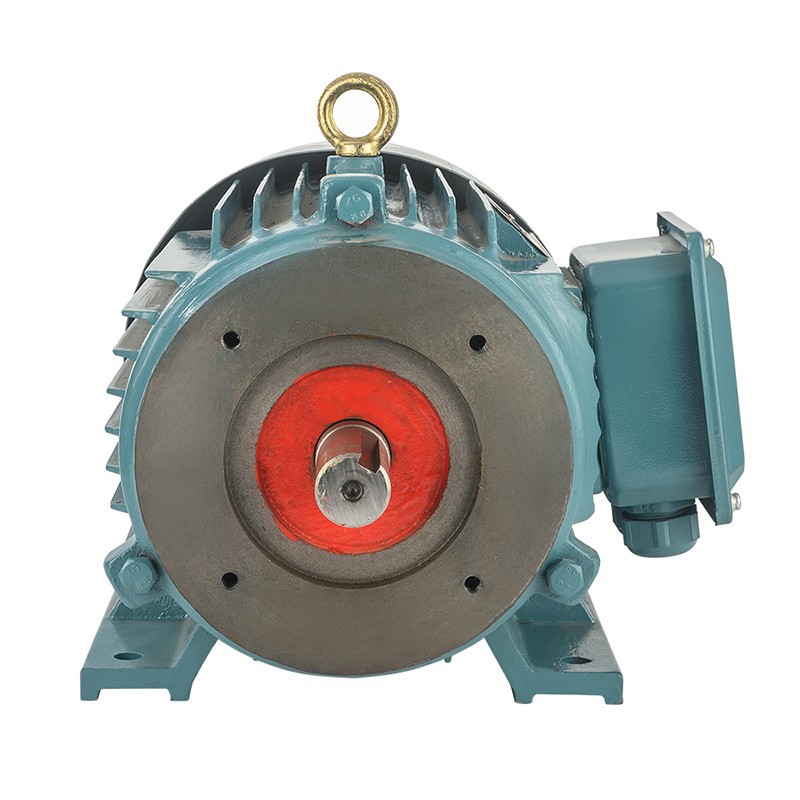
To ensure a smooth start, it may be necessary to use a soft - starter or a variable frequency drive (VFD). A soft - starter gradually increases the voltage applied to the motor during startup, reducing the starting current and minimizing the impact on the power supply. A VFD, on the other hand, can control both the motor's speed and starting current by adjusting the frequency and voltage of the power supply.
Connection Types
IE4 Ultra High Efficiency Asynchronous Motors can be connected in either a star (Y) or delta (Δ) configuration. The connection type depends on the motor's design and the power supply voltage. In a star connection, the line voltage is √3 times the phase voltage, while in a delta connection, the line voltage is equal to the phase voltage.
The correct connection type is crucial for the motor's performance and safety. Incorrect connection can lead to overheating, reduced efficiency, and even motor damage. It is important to follow the manufacturer's instructions when making the electrical connections.
Compatibility with Existing Electrical Systems
When installing an IE4 Ultra High Efficiency Asynchronous Motor, it is necessary to consider its compatibility with the existing electrical system. This includes checking the capacity of the electrical cables, circuit breakers, and other components. The motor's starting and running currents should be within the rated capacity of the electrical system to avoid overloading and potential safety hazards.
For example, if you are replacing an older, less - efficient motor with an IE4 motor, you may need to upgrade the electrical cables to handle the higher starting currents. Our Horizontal Foot Mounting YE3 Asynchronous Motor is designed to be compatible with a wide range of electrical systems, but proper assessment and potential upgrades may still be required.
Special Applications and Requirements
In some special applications, such as those in hazardous environments or with specific speed control requirements, additional power supply considerations may be necessary. For example, in a hazardous environment, the motor may need to be explosion - proof, which can affect the power supply requirements and installation methods.
For applications that require precise speed control, a VFD is often used. A VFD allows for variable speed operation by adjusting the frequency and voltage of the power supply. However, it is important to select a VFD that is compatible with the IE4 motor and the overall electrical system.
Impact on Energy Efficiency
Proper power supply is directly related to the energy efficiency of IE4 Ultra High Efficiency Asynchronous Motors. When the power supply meets all the requirements, the motor can operate at its maximum efficiency, resulting in significant energy savings over its lifetime.
By ensuring the correct voltage, frequency, and power quality, the motor can minimize energy losses and operate more smoothly. This not only reduces electricity costs but also contributes to a more sustainable and environmentally friendly operation.
Conclusion
In conclusion, the power supply requirements for IE4 Ultra High Efficiency Asynchronous Motors are complex and multifaceted. Voltage, frequency, power quality, starting and running currents, connection types, and compatibility with the existing electrical system all play crucial roles in ensuring the motor's optimal performance and energy efficiency.
As a supplier of IE4 motors, we are committed to providing our customers with the highest - quality products and technical support. If you are considering purchasing an IE4 Ultra High Efficiency Asynchronous Motor, such as our Water Pump Electric Motor Winding Motor, or have any questions about power supply requirements, we encourage you to contact us for detailed information and professional advice. We look forward to discussing your specific needs and helping you make the right choice for your application.
References
- "Electric Motors and Drives: Fundamentals, Types, and Applications" by Austin Hughes and Bill Drury.
- "Motor Efficiency Guide" published by the U.S. Department of Energy.


