

As a supplier of Squirrel Cage Three Phase Asynchronous Motors, I often receive inquiries from customers about various aspects of these motors, including how to reverse their rotation direction. In this blog, I'll share in - depth knowledge about reversing the rotation direction of a Squirrel Cage Three Phase Asynchronous Motor, providing clear and practical guidance.
Understanding the Basics of Squirrel Cage Three Phase Asynchronous Motors
Before delving into the method of reversing the rotation direction, it's essential to understand the fundamental working principle of Squirrel Cage Three Phase Asynchronous Motors. These motors are widely used in industrial and commercial applications due to their simplicity, reliability, and cost - effectiveness.
The rotation of the motor is driven by a rotating magnetic field created by the three - phase power supply. When the three - phase power is applied to the stator windings, a magnetic field rotates at a synchronous speed. The squirrel - cage rotor, which consists of conducting bars short - circuited at both ends by end rings, experiences an induced current due to the relative motion between the rotating magnetic field and the rotor. This induced current creates a magnetic field in the rotor, and the interaction between the stator's magnetic field and the rotor's magnetic field causes the rotor to rotate.
The Principle of Reversing Rotation Direction
The direction of rotation of a Squirrel Cage Three Phase Asynchronous Motor is determined by the phase sequence of the three - phase power supply. A three - phase power supply has a specific phase sequence, typically denoted as A - B - C. When the motor is connected to the power supply with this normal phase sequence, it rotates in a certain direction.
To reverse the rotation direction, we need to change the phase sequence of the power supply connected to the motor. By swapping any two of the three - phase power lines connected to the motor's stator windings, we can reverse the direction of the rotating magnetic field, and thus reverse the rotation direction of the rotor.
Step - by - Step Guide to Reversing the Rotation Direction
- Safety First: Before starting any work on the motor, ensure that the power supply to the motor is completely disconnected. This is crucial to prevent electric shock and other safety hazards. Use a lockout - tagout procedure to ensure that the power cannot be accidentally restored while you are working on the motor.
- Identify the Power Lines: Locate the three - phase power lines connected to the motor's terminal box. These lines are usually labeled as L1, L2, and L3 on the power side and T1, T2, and T3 on the motor side. In some cases, the labels may vary, but they generally follow a similar pattern.
- Select Two Lines to Swap: Choose any two of the three - phase power lines. For example, you can swap L1 and L2. Mark the lines clearly before disconnecting them to avoid confusion during re - connection.
- Disconnect the Lines: Using an appropriate screwdriver or other tools, carefully disconnect the two selected power lines from the motor's terminal box. Make sure to keep the other line connected.
- Re - connect the Lines: Swap the positions of the two disconnected lines and re - connect them to the motor's terminal box. Ensure that the connections are tight and secure to prevent loose connections, which can cause overheating and other problems.
- Inspect the Connections: After re - connecting the lines, double - check all the connections to ensure that there are no loose wires or incorrect connections. Also, make sure that the terminal box is properly closed and sealed to protect the connections from dust, moisture, and other environmental factors.
- Test the Motor: Re - connect the power supply to the motor. Start the motor and observe its rotation direction. If the motor rotates in the desired reversed direction, the operation is successful. If not, check the connections again to ensure that the correct two lines have been swapped.
Precautions
- Motor Compatibility: Some motors may have specific requirements or limitations regarding the reversal of rotation direction. Before attempting to reverse the rotation, refer to the motor's manual or consult the manufacturer to ensure that the motor can be safely reversed.
- Load Considerations: Reversing the rotation direction of a motor that is connected to a load, such as a pump or a conveyor, may have an impact on the load. For example, a water pump may not function properly if the rotation direction is reversed. Make sure to consider the load requirements and consult with the relevant engineers or technicians if necessary.
- Electrical Safety: Always follow proper electrical safety procedures when working on the motor. Wear appropriate personal protective equipment, such as insulated gloves and safety glasses, and use insulated tools to prevent electric shock.
Applications and Related Products
Our company offers a wide range of Squirrel Cage Three Phase Asynchronous Motors suitable for various applications. For example, if you are looking for a motor for a water pump, our Water Pump Electric Motor Winding Motor is a great choice. It is designed to provide reliable and efficient operation for water pumping systems.
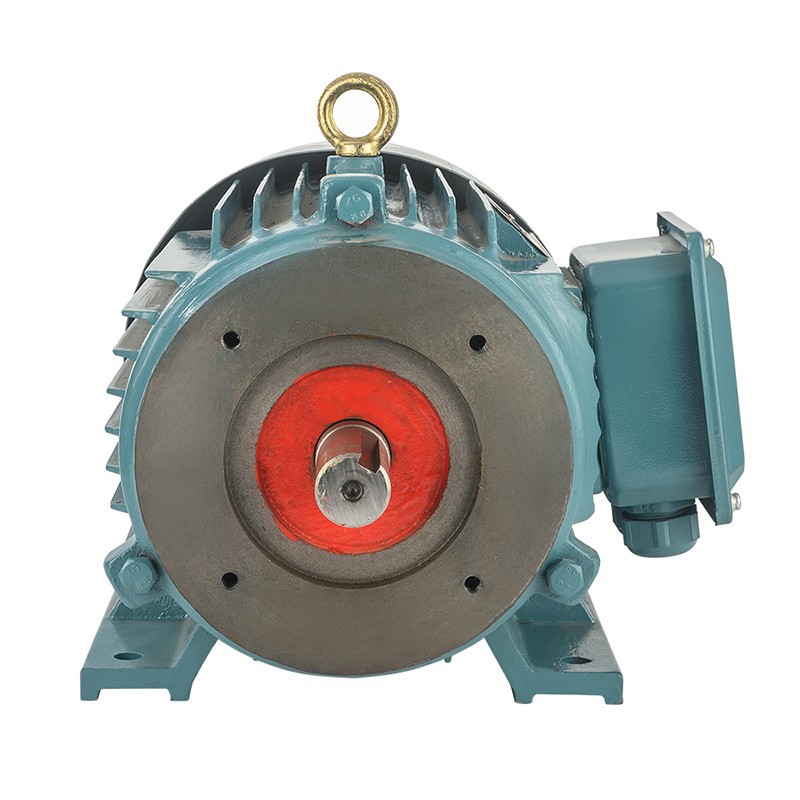

If energy - saving is a priority, our Energy Saving Complete Copper 380V Motor is an excellent option. It uses high - quality copper windings and advanced design techniques to reduce energy consumption and improve efficiency.
For applications that require a horizontal foot - mounting motor, our Horizontal Foot Mounting YE3 Asynchronous Motor offers stable and reliable performance. It is easy to install and suitable for a variety of industrial and commercial applications.
Conclusion
Reversing the rotation direction of a Squirrel Cage Three Phase Asynchronous Motor is a relatively simple process based on changing the phase sequence of the power supply. By following the steps and precautions mentioned above, you can safely and effectively reverse the rotation direction of the motor.
If you have any further questions about Squirrel Cage Three Phase Asynchronous Motors, including reversing rotation direction, motor selection, or installation, please feel free to contact us. Our professional team is ready to provide you with detailed technical support and help you choose the most suitable motor for your specific needs. We look forward to starting a fruitful cooperation with you in the field of motor procurement and application.
References
- Fitzgerald, A. E., Kingsley, C., & Umans, S. D. (2003). Electric Machinery. McGraw - Hill.
- Chapman, S. J. (2012). Electric Machinery Fundamentals. McGraw - Hill.


