

As a supplier of YVF frequency variable motors, I often receive inquiries from customers about how to calculate the power consumption of these motors. Understanding the power consumption is crucial for both cost - effectiveness and efficient operation of industrial equipment. In this blog, I will guide you through the process of calculating the power consumption of a YVF frequency variable motor.
Basic Concepts of YVF Frequency Variable Motors
Before delving into the calculation of power consumption, let's briefly introduce YVF frequency variable motors. These motors are designed to adjust their speed according to different load requirements. They are widely used in various industrial applications, such as conveyor systems, fans, and pumps. The ability to vary the speed makes them more energy - efficient compared to traditional fixed - speed motors.
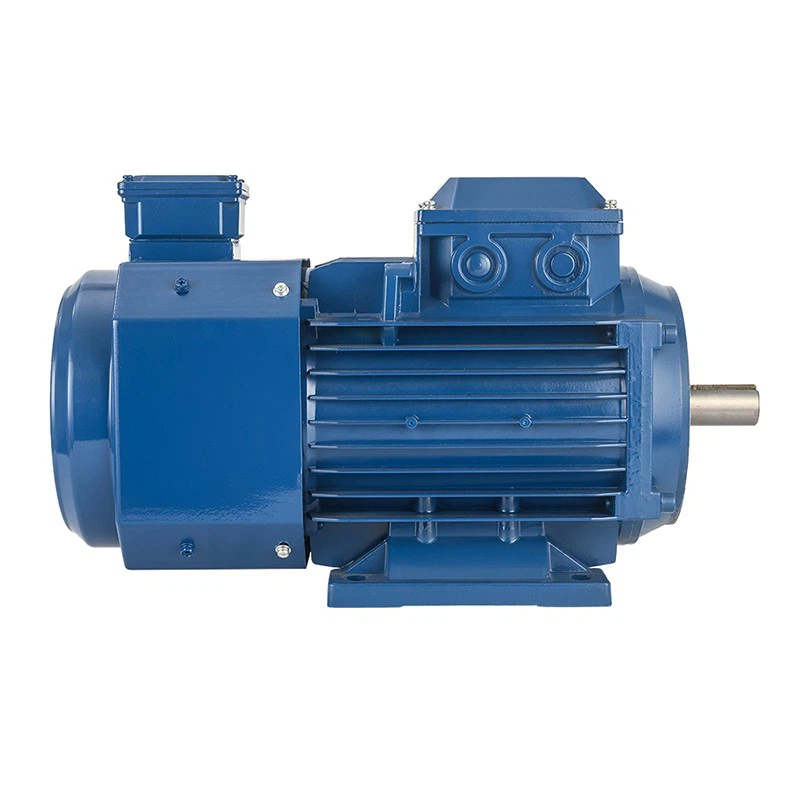
There are several types of YVF frequency variable motors available on the market, including the YVF2 Frequency Control Three - phase Asynchronous Motor, Inverter Adjustable 50Hz 60Hz Three Phase Motor, and 2HP 5HP 10HP 20HP Variable Speed Electric Motor. Each type has its own characteristics and is suitable for different working conditions.
Factors Affecting the Power Consumption of YVF Frequency Variable Motors
The power consumption of a YVF frequency variable motor is influenced by multiple factors:
1. Motor Rated Power
The rated power of the motor is the power output when the motor operates under rated conditions. It is usually marked on the motor nameplate. However, in actual operation, the motor may not always operate at the rated power. For example, if the load on the motor is relatively light, the actual power consumption will be lower than the rated power.
2. Load Torque
Load torque refers to the resistance that the motor needs to overcome during operation. The greater the load torque, the more power the motor needs to consume. In industrial applications, the load torque may change with different working processes. For instance, in a conveyor system, the load torque will increase when the conveyor is carrying more goods.
3. Operating Frequency
One of the significant advantages of YVF frequency variable motors is the ability to adjust the operating frequency. According to the motor speed formula (n = 60f(1 - s)/p) (where (n) is the motor speed, (f) is the operating frequency, (s) is the slip rate, and (p) is the number of pole pairs), by changing the frequency, the motor speed can be adjusted. Generally, the power consumption of the motor is proportional to the cube of the speed. Therefore, reducing the operating frequency can significantly reduce the power consumption.
4. Motor Efficiency
Motor efficiency is an important factor affecting power consumption. It represents the ratio of the output power of the motor to the input power. A higher - efficiency motor can convert more electrical energy into mechanical energy, thereby reducing power consumption. The efficiency of YVF frequency variable motors may vary with different operating frequencies and load conditions.
Calculation Methods for Power Consumption
There are two main methods to calculate the power consumption of a YVF frequency variable motor: the theoretical calculation method and the actual measurement method.
Theoretical Calculation Method
The theoretical calculation of power consumption is based on the motor's electrical parameters and operating conditions. The basic formula for calculating the power of a three - phase motor is:
(P=\sqrt{3}UI\cos\varphi)
where (P) is the power (in kilowatts, kW), (U) is the line voltage (in volts, V), (I) is the line current (in amperes, A), and (\cos\varphi) is the power factor.
However, in the case of a YVF frequency variable motor, the values of (U), (I), and (\cos\varphi) will change with the operating frequency and load torque. To calculate the power consumption more accurately, we need to consider the motor's performance curve provided by the manufacturer.
For example, assume that we know the rated power (P_{rated}) of the motor, the load rate (\beta) (the ratio of the actual load torque to the rated load torque), and the efficiency (\eta) at the current operating point. The actual power consumption (P_{actual}) can be calculated as:
(P_{actual}=\frac{\beta P_{rated}}{\eta})
Let's take a 2HP 5HP 10HP 20HP Variable Speed Electric Motor as an example. Suppose the rated power of the motor is (P_{rated}=5HP) (1HP is approximately equal to 0.746kW, so (P_{rated}=5\times0.746 = 3.73kW)). If the load rate (\beta = 0.8) and the efficiency (\eta = 0.9) at the current operating point, then the actual power consumption is:

(P_{actual}=\frac{0.8\times3.73}{0.9}\approx3.31kW)
Actual Measurement Method
The actual measurement method is more accurate for determining the power consumption of a YVF frequency variable motor. We can use power meters to measure the electrical parameters of the motor in real - time.
First, install a power meter at the input end of the motor. The power meter can measure the voltage, current, power factor, and power consumption of the motor. By recording the power consumption data over a certain period of time, we can calculate the total power consumption.
For example, if the power meter shows that the average power consumption of the motor is (P = 3kW) and the motor operates for (t = 8) hours a day, then the daily power consumption (E) is:
(E=P\times t=3\times8 = 24kWh)
Strategies to Reduce Power Consumption
Based on the above analysis, here are some strategies to reduce the power consumption of YVF frequency variable motors:
1. Optimize the Operating Frequency
According to the load requirements, adjust the operating frequency of the motor in a timely manner. For light - load conditions, reducing the operating frequency can significantly reduce the power consumption.
2. Select the Appropriate Motor
When selecting a motor, choose a motor with a suitable rated power according to the actual load requirements. Avoid using a motor with a much larger rated power than the actual load, which will lead to low - load operation and increased power consumption.
3. Improve Motor Efficiency
Regularly maintain the motor to ensure its good operating condition. Check the motor bearings, windings, and cooling system to improve the motor efficiency.
Conclusion
Calculating the power consumption of a YVF frequency variable motor is a complex process that requires considering multiple factors such as motor rated power, load torque, operating frequency, and motor efficiency. By using the theoretical calculation method or the actual measurement method, we can estimate the power consumption of the motor. As a supplier of YVF frequency variable motors, we are committed to providing high - quality products and professional technical support to help our customers reduce energy consumption and improve production efficiency.
If you are interested in our YVF2 Frequency Control Three - phase Asynchronous Motor, Inverter Adjustable 50Hz 60Hz Three Phase Motor, 2HP 5HP 10HP 20HP Variable Speed Electric Motor or other products, please feel free to contact us for further negotiation on procurement. We look forward to cooperating with you to achieve mutual benefits.
References
- Motor Design and Application Handbook
- Electrical Engineering Principles and Applications textbooks


