

As a supplier of Squirrel Cage Three Phase Asynchronous Motors, I've witnessed firsthand the pivotal role that stator core materials play in determining the performance of these motors. In this blog, I'll delve into the ways in which different stator core materials can impact the efficiency, power output, and overall reliability of a Squirrel Cage Three Phase Asynchronous Motor.
Understanding the Basics of Squirrel Cage Three Phase Asynchronous Motors
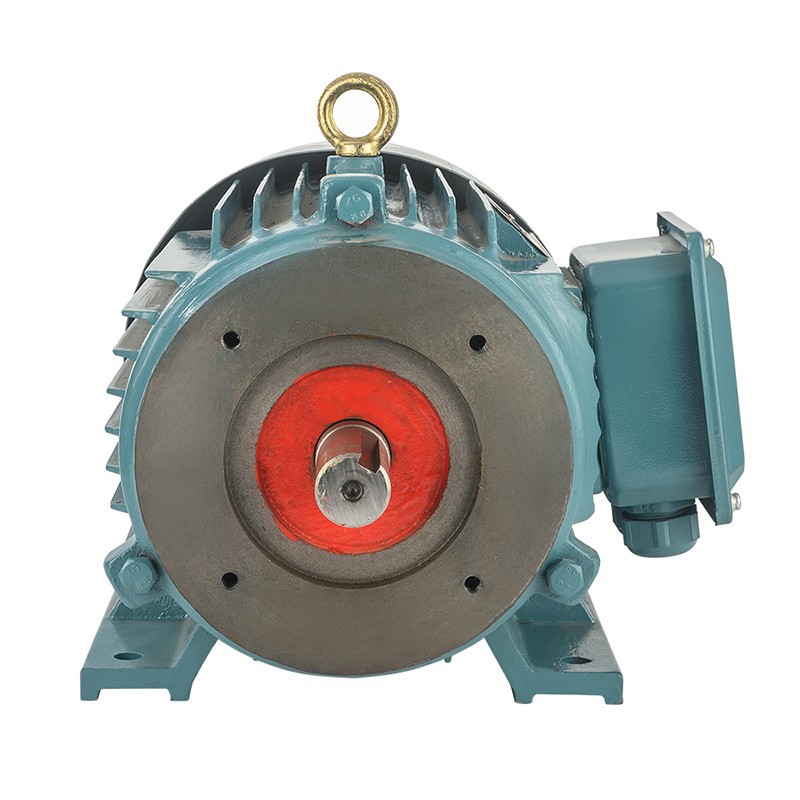
Before we explore the influence of stator core materials, let's briefly review how a Squirrel Cage Three Phase Asynchronous Motor operates. These motors are widely used in industrial and commercial applications due to their simplicity, robustness, and cost - effectiveness. They consist of a stator, which is the stationary part of the motor, and a rotor, which is the rotating part. The stator contains a set of windings that are connected to a three - phase power supply. When an alternating current is applied to these windings, a rotating magnetic field is created. The rotor, which is in the form of a squirrel cage, has conducting bars short - circuited at both ends. The rotating magnetic field induces currents in the rotor bars, which in turn creates a magnetic field that interacts with the stator's magnetic field, causing the rotor to rotate.
The Role of the Stator Core
The stator core is a crucial component of the motor. Its main function is to provide a low - reluctance path for the magnetic flux generated by the stator windings. This allows the magnetic field to be efficiently transferred from the stator to the rotor, which is essential for the motor's operation. The choice of stator core material can significantly affect the motor's performance in several ways.
Core Losses
One of the most important factors affected by the stator core material is core losses. Core losses consist of hysteresis losses and eddy current losses. Hysteresis losses occur due to the repeated magnetization and demagnetization of the core material as the alternating magnetic field changes direction. Eddy current losses, on the other hand, are caused by the induction of circulating currents within the core material itself. These losses result in the generation of heat, which not only reduces the motor's efficiency but can also lead to premature failure of the motor if not properly managed.
Materials with low hysteresis and eddy current losses are highly desirable for stator cores. For example, electrical steels, which are specifically designed for use in electrical machines, have low hysteresis coefficients and high electrical resistivity. This helps to minimize both hysteresis and eddy current losses, resulting in a more efficient motor.
Magnetic Permeability
Magnetic permeability is another critical property of stator core materials. It measures how easily a material can be magnetized. A high magnetic permeability means that the material can support a large magnetic flux density with a relatively small magnetic field strength. This is important because it allows the motor to generate a stronger magnetic field, which in turn can increase the motor's torque and power output.
Materials such as silicon steel have high magnetic permeability, making them ideal for use in stator cores. By using a high - permeability material, the motor can achieve a higher power density, which means it can deliver more power in a smaller physical size.
Saturation Flux Density
The saturation flux density of a stator core material is the maximum magnetic flux density that the material can support before it becomes saturated. Once the material is saturated, any further increase in the magnetic field strength will not result in a proportional increase in the magnetic flux density. This can limit the motor's performance, especially at high loads.
Materials with high saturation flux densities are preferred for stator cores, as they allow the motor to operate at higher magnetic field strengths without saturating. This can improve the motor's torque and power capabilities, especially in applications where high - load operation is required.
Different Types of Stator Core Materials and Their Impact on Performance
Silicon Steel
Silicon steel is the most commonly used material for stator cores in Squirrel Cage Three Phase Asynchronous Motors. It is an alloy of iron and silicon, with silicon content typically ranging from 1% to 4%. The addition of silicon increases the electrical resistivity of the steel, which helps to reduce eddy current losses. At the same time, silicon steel has low hysteresis losses and high magnetic permeability, making it an excellent choice for motor applications.
Motors with silicon steel stator cores are known for their high efficiency, good power factor, and reliable performance. They are suitable for a wide range of applications, from small household appliances to large industrial machinery. For example, our [Water Pump Electric Motor Winding Motor](/three - phase - asynchronous - motor/ye3 - ye4 - high - efficiency - electric - motor/water - pump - electric - motor - winding - motor.html) uses high - quality silicon steel stator cores to ensure efficient and reliable operation.
Amorphous Metals
Amorphous metals are a relatively new type of material that has shown great potential for use in stator cores. These materials have a disordered atomic structure, which gives them unique magnetic properties. Amorphous metals have extremely low hysteresis losses, much lower than traditional silicon steels. This makes them very attractive for applications where high efficiency is required.
However, amorphous metals also have some limitations. They have lower saturation flux densities compared to silicon steels, which can limit the motor's power output at high loads. Additionally, they are more expensive and difficult to process, which can increase the manufacturing cost of the motor. Despite these challenges, amorphous metals are being increasingly used in high - efficiency motors, such as our [Energy Saving Complete Copper 380V Motor](/three - phase - asynchronous - motor/ye3 - ye4 - high - efficiency - electric - motor/energy - saving - complete - copper - 380v - motor.html), where the benefits of reduced losses outweigh the higher cost.
Soft Magnetic Composites (SMCs)
Soft Magnetic Composites are made by mixing ferromagnetic powder particles with an insulating binder. These materials offer several advantages over traditional laminated cores. SMCs have isotropic magnetic properties, which means that their magnetic performance is the same in all directions. This allows for more flexible motor design and can reduce the complexity of the manufacturing process.
SMCs also have relatively low eddy current losses, especially at high frequencies. However, they generally have lower magnetic permeability and saturation flux densities compared to silicon steels. As a result, they are more suitable for applications where size and weight reduction are important, such as in some portable or aerospace applications. Our [Horizontal Foot Mounting YE3 Asynchronous Motor](/three - phase - asynchronous - motor/ye3 - ye4 - high - efficiency - electric - motor/horizontal - foot - mounting - ye3 - asynchronous.html) incorporates advanced design concepts that can take advantage of the unique properties of SMCs in certain configurations.

Impact on Motor Efficiency and Energy Consumption
The choice of stator core material has a direct impact on the motor's efficiency and energy consumption. Motors with low - loss stator core materials, such as silicon steel or amorphous metals, can operate more efficiently, which means they convert a higher percentage of the electrical energy input into mechanical energy output. This not only reduces the operating cost of the motor but also helps to conserve energy and reduce greenhouse gas emissions.
In today's energy - conscious world, energy efficiency is a major consideration for many customers. By offering motors with high - performance stator core materials, we can provide our customers with motors that not only meet their power requirements but also help them save on energy costs in the long run.
Impact on Motor Reliability and Lifespan
The stator core material can also affect the motor's reliability and lifespan. Motors with low - loss stator core materials generate less heat during operation. This reduces the thermal stress on the motor components, such as the windings and insulation, which can extend the motor's lifespan and reduce the likelihood of premature failure.
In addition, materials with good mechanical properties, such as high strength and toughness, can withstand the mechanical stresses and vibrations that occur during motor operation. This helps to ensure the long - term reliability of the motor, especially in harsh operating environments.
Conclusion
In conclusion, the stator core material plays a crucial role in determining the performance, efficiency, reliability, and lifespan of a Squirrel Cage Three Phase Asynchronous Motor. As a supplier, we understand the importance of choosing the right stator core material for each application. Whether it's silicon steel for general - purpose applications, amorphous metals for high - efficiency requirements, or soft magnetic composites for specialized designs, we are committed to providing our customers with motors that offer the best performance and value.
If you are in the market for a Squirrel Cage Three Phase Asynchronous Motor and would like to learn more about how our products can meet your specific needs, we invite you to contact us for a procurement discussion. We have a team of experts who can provide you with detailed information and help you select the most suitable motor for your application.
References
- Fitzgerald, A. E., Kingsley, C., & Umans, S. D. (2003). Electric Machinery. McGraw - Hill.
- Chapman, S. J. (2012). Electric Machinery Fundamentals. McGraw - Hill.
- Pillay, P., & Krishnan, R. (1998). Electric Motor Drives: Modeling, Analysis, and Control. IEEE Press.


