

Hey there! As a supplier of High Efficiency IE3 Explosion - proof Motors, I often get asked if these motors produce less heat than lower - efficiency motors. Let's dive right into this topic and break it down.
First off, what are High Efficiency IE3 Explosion - proof Motors? Well, these motors, like our High Efficiency IE3 Explosion-proof Motor, are designed to meet high - efficiency standards. The IE3 standard is all about reducing energy consumption and waste. These motors are also built to be explosion - proof, which means they can be used in hazardous environments where there's a risk of explosions.
On the other hand, lower - efficiency motors are those that don't meet the IE3 standards. They might be older models or motors that are just not as well - engineered in terms of energy efficiency.
Now, let's talk about heat production. Heat is basically a form of energy loss in motors. When a motor is running, not all of the electrical energy it consumes is converted into mechanical energy. Some of it is lost as heat. The more energy a motor loses as heat, the less efficient it is.
High Efficiency IE3 Explosion - proof Motors are designed to minimize this energy loss. They use advanced materials and better engineering techniques. For example, the windings in these motors are made of high - quality copper that has lower resistance. Lower resistance means less heat is generated when electricity flows through the windings. In contrast, lower - efficiency motors might use lower - quality materials or have a design that causes more resistance, leading to more heat production.
Another factor is the motor's cooling system. High Efficiency IE3 Explosion - proof Motors usually have more efficient cooling systems. They might have better ventilation designs or use advanced cooling fans. These features help to dissipate the heat that is produced more quickly, keeping the motor at a lower temperature.
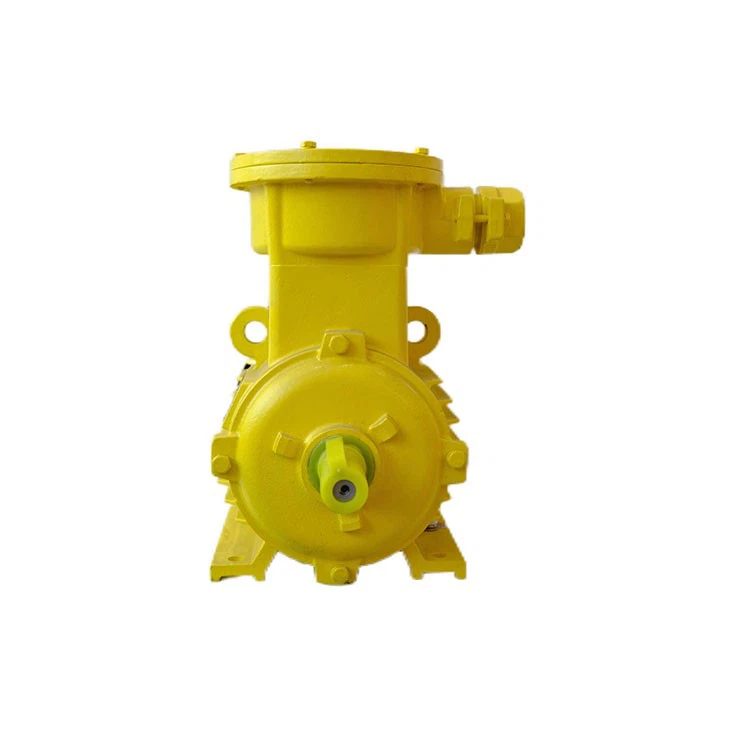
Let's take a look at a specific example, our YBX3 Three Phase Explosion Proof Motor. This motor is a great representative of the High Efficiency IE3 class. It's been tested under various conditions, and the results show that it runs cooler compared to lower - efficiency motors of the same power rating.
We also have the YBX3-100L2-4 3kw Induction Motor IP55. This motor is not only explosion - proof but also highly efficient. In real - world applications, customers have reported that it stays much cooler than the older, less efficient motors they used to have.
The benefits of a motor that produces less heat are numerous. For starters, it means a longer lifespan for the motor. Heat can cause the insulation in the motor to break down over time, leading to short - circuits and motor failures. By running cooler, High Efficiency IE3 Explosion - proof Motors can last much longer, which saves you money in the long run.
Less heat also means better performance. When a motor gets too hot, its efficiency drops even further. This is because the increased temperature can cause the electrical resistance in the motor to go up, which in turn leads to more energy loss. A cooler - running motor can maintain its efficiency and performance over a longer period.
In addition, in hazardous environments, a cooler - running motor is much safer. Lower heat levels reduce the risk of ignition in areas where there are flammable gases or dust. This is especially important for industries like oil and gas, mining, and chemical processing.
So, to answer the question, yes, High Efficiency IE3 Explosion - proof Motors do produce less heat than lower - efficiency motors. This is due to their advanced design, high - quality materials, and efficient cooling systems.
If you're in the market for a motor that can save you energy, last longer, and operate safely in hazardous environments, then our High Efficiency IE3 Explosion - proof Motors are the way to go. We've got a wide range of models to suit different needs and applications.

If you're interested in learning more or want to discuss your specific requirements, don't hesitate to reach out. We're here to help you make the best choice for your business.
References
- Electrical Engineering Handbook: Motor Efficiency and Heat Dissipation
- Industry Reports on High - Efficiency Motor Performance


