

As a supplier of YY 220V 0.75KW 1.5KW Single Phase Motors, I often receive inquiries from customers about the motor's application in various environments. One question that has come up frequently is whether this type of motor can be used in a vacuum environment. In this blog post, I will delve into this topic and provide a comprehensive analysis based on scientific principles and practical considerations.
Understanding the YY 220V 0.75KW 1.5KW Single Phase Motor
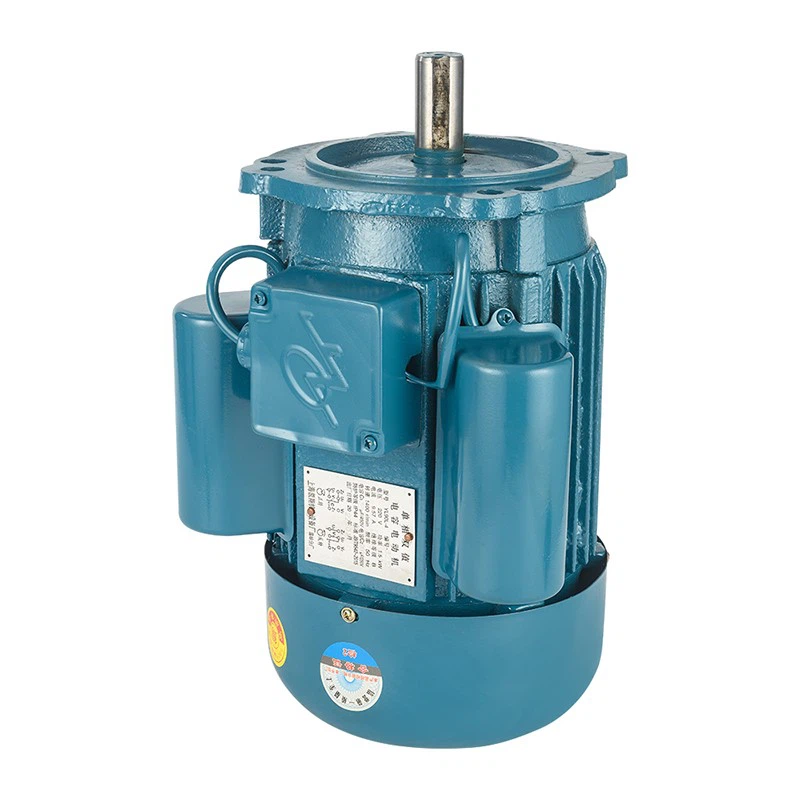
Before discussing its usability in a vacuum environment, let's first understand the basic characteristics of the YY 220V 0.75KW 1.5KW Single Phase Motor. These motors are designed to operate on a single - phase power supply of 220V, with power ratings of either 0.75KW or 1.5KW. They are commonly used in a wide range of applications, such as small household appliances, light industrial equipment, and ventilation systems.
The motor works based on the principle of electromagnetic induction. When an alternating current is applied to the stator windings, it creates a rotating magnetic field. This rotating magnetic field then induces a current in the rotor, causing it to rotate. The design of the motor includes components such as the stator, rotor, capacitor (for starting and running), and bearings.
Challenges in a Vacuum Environment
A vacuum environment presents several unique challenges for electrical motors, including the YY 220V 0.75KW 1.5KW Single Phase Motor.
Heat Dissipation
One of the primary challenges is heat dissipation. In a normal atmosphere, motors dissipate heat through convection and radiation. Convection occurs when the surrounding air absorbs the heat from the motor's surface and carries it away. However, in a vacuum, there is no air to facilitate convection. As a result, the motor can only rely on radiation to dissipate heat. Radiation is a much less efficient method of heat transfer compared to convection, especially for small - to medium - sized motors like the YY series.
If the heat generated by the motor during operation cannot be effectively dissipated, the temperature of the motor will rise rapidly. Excessive temperature can lead to insulation breakdown, reduced motor efficiency, and even permanent damage to the motor.
Lubrication of Bearings
Another challenge is the lubrication of bearings. Most bearings in motors are lubricated with grease or oil. In a vacuum, the lubricant can evaporate or outgas. Evaporation of the lubricant can lead to a loss of lubrication, causing increased friction and wear in the bearings. This can significantly reduce the lifespan of the motor and may lead to mechanical failures.
Corona Discharge
In a vacuum, the absence of air can also increase the risk of corona discharge. Corona discharge occurs when the electric field around the motor's conductors is strong enough to ionize the surrounding medium. In a normal atmosphere, the air acts as a dielectric and can withstand a certain amount of electric field before ionization occurs. However, in a vacuum, there is no such dielectric protection. Corona discharge can cause damage to the insulation of the motor windings, leading to short - circuits and motor failure.
Adaptations for Vacuum Use
Despite these challenges, it is possible to adapt the YY 220V 0.75KW 1.5KW Single Phase Motor for use in a vacuum environment with some modifications.
Heat Dissipation Solutions
To improve heat dissipation, heat pipes or thermally conductive materials can be used. Heat pipes are highly efficient heat transfer devices that can transfer heat from the motor to a heat sink located outside the vacuum chamber. Thermally conductive materials, such as copper or aluminum, can be used to increase the surface area for radiation and improve heat transfer within the motor.
Lubrication
For bearing lubrication, special vacuum - compatible lubricants can be used. These lubricants are designed to have low vapor pressure and high resistance to evaporation in a vacuum environment. Additionally, sealed bearings can be employed to prevent the loss of lubricant and the ingress of contaminants.
Corona Protection
To prevent corona discharge, the motor's insulation can be improved. This can include using high - quality insulation materials with high dielectric strength and proper insulation design to reduce the electric field strength around the conductors.

Applications in Vacuum - Related Industries
Even with the challenges and necessary adaptations, there are potential applications for the YY 220V 0.75KW 1.5KW Single Phase Motor in vacuum - related industries.
In some small - scale vacuum systems, such as laboratory vacuum chambers for research purposes, the motor can be used to drive small pumps or ventilation fans. These applications may not require extremely high - power motors, and with proper adaptations, the YY series motors can meet the requirements.
Our Product Portfolio
As a supplier, we offer a range of single - phase motors that are suitable for different applications. In addition to the YY 220V 0.75KW 1.5KW Single Phase Motor, we also have other models that may be of interest to you.
Our YC Capacitor Start Single Phase Induction Motor IP44 is designed for applications that require high starting torque. It features a capacitor - start mechanism, which provides a high starting current to overcome the initial inertia of the load.
The 2 Poles Dual Capacitors 1 Phase Motor Fan Motor is specifically designed for fan applications. It has a compact design and high efficiency, making it ideal for ventilation systems.
We also have the Hot Selling YL Single Phase Asynchronous Motor, which is widely used in light industrial equipment and household appliances.
Contact Us for Purchase and Consultation
If you are interested in our YY 220V 0.75KW 1.5KW Single Phase Motor or any other products in our portfolio, and you have specific requirements for vacuum applications, we are here to help. Our team of experts can provide you with detailed technical advice and customized solutions. Whether you need a standard motor or a modified version for a vacuum environment, we can work with you to meet your needs.
Please feel free to reach out to us for more information, product samples, or to start a procurement negotiation. We look forward to serving you and contributing to the success of your projects.
References
- Fitzgerald, A. E., Kingsley, C., Jr., & Umans, S. D. (2003). Electric Machinery. McGraw - Hill.
- Chapman, S. J. (2012). Electric Machinery Fundamentals. McGraw - Hill.
- Laughton, M. A., & Warne, D. R. (Eds.). (2003). Electrical Engineer's Reference Book. Newnes.


