

Hey there! As a supplier of Squirrel Cage Three Phase Asynchronous Motors, I often get asked about the thermal protection methods for these motors. In this blog post, I'll walk you through what thermal protection is, why it's important, and the different methods you can use to protect your Squirrel Cage Three Phase Asynchronous Motor.
First off, let's talk about why thermal protection is a big deal. Squirrel Cage Three Phase Asynchronous Motors are workhorses in many industrial and commercial applications. They power everything from conveyor belts to Water Pump Electric Motor Winding Motor and more. But like any piece of equipment, they generate heat when they're running. If the temperature gets too high, it can damage the motor's insulation, windings, and other components. This not only shortens the motor's lifespan but can also lead to costly breakdowns and downtime.
So, what are the thermal protection methods available for Squirrel Cage Three Phase Asynchronous Motors? Let's take a look.
1. Overload Relays
Overload relays are one of the most common thermal protection devices used with Squirrel Cage Three Phase Asynchronous Motors. These relays work by monitoring the current flowing through the motor. When the current exceeds a pre - set value for a certain period, it indicates that the motor is overloaded and generating more heat than normal.
The overload relay has a heating element that heats up as the current increases. When the temperature of the heating element reaches a certain point, it trips a switch that disconnects the motor from the power supply. This helps prevent the motor from overheating and getting damaged.
Overload relays are relatively simple and cost - effective. They come in different types, such as thermal overload relays and electronic overload relays. Thermal overload relays use a bimetallic strip that bends when heated, while electronic overload relays use electronic circuits to measure and monitor the current.
2. Thermistors
Thermistors are another popular thermal protection method. A thermistor is a type of resistor whose resistance changes with temperature. In a Squirrel Cage Three Phase Asynchronous Motor, thermistors are usually embedded in the motor windings.
As the temperature of the windings increases, the resistance of the thermistor also changes. This change in resistance is detected by a control circuit, which can then take action to protect the motor. For example, if the temperature gets too high, the control circuit can send a signal to a contactor to disconnect the motor from the power supply.
Thermistors offer more accurate temperature sensing compared to overload relays. They can detect local hot spots in the motor windings, which is especially useful in preventing insulation damage due to overheating.
3. Thermal Switches
Thermal switches are simple yet effective thermal protection devices. These switches are usually mounted on the motor frame or near the windings. They contain a bimetallic strip that bends when heated.
When the temperature of the motor reaches a pre - set level, the bimetallic strip bends enough to open or close a contact. This contact can be used to control a relay or a contactor, which then disconnects the motor from the power supply.
Thermal switches are easy to install and are often used as a secondary protection method in addition to overload relays or thermistors.
4. Temperature Sensors and Controllers
For more advanced thermal protection, temperature sensors and controllers can be used. These systems use high - precision temperature sensors, such as RTDs (Resistance Temperature Detectors) or thermocouples, to measure the temperature of the motor at multiple points.
The temperature data is then sent to a controller, which can analyze the data and make decisions based on pre - programmed algorithms. The controller can adjust the motor's operating parameters, such as reducing the speed or disconnecting the motor if the temperature exceeds safe limits.
Temperature sensors and controllers offer the highest level of accuracy and flexibility in thermal protection. They are commonly used in large - scale industrial applications where precise temperature control is crucial.
5. Cooling Systems
In addition to the above protection methods, proper cooling is also an important part of thermal management for Squirrel Cage Three Phase Asynchronous Motors. There are several types of cooling systems available.
Natural Cooling
Natural cooling relies on the natural flow of air around the motor to dissipate heat. Motors with natural cooling are usually designed with fins on the motor housing to increase the surface area for heat transfer. This is a simple and cost - effective cooling method, but it is only suitable for small - to medium - sized motors with relatively low power ratings.
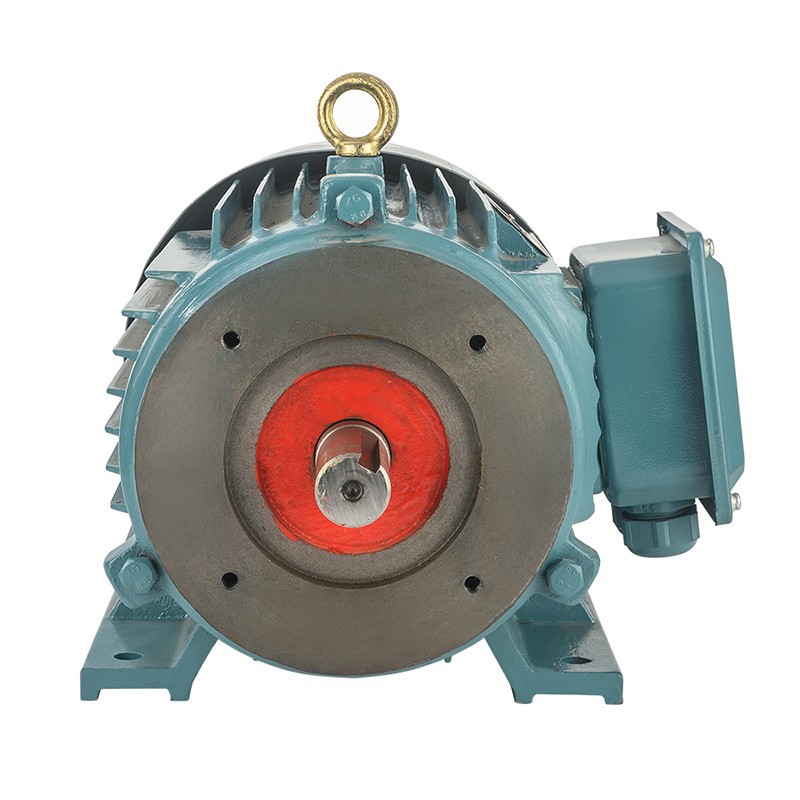

Forced Air Cooling
Forced air cooling uses a fan to blow air over the motor. The fan can be either integral to the motor or an external unit. Forced air cooling is more effective than natural cooling and can be used for larger motors. It helps to maintain a lower operating temperature and improves the motor's performance and reliability.
Liquid Cooling
Liquid cooling systems use a liquid, such as water or oil, to absorb and carry away heat from the motor. These systems are more complex and expensive than air - cooling systems but offer superior cooling performance. Liquid cooling is often used in high - power motors or motors that operate in harsh environments.
As a supplier of Squirrel Cage Three Phase Asynchronous Motor, I understand the importance of choosing the right thermal protection method for your specific application. The type of protection you need depends on factors such as the motor's power rating, operating environment, and duty cycle.
If you're in the market for a Squirrel Cage Three Phase Asynchronous Motor or need advice on thermal protection, I'm here to help. We offer a wide range of motors, including Horizontal Foot Mounting YE3 Asynchronous Motor, with different power ratings and features to meet your needs.
Don't hesitate to reach out to us for more information or to discuss your requirements. We can help you select the right motor and the appropriate thermal protection method to ensure reliable and efficient operation.
References
- Electric Motor Handbook, various editions
- Electrical Installation and Maintenance Manuals
- Technical documents from motor manufacturers


