

Hey there! As a supplier of YY 220V 0.75KW and 1.5KW Single Phase Motors, I often get asked about the starting time of these motors. So, I thought I'd write this blog to shed some light on the topic.
First off, let's understand what we mean by "starting time." The starting time of a motor is the period it takes for the motor to go from a stand - still position to its rated speed. This is a crucial aspect as it can impact the overall performance and efficiency of the equipment the motor is powering.
For our YY 220V 0.75KW and 1.5KW Single Phase Motors, the starting time isn't a fixed number. It can vary depending on several factors. One of the main factors is the load connected to the motor. If the motor has to start under a heavy load, it will take longer to reach its rated speed compared to a light - load situation.
Let's say you're using a 0.75KW motor to drive a small conveyor belt with a light load. In this case, the motor can start relatively quickly. On the other hand, if the same motor is used to drive a pump that has to lift a large volume of fluid against high pressure right from the start, the starting time will be extended.
Another factor that affects the starting time is the design of the motor itself. Our YY single - phase motors are designed with certain features to optimize the starting process. They have specific winding configurations and capacitor setups that help in getting the motor up and running.
The type of capacitor used in the single - phase motor can also play a significant role. Capacitors are used in single - phase motors to create a phase shift, which is essential for generating the rotating magnetic field required for starting. A well - sized and functioning capacitor can reduce the starting time of the motor.
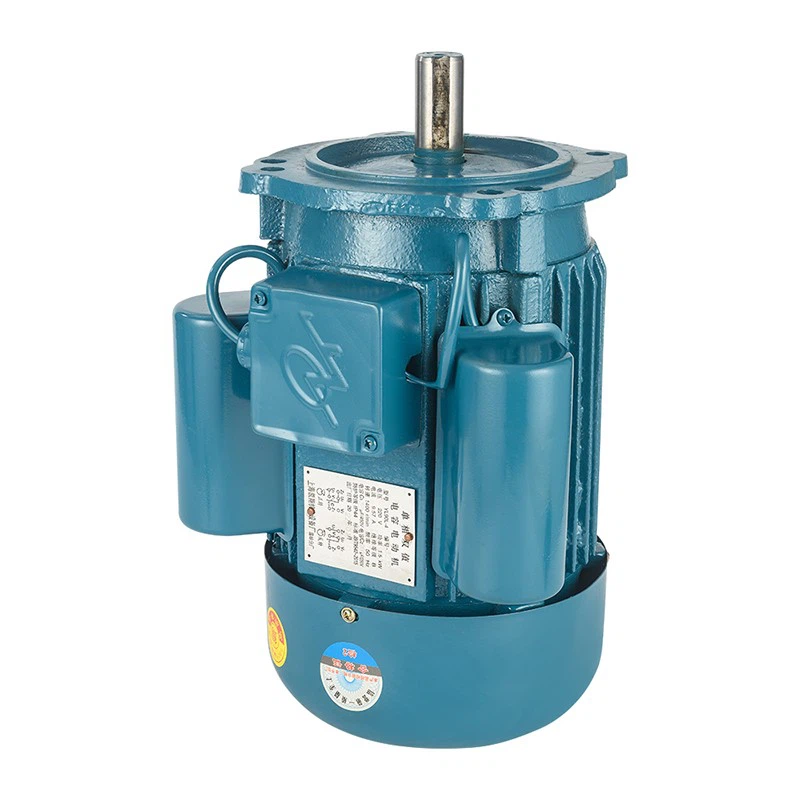
Now, let's talk about some of the products we offer that are related to this topic. We have the Hot Selling YL Single Phase Asynchronous Motor. This motor is known for its reliable starting performance. It's designed to handle a variety of loads and has a relatively short starting time, making it a popular choice among our customers.
The YCL Heavy Duty Two Capacitors Single Phase Motor is another great option. As the name suggests, it's a heavy - duty motor. The two - capacitor design helps in providing a strong starting torque, which means it can start under heavy loads more quickly compared to some other single - phase motors.
We also have the Hot Selling YL Single Phase Asynchronous Motor that offers excellent starting characteristics. It's been engineered to start smoothly and reach its rated speed in a timely manner.
To give you a rough idea, under normal light - load conditions, our 0.75KW YY 220V single - phase motor can start within 1 - 3 seconds. The 1.5KW motor might take a bit longer, usually around 2 - 5 seconds, but this can vary based on the factors we discussed earlier.
If you're in an environment where quick starting is crucial, for example, in a production line where downtime can be costly, you might want to consider our heavy - duty models. These motors are built to start fast and keep your operations running smoothly.
But here's the thing, if you're not sure which motor is the best fit for your application or you have specific requirements regarding the starting time, don't hesitate to reach out. We have a team of experts who can help you select the right motor based on your needs.
Whether you're a small business owner looking for a motor to power a simple machine or a large - scale manufacturer in need of multiple motors, we've got you covered. Our motors are of high quality, and we offer competitive prices.
So, if you're interested in purchasing our YY 220V 0.75KW or 1.5KW Single Phase Motors or any of our other products, get in touch with us. We're more than happy to have a chat about your requirements and see how we can help you. Let's work together to find the perfect motor solution for your business.

References:
- General knowledge of single - phase motor operation and design principles.
- In - house testing data of YY 220V 0.75KW and 1.5KW Single Phase Motors.


