

As a supplier of YE2 series electric motors, I am often asked about the starting mode of these motors. In this blog post, I will delve into the various starting modes of YE2 series electric motors, providing a comprehensive understanding of how they work and their applications.
Direct - On - Line (DOL) Starting
The Direct - On - Line (DOL) starting is the simplest and most straightforward starting method for YE2 series electric motors. In this mode, the motor is directly connected to the power supply at full voltage. When the motor is switched on, it draws a large inrush current, typically 5 - 8 times the rated current of the motor. This high current is due to the low impedance of the motor windings at startup.
The advantage of DOL starting is its simplicity and low cost. It requires minimal control equipment, just a contactor and an overload protection device. It provides the maximum starting torque, which is beneficial for applications where the load needs to be accelerated quickly, such as in some conveyor systems and small pumps.
However, DOL starting also has its limitations. The high inrush current can cause a significant voltage drop in the power supply system, which may affect other electrical equipment connected to the same supply. Also, the high mechanical stress on the motor and the load during startup can reduce the lifespan of both the motor and the driven equipment.
Star - Delta (Y - Δ) Starting
The Star - Delta (Y - Δ) starting is a popular method for reducing the starting current of YE2 series electric motors. In this starting mode, the motor windings are initially connected in a star configuration during the starting period. When the motor reaches a certain speed, the windings are then re - connected in a delta configuration for normal operation.
When the motor is connected in a star configuration, the voltage across each winding is reduced to 1/√3 (approximately 0.58) of the line voltage. As a result, the starting current is also reduced to 1/3 of the current that would be drawn if the motor were started directly in a delta configuration. The starting torque is also reduced to 1/3 of the direct - on - line starting torque.
The main advantage of Star - Delta starting is the reduction of the starting current, which helps to minimize the voltage drop in the power supply system. It is suitable for applications where the load has a relatively low starting torque requirement, such as fans and blowers.
But there are also some drawbacks. The reduction in starting torque means that it may not be suitable for applications with high inertia loads. Also, the control circuit for Star - Delta starting is more complex than DOL starting, requiring additional contactors and a timer.
Auto - Transformer Starting
Auto - transformer starting is another method for reducing the starting current of YE2 series electric motors. An auto - transformer is used to reduce the voltage applied to the motor during the starting period. The auto - transformer has taps that allow different voltage reduction ratios to be selected according to the requirements of the application.
By reducing the voltage applied to the motor, the starting current is proportionally reduced. The starting torque is proportional to the square of the applied voltage. So, if the voltage is reduced by a factor of k, the starting current is reduced by a factor of k, and the starting torque is reduced by a factor of k².
Auto - transformer starting provides a more flexible way of controlling the starting current and torque compared to Star - Delta starting. It can be adjusted to provide the appropriate starting torque for different types of loads. However, auto - transformers are relatively expensive and take up more space. They also introduce additional losses in the power system.
Soft - Starter Starting
Soft - starter starting is a modern and advanced method for starting YE2 series electric motors. A soft - starter is an electronic device that gradually increases the voltage applied to the motor during the starting period, thereby controlling the starting current and torque.
The soft - starter uses thyristors to control the voltage. By adjusting the firing angle of the thyristors, the voltage applied to the motor can be smoothly increased from a low value to the full voltage. This results in a smooth start, reducing the mechanical stress on the motor and the load.
Soft - starters offer several advantages. They can provide precise control of the starting current and torque, which is beneficial for applications with high - inertia loads or where a smooth start is required, such as in some large compressors and crushers. They also reduce the voltage drop in the power supply system and can be programmed to provide different starting profiles according to the specific requirements of the application.
However, soft - starters are more expensive than traditional starting methods. They also generate some heat during operation, which requires proper cooling.
Variable Frequency Drive (VFD) Starting
Variable Frequency Drive (VFD) starting is the most sophisticated method for starting YE2 series electric motors. A VFD is an electronic device that can vary the frequency and voltage of the power supplied to the motor.
By varying the frequency, the speed of the motor can be controlled precisely. During startup, the VFD can start the motor at a low frequency and gradually increase the frequency to the rated frequency. This allows for a very smooth start with minimal starting current and torque, reducing the stress on the motor and the load.

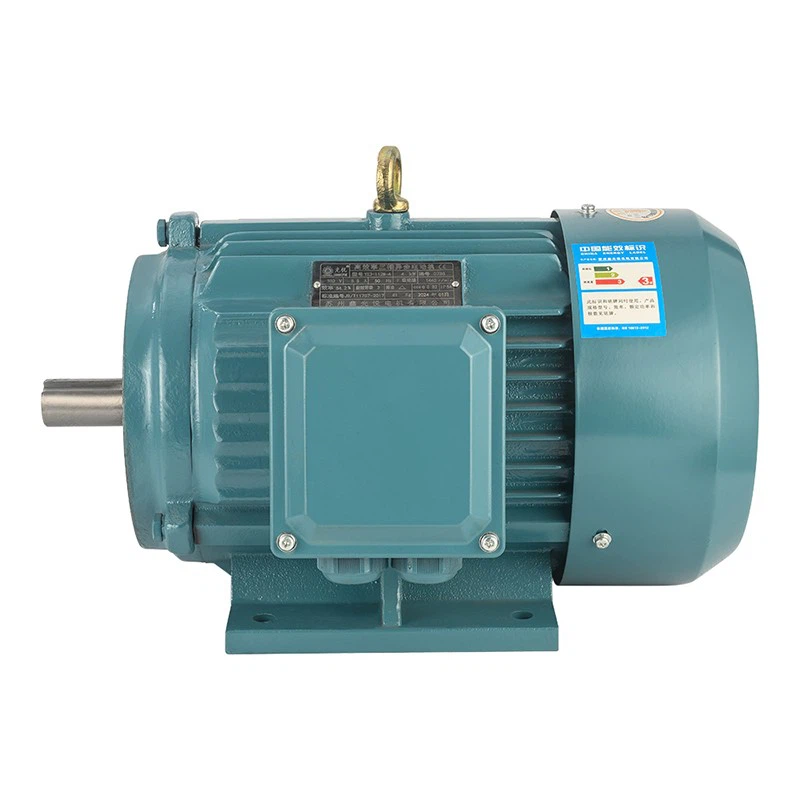
VFDs offer the highest level of control over the motor's speed and torque. They can be used in a wide range of applications, from simple fans to complex industrial machinery. They can also improve the energy efficiency of the motor by adjusting the speed according to the load requirements.
However, VFDs are the most expensive starting option. They also require more complex installation and maintenance, and they can generate electromagnetic interference, which may require additional filtering.
Applications and Considerations
The choice of the starting mode for a YE2 series electric motor depends on several factors, including the type of load, the power supply system, and the cost - effectiveness.
For small - power motors with low - inertia loads and where cost is a major concern, DOL starting may be the most suitable option. For medium - power motors, Star - Delta starting or soft - starter starting can be considered, depending on the starting torque requirements. For large - power motors or applications where precise control of the starting and running speed is required, VFD starting is often the best choice.
When selecting a YE2 series electric motor, it is also important to consider the quality and performance of the motor itself. Our company offers a wide range of YE2 series electric motors, including the High Efficiency Copper Winding Washing Machine Motor, Low Rpm Electric Motor Three Phase Electric Motor, and YE2 - 80M2 - 4 1HP Three Phase Electric Motor. These motors are designed with high - quality materials and advanced manufacturing processes to ensure reliable performance and long service life.
If you are in the market for a YE2 series electric motor or need more information about the starting modes, please feel free to contact us for procurement and further discussions. We are committed to providing you with the best solutions for your specific needs.
References
- "Electric Motors and Drives: Fundamentals, Types and Applications" by Austin Hughes
- "Industrial Electric Motor Handbook" by Thomas H. Bishop


