

As a supplier of 5.5KW Electromagnetic Brake Induction Motors, I've had numerous inquiries regarding the speed regulation accuracy of these motors. In this blog, I'll delve into what speed regulation accuracy means in the context of our 5.5KW Electromagnetic Brake Induction Motors, the factors that influence it, and why it matters in various applications.
Understanding Speed Regulation Accuracy
Speed regulation accuracy refers to the ability of a motor to maintain a consistent speed under different load conditions. In the case of our 5.5KW Electromagnetic Brake Induction Motor, it's crucial to ensure that the motor can operate at a set speed with minimal deviation, regardless of whether the load is light or heavy.
Let's break this down further. When a motor is running, it is subject to various external forces and internal factors that can affect its speed. For instance, as the load on the motor increases, the motor has to work harder to maintain its speed. A motor with high speed regulation accuracy will be able to adjust its output power to counteract the increased load and keep the speed stable. On the other hand, a motor with poor speed regulation accuracy may experience significant speed drops when the load changes, which can lead to inefficiencies and potential problems in the machinery it powers.
Factors Affecting Speed Regulation Accuracy
Several factors can influence the speed regulation accuracy of our 5.5KW Electromagnetic Brake Induction Motor.
1. Motor Design
The design of the motor plays a fundamental role in determining its speed regulation accuracy. Our motors are engineered with advanced winding configurations and magnetic circuits to optimize performance. The stator and rotor design, including the number of poles and the shape of the windings, can affect how the motor responds to changes in load. For example, a motor with a higher number of poles may have better low - speed performance and more stable speed regulation.
2. Load Characteristics
The nature of the load connected to the motor is another critical factor. Different types of loads, such as constant - torque loads, variable - torque loads, and constant - power loads, will have different effects on the motor's speed. A constant - torque load requires the motor to provide a consistent amount of torque regardless of the speed. In contrast, a variable - torque load, like a fan or a pump, has a torque requirement that varies with the speed. Our 5.5KW Electromagnetic Brake Induction Motor is designed to handle a wide range of load characteristics, but the specific load profile will still impact the speed regulation accuracy.
3. Control System
The control system used with the motor is also vital. Modern control systems, such as variable frequency drives (VFDs), can significantly improve the speed regulation accuracy of our motors. A VFD allows us to adjust the frequency and voltage supplied to the motor, which in turn controls the motor's speed. By using a VFD, we can fine - tune the motor's operation to match the load requirements precisely, resulting in more accurate speed regulation.
Importance of Speed Regulation Accuracy
The speed regulation accuracy of our 5.5KW Electromagnetic Brake Induction Motor is of utmost importance in many applications.
1. Industrial Machinery
In industrial settings, precision is key. Many manufacturing processes rely on motors to drive conveyor belts, machine tools, and other equipment. If the motor's speed is not accurately regulated, it can lead to inconsistent product quality, increased waste, and even equipment damage. For example, in a textile manufacturing plant, a motor with poor speed regulation accuracy may cause uneven yarn tension, resulting in defective fabrics.
2. Automation Systems
Automation systems often require motors to perform repetitive tasks with high precision. Our motors are used in robotic arms, automated assembly lines, and other automated equipment. Accurate speed regulation ensures that these systems can operate smoothly and efficiently, reducing downtime and improving productivity.
3. Energy Efficiency
A motor with good speed regulation accuracy can also contribute to energy savings. When a motor operates at a stable speed, it can avoid unnecessary power consumption caused by speed fluctuations. This is especially important in applications where the motor runs continuously, as even small improvements in energy efficiency can lead to significant cost savings over time.
Our Product Offerings
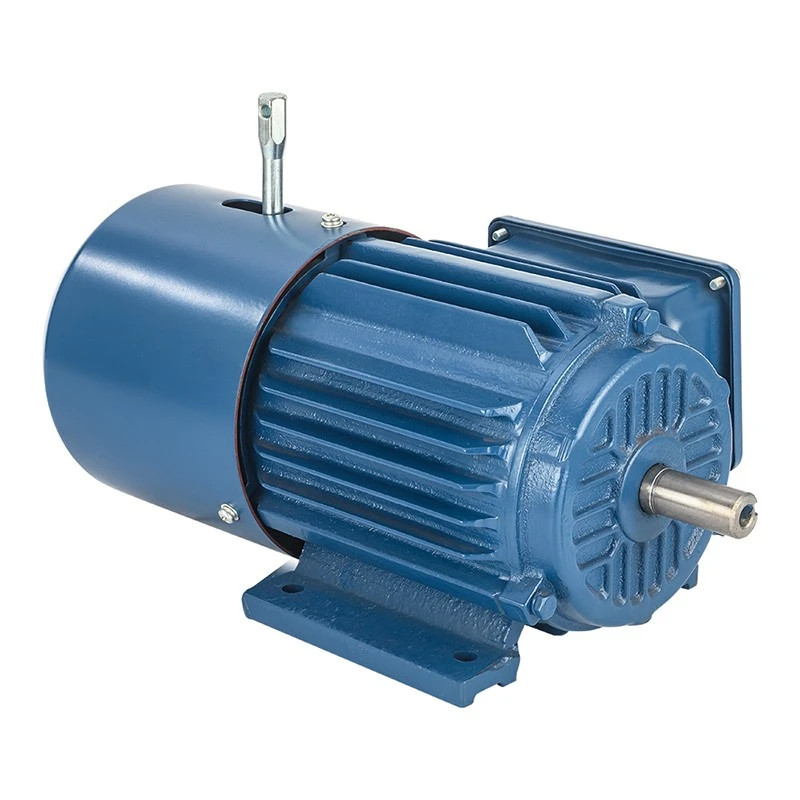
We offer a range of 5.5KW Electromagnetic Brake Induction Motors that are designed to provide high - speed regulation accuracy. In addition to our standard models, we also have some specialized products that may be of interest to you.
One of our popular products is the YEJ 460V 1700rpm Electric Motor for Driving Machine. This motor is specifically designed for driving machines and offers excellent speed regulation performance. It is built with high - quality materials and advanced manufacturing techniques to ensure reliability and durability.
Another option is the Braking Motor YEJ Series Cast Iron Frame 100HP. This motor features a cast - iron frame for enhanced strength and stability. It is suitable for heavy - duty applications where accurate speed regulation and reliable braking are required.
We also have the Motor 2.2kw Three Phase Induction Brake Motor, which is a smaller but equally high - performance motor. It can be used in applications where space is limited but precision is still essential.

Contact Us for Purchase and Consultation
If you're in the market for a 5.5KW Electromagnetic Brake Induction Motor or any of our other products, we'd love to hear from you. Whether you have questions about speed regulation accuracy, need help selecting the right motor for your application, or want to discuss a potential purchase, our team of experts is here to assist you. We can provide detailed product information, technical support, and competitive pricing.
Don't hesitate to reach out to us to start the conversation. We're committed to providing you with the best - in - class motors and excellent customer service.
References
- Chapman, S. J. (2012). Electric Machinery Fundamentals. McGraw - Hill Education.
- Fitzgerald, A. E., Kingsley, C., & Umans, S. D. (2003). Electric Machinery. McGraw - Hill Education.
- Krause, P. C., Wasynczuk, O., & Sudhoff, S. D. (2002). Analysis of Electric Machinery and Drive Systems. Wiley - Interscience.


