

As a seasoned supplier of YVF frequency variable motors, I've witnessed firsthand the growing demand for these versatile machines across various industries. YVF motors are designed to offer precise speed control, energy efficiency, and reliable performance, making them an ideal choice for applications where variable speed operation is required. In this blog post, I'll explore the customization options available for YVF frequency variable motors, highlighting how these options can be tailored to meet the specific needs of your business.
Power and Speed Ratings
One of the primary customization options for YVF frequency variable motors is the selection of power and speed ratings. These motors are available in a wide range of power outputs, typically from a few hundred watts to several hundred kilowatts. The choice of power rating depends on the specific application requirements, such as the load torque, speed range, and duty cycle. For example, a small conveyor belt system may only require a motor with a power rating of a few kilowatts, while a large industrial mixer may need a motor with a power rating of several hundred kilowatts.
In addition to power ratings, YVF motors can also be customized with different speed ranges. The speed of a YVF motor can be adjusted by changing the frequency of the electrical supply, allowing for precise control over the motor's rotational speed. This is particularly useful in applications where variable speed operation is required, such as in HVAC systems, pumps, and fans. By selecting a motor with the appropriate speed range, you can ensure that your equipment operates at the optimal speed for maximum efficiency and performance.
Enclosure Types
Another important customization option for YVF frequency variable motors is the selection of enclosure types. The enclosure of a motor protects it from environmental factors such as dust, moisture, and chemicals, ensuring its reliability and longevity. There are several different types of enclosures available for YVF motors, each with its own advantages and disadvantages.
- Open Drip Proof (ODP) Enclosure: This type of enclosure is the most common and is suitable for use in clean, dry environments. It allows air to circulate freely around the motor, helping to dissipate heat and prevent overheating.
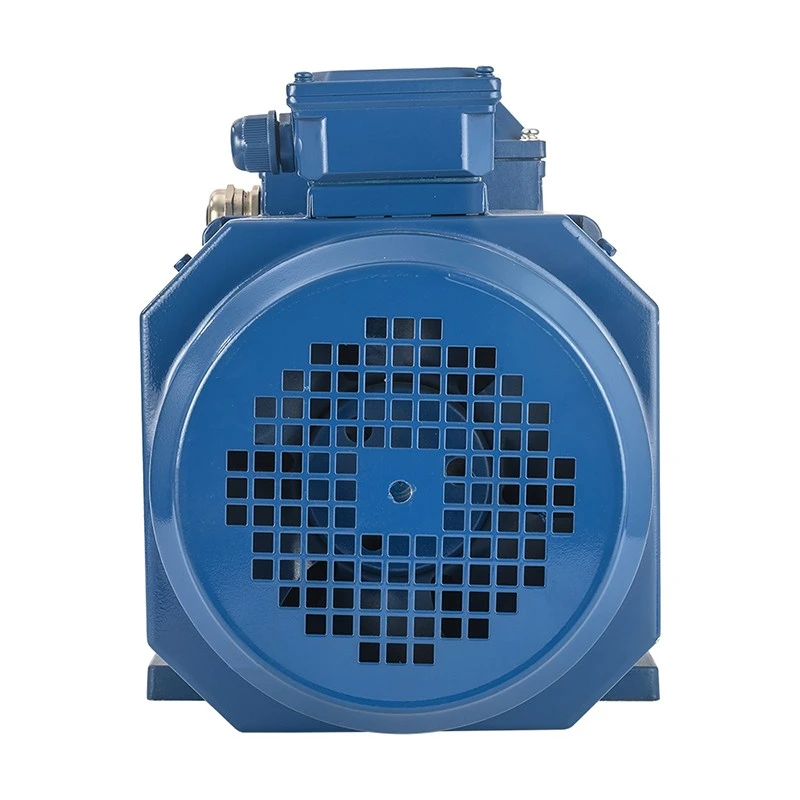
- Totally Enclosed Fan Cooled (TEFC) Enclosure: This type of enclosure is more robust and is suitable for use in dirty or wet environments. It is sealed to prevent dust and moisture from entering the motor, and it is equipped with a fan to help cool the motor.
- Explosion-Proof Enclosure: This type of enclosure is designed for use in hazardous environments where there is a risk of explosion. It is constructed to prevent the ignition of flammable gases or dust, and it is certified to meet specific safety standards.
By selecting the appropriate enclosure type for your application, you can ensure that your YVF motor is protected from the elements and operates safely and reliably.
Mounting Options
YVF frequency variable motors can also be customized with different mounting options to suit the specific requirements of your equipment. There are several different types of mounting options available, including:
- Foot Mounting: This is the most common type of mounting option and is suitable for use in applications where the motor is mounted on a flat surface. The motor is typically secured to the surface using bolts or screws.
- Flange Mounting: This type of mounting option is suitable for use in applications where the motor needs to be mounted directly to a machine or equipment. The motor is typically secured to the machine or equipment using bolts or screws.
- Face Mounting: This type of mounting option is suitable for use in applications where the motor needs to be mounted on the end of a shaft. The motor is typically secured to the shaft using a coupling or a keyway.
By selecting the appropriate mounting option for your application, you can ensure that your YVF motor is installed correctly and operates smoothly.
Cooling Options
In addition to enclosure types and mounting options, YVF frequency variable motors can also be customized with different cooling options to ensure optimal performance and reliability. The cooling system of a motor helps to dissipate heat generated during operation, preventing the motor from overheating and extending its lifespan. There are several different types of cooling options available for YVF motors, including:
- Self-Cooled: This is the most common type of cooling option and is suitable for use in applications where the motor operates at a relatively low speed and load. The motor is cooled by the natural circulation of air around it.
- Forced Air Cooling: This type of cooling option is suitable for use in applications where the motor operates at a high speed and load. The motor is equipped with a fan to help circulate air around it, increasing the cooling efficiency.
- Water Cooling: This type of cooling option is suitable for use in applications where the motor operates in a high-temperature environment or where the motor generates a large amount of heat. The motor is equipped with a water jacket or a cooling coil to help dissipate heat.
By selecting the appropriate cooling option for your application, you can ensure that your YVF motor operates at the optimal temperature and performance.
Control Options
Finally, YVF frequency variable motors can be customized with different control options to meet the specific requirements of your application. The control system of a motor allows you to adjust the speed, torque, and direction of the motor, providing precise control over its operation. There are several different types of control options available for YVF motors, including:

- Manual Control: This type of control option is the simplest and is suitable for use in applications where the motor needs to be operated at a fixed speed. The motor is typically controlled using a switch or a potentiometer.
- Automatic Control: This type of control option is more sophisticated and is suitable for use in applications where the motor needs to be operated at a variable speed. The motor is typically controlled using a programmable logic controller (PLC) or a variable frequency drive (VFD).
- Remote Control: This type of control option allows you to control the motor from a remote location. The motor is typically controlled using a wireless or wired communication system.
By selecting the appropriate control option for your application, you can ensure that your YVF motor operates at the optimal speed and performance, while also providing you with the flexibility and convenience you need.
Conclusion
In conclusion, YVF frequency variable motors offer a wide range of customization options that can be tailored to meet the specific needs of your business. By selecting the appropriate power and speed ratings, enclosure types, mounting options, cooling options, and control options, you can ensure that your YVF motor operates at the optimal speed and performance, while also providing you with the reliability and durability you need.
If you're interested in learning more about the customization options available for YVF frequency variable motors, or if you have any questions or concerns, please don't hesitate to contact us. We'd be happy to help you find the perfect motor for your application. You can explore our product range by clicking on the following links: Inverter Adjustable 50Hz 60Hz Three Phase Motor, 2HP 5HP 10HP 20HP Variable Speed Electric Motor, and YVF2 Frequency Control Three-phase Asynchronous Motor.
References
- Electric Motor Handbook, Third Edition, by Arnold Tustin
- Variable Frequency Drives: Selection, Application, and Troubleshooting, by Dan Hebert


