

As a seasoned supplier of YVF frequency variable motors, I've witnessed firsthand the transformative impact these motors have on various industrial applications. The efficiency, flexibility, and precision they offer are truly remarkable. A crucial aspect of these motors is their communication interfaces, which play a pivotal role in enabling seamless integration and control within complex systems. In this blog, I'll delve into the different communication interfaces of a YVF frequency variable motor control system, providing insights into their functions, advantages, and typical use cases.
RS - 485 Communication Interface
One of the most commonly used communication interfaces in YVF frequency variable motor control systems is the RS - 485 interface. This interface is based on a differential signaling technique, which provides excellent noise immunity, making it suitable for long - distance communication in industrial environments.
The RS - 485 interface allows multiple devices to be connected in a multi - drop network. In a YVF motor control system, this means that several frequency converters can be connected to a central control unit, such as a PLC (Programmable Logic Controller). This setup enables the central control unit to monitor and adjust the operating parameters of each motor, such as speed, torque, and acceleration/deceleration time.
For example, in a large - scale manufacturing plant where multiple conveyor belts are driven by YVF motors, the RS - 485 interface can be used to synchronize the speed of these belts. The central control unit can send commands to each frequency converter via the RS - 485 network, ensuring that all conveyor belts operate at the desired speed.
The advantage of using the RS - 485 interface is its simplicity and cost - effectiveness. It uses a relatively simple two - wire connection, which reduces the wiring complexity and cost. Moreover, it has a high data transfer rate, which can reach up to 10 Mbps, allowing for real - time control of the motors.
Modbus Communication Protocol
Modbus is a widely used communication protocol that often works in conjunction with the RS - 485 interface in YVF frequency variable motor control systems. Modbus is an open - source protocol, which means that it is supported by a wide range of devices, including frequency converters, PLCs, and HMIs (Human - Machine Interfaces).
Modbus uses a master - slave communication model. In a YVF motor control system, the central control unit acts as the master, while the frequency converters act as slaves. The master can send read or write requests to the slaves to access or modify their data registers. For instance, the master can read the current speed of a motor from the frequency converter's register or write a new speed setpoint to it.
The Modbus protocol supports different data formats, such as binary and ASCII. It also provides error - checking mechanisms, such as CRC (Cyclic Redundancy Check), to ensure the integrity of the data transmitted between the master and the slaves.
The use of the Modbus protocol in YVF motor control systems simplifies the integration process. Since it is a well - established and widely supported protocol, it is easy to find compatible devices and software tools. This reduces the development time and cost for system integrators.
CANopen Communication Interface
CANopen is another communication interface that is gaining popularity in YVF frequency variable motor control systems. CANopen is based on the Controller Area Network (CAN) bus, which is known for its high - speed communication, reliability, and fault - tolerance.
CANopen provides a standardized communication profile for different types of devices, including motors and drives. In a YVF motor control system, this means that the frequency converters can be easily integrated into a CANopen network. The CANopen network allows for real - time communication between the frequency converters and other devices, such as sensors and actuators.
For example, in a robotic application where YVF motors are used to drive the joints of a robot, the CANopen interface can be used to synchronize the movement of these motors. The sensors on the robot can send feedback signals to the frequency converters via the CANopen network, and the frequency converters can adjust the motor speed and torque accordingly.
The advantage of using the CANopen interface is its high - speed communication and reliability. The CAN bus can support data transfer rates of up to 1 Mbps, and it has built - in error - detection and - correction mechanisms. Moreover, CANopen provides a rich set of services, such as object dictionary access, emergency messages, and synchronization services, which enhance the functionality of the YVF motor control system.
Ethernet Communication Interface
With the increasing trend of industrial automation and the Internet of Things (IoT), the Ethernet communication interface is becoming more and more important in YVF frequency variable motor control systems. Ethernet offers high - speed data transfer, long - distance communication, and the ability to connect to the Internet.
In a YVF motor control system, the Ethernet interface allows the frequency converters to be connected to a local area network (LAN) or even the Internet. This enables remote monitoring and control of the motors. For example, a maintenance engineer can access the frequency converters from a remote location via the Internet to check the motor status, diagnose faults, and perform parameter adjustments.
Many modern frequency converters support Ethernet - based communication protocols, such as Profinet, Ethernet/IP, and Modbus TCP. These protocols provide seamless integration with industrial Ethernet networks and allow for easy communication with other devices, such as PLCs and SCADA (Supervisory Control and Data Acquisition) systems.
The use of the Ethernet interface in YVF motor control systems also enables data analytics and predictive maintenance. The data collected from the motors, such as temperature, vibration, and power consumption, can be transmitted to a cloud - based server via the Ethernet network. Advanced analytics algorithms can then be applied to this data to predict potential failures and schedule maintenance in advance.
Product Recommendations
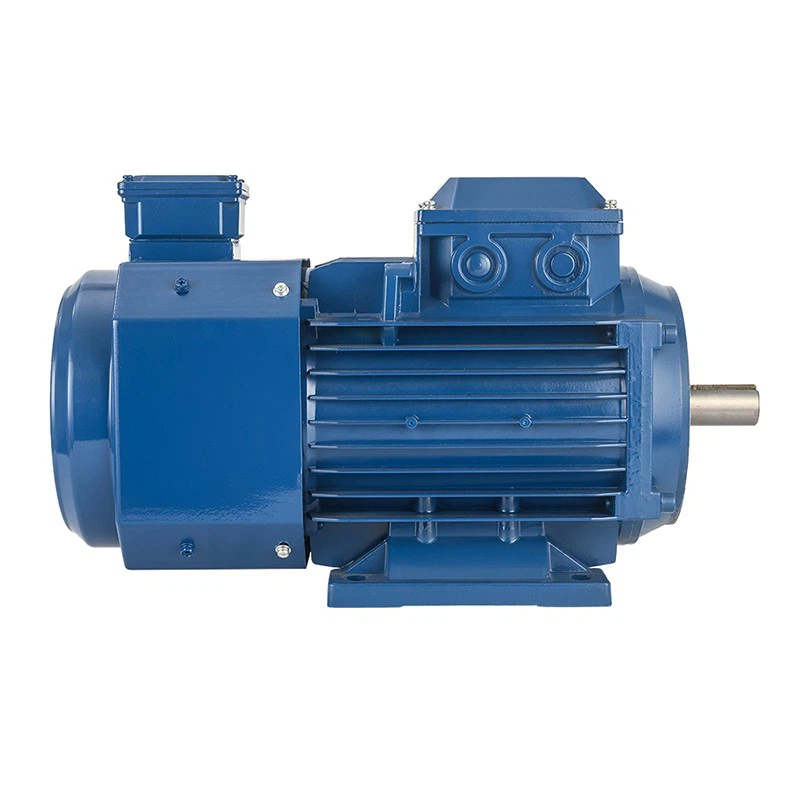
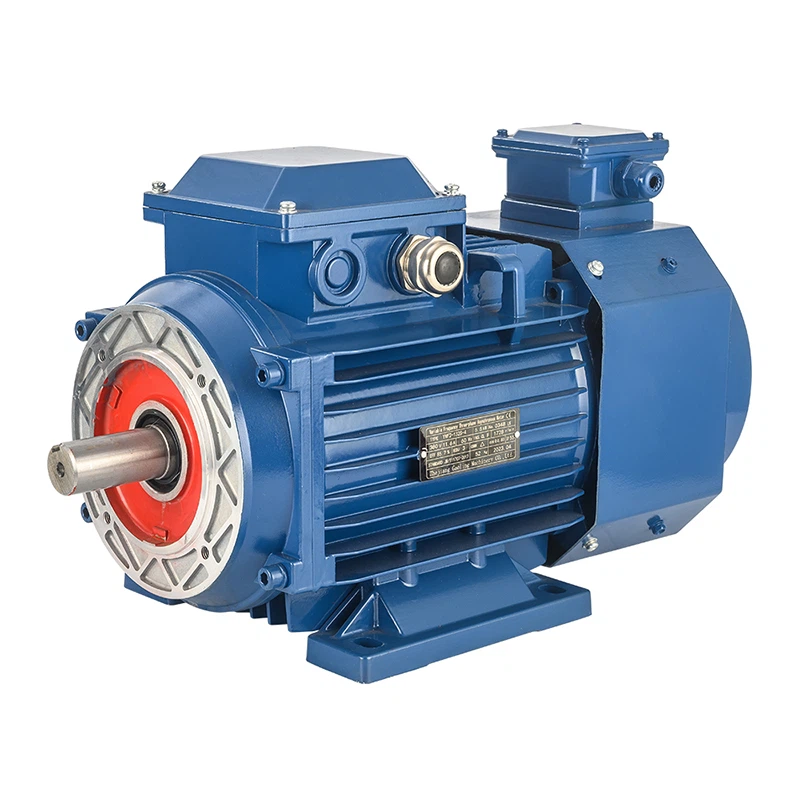
As a supplier, I would like to recommend some of our high - quality YVF frequency variable motors. The YVF2 Frequency Control Three - phase Asynchronous Motor is a reliable choice for various industrial applications. It offers excellent speed control performance and energy efficiency.
Another great option is the Inverter Adjustable 50Hz 60Hz Three Phase Motor. This motor can be easily adjusted to different frequencies, making it suitable for applications that require variable speed operation.
If you need a motor with different power ratings, our 2HP 5HP 10HP 20HP Variable Speed Electric Motor is a great option. It provides a wide range of power choices to meet your specific requirements.
Conclusion
In conclusion, the communication interfaces of a YVF frequency variable motor control system are essential for achieving efficient and precise control of the motors. The RS - 485 interface with the Modbus protocol, CANopen, and Ethernet interfaces each have their own advantages and are suitable for different application scenarios. By choosing the right communication interface, you can enhance the performance, reliability, and functionality of your YVF motor control system.
If you are interested in our YVF frequency variable motors or have any questions about the communication interfaces, please feel free to contact us for a procurement negotiation. We are committed to providing you with the best products and services to meet your industrial needs.
References
- "Industrial Communication Technology Handbook" by Peter Harms
- "Motor Control and Power Electronics" by Muhammad H. Rashid
- Technical documentation of YVF frequency variable motors and related communication interfaces from various manufacturers.


