

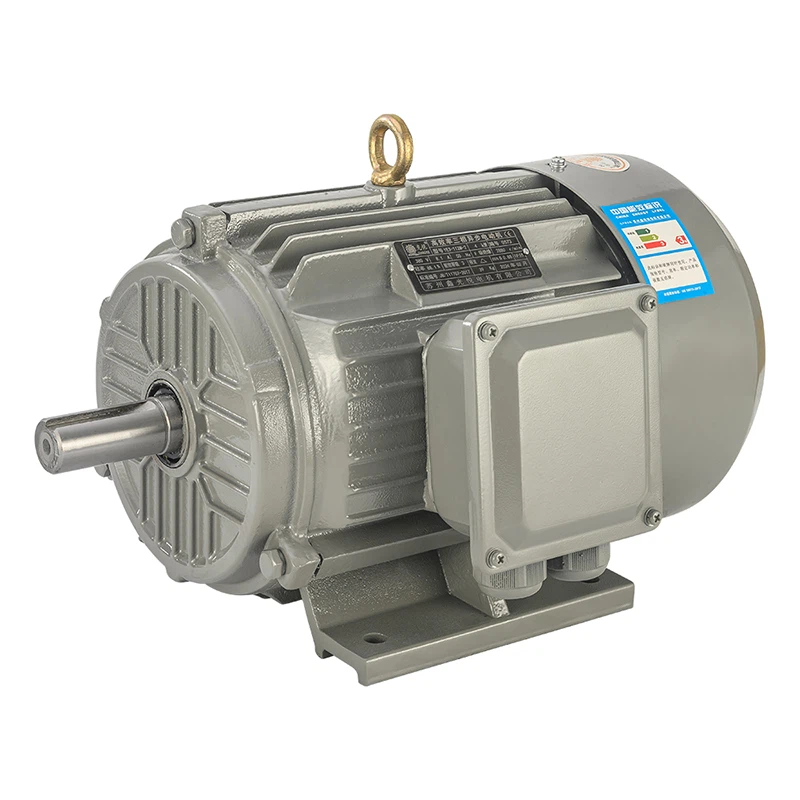
As a supplier of the YE2 - 80M2 - 4 1HP Three Phase Electric Motor, I often encounter inquiries from customers about how to measure the speed of this type of motor. In this blog, I will share some common and effective methods to measure the speed of the YE2 - 80M2 - 4 1HP Three Phase Electric Motor, which can help users better understand and utilize the performance of the motor.
Understanding the YE2 - 80M2 - 4 1HP Three Phase Electric Motor
Before delving into the measurement methods, it's essential to have a basic understanding of the YE2 - 80M2 - 4 1HP Three Phase Electric Motor. This motor belongs to the YE2 series, which is known for its high - efficiency performance. It is a three - phase asynchronous motor with a power of 1HP (horsepower), which is approximately 746 watts. The "80M2 - 4" in the model number provides information about the frame size, mounting type, and the number of poles. In this case, the number 4 indicates that the motor has 4 poles.
The synchronous speed of a three - phase asynchronous motor can be calculated using the following formula:
[n_s=\frac{120f}{p}]
where (n_s) is the synchronous speed in revolutions per minute (RPM), (f) is the frequency of the power supply (usually 50Hz or 60Hz in most countries), and (p) is the number of poles of the motor.

For a 4 - pole motor ((p = 4)) and a power supply frequency of (f=50Hz), the synchronous speed is:
[n_s=\frac{120\times50}{4}=1500RPM]
However, the actual speed of an asynchronous motor is slightly less than the synchronous speed, and this difference is called the slip.
Methods to Measure the Speed of the YE2 - 80M2 - 4 1HP Three Phase Electric Motor
1. Tachometer Method
A tachometer is a commonly used device for measuring the rotational speed of a motor. There are two main types of tachometers: contact and non - contact.
Contact Tachometers
Contact tachometers work by physically touching the rotating shaft of the motor. They usually have a spindle or a wheel that is placed in contact with the motor shaft. As the shaft rotates, the tachometer measures the rotational speed based on the contact friction. When using a contact tachometer to measure the speed of the YE2 - 80M2 - 4 motor, make sure that the tachometer is firmly in contact with the shaft and that the measurement is taken under stable operating conditions. However, contact tachometers may have some limitations, such as the need for direct access to the shaft and the potential to cause some wear on the shaft surface.
Non - Contact Tachometers
Non - contact tachometers, such as optical tachometers, are more convenient in some cases. An optical tachometer uses a light source and a sensor to detect the rotation of a reflective mark on the motor shaft. You can attach a small reflective sticker to the shaft, and the tachometer emits a light beam onto the sticker. As the shaft rotates, the reflected light is detected by the sensor, and the tachometer calculates the speed based on the frequency of the reflected light signals. Non - contact tachometers are ideal for measuring the speed of motors in hard - to - reach places or when you don't want to interfere with the normal operation of the motor.
2. Frequency Converter Method
If the YE2 - 80M2 - 4 motor is controlled by a frequency converter, you can also measure the speed through the frequency converter. A frequency converter can adjust the frequency of the power supply to the motor, thereby controlling its speed. Most modern frequency converters have a built - in display that can show the actual output frequency and the corresponding motor speed.
The relationship between the frequency of the power supply and the motor speed is approximately linear. By knowing the frequency output of the frequency converter and using the synchronous speed formula mentioned above, you can estimate the motor speed. For example, if the frequency converter is set to output a frequency of (f = 40Hz) for a 4 - pole motor, the estimated synchronous speed is:
[n_s=\frac{120\times40}{4}=1200RPM]
And considering the slip, the actual speed will be slightly lower.
3. Encoder Method
An encoder is a device that can convert the rotational motion of a shaft into an electrical signal. By installing an encoder on the motor shaft, you can accurately measure the speed of the motor. There are two main types of encoders: incremental encoders and absolute encoders.
Incremental Encoders
Incremental encoders generate a series of pulses as the shaft rotates. The number of pulses is proportional to the angle of rotation. By counting the number of pulses within a certain time interval, you can calculate the rotational speed of the motor. For example, if an incremental encoder generates 1000 pulses per revolution and you count 5000 pulses in 1 second, the motor is rotating at a speed of 300RPM ((\frac{5000}{1000}\times60 = 300RPM)).
Absolute Encoders
Absolute encoders provide a unique digital code for each position of the shaft rotation. They can directly determine the absolute position and speed of the motor shaft without the need for a reference point. Absolute encoders are more accurate and reliable, especially in applications where high - precision speed control is required.
Importance of Measuring the Motor Speed
Measuring the speed of the YE2 - 80M2 - 4 1HP Three Phase Electric Motor is crucial for several reasons. Firstly, it helps to ensure that the motor is operating within its normal speed range. If the speed is too high or too low, it may indicate a problem with the motor, such as a mechanical fault, electrical issues, or improper load. Secondly, accurate speed measurement is essential for applications that require precise speed control, such as conveyor systems, machine tools, and pumps.
Related Products Introduction
In addition to the YE2 - 80M2 - 4 1HP Three Phase Electric Motor, our company also offers a wide range of other high - quality electric motors. For example, we have the High Efficiency Copper Winding Washing Machine Motor, which is designed for washing machines with high - efficiency performance and reliable operation. We also provide the Three Phase Engine Shaded Pole Asynchronous Motor, which is suitable for various industrial applications. And if you need a more powerful motor, our Three - phase Ac Motor 7.5 Hp 1440 Rpm 5.5 Kw may be a good choice.
Conclusion
Measuring the speed of the YE2 - 80M2 - 4 1HP Three Phase Electric Motor is an important task that can help users ensure the normal operation and performance of the motor. Whether you choose a tachometer, a frequency converter, or an encoder, each method has its own advantages and can be selected according to your specific needs.
If you are interested in our YE2 - 80M2 - 4 1HP Three Phase Electric Motor or other related products, please feel free to contact us for more information and to start a procurement negotiation. We are committed to providing you with high - quality products and excellent service.
References
- Electric Machinery Fundamentals, Stephen J. Chapman
- Motor Handbook, various authors


