Hey there! As a supplier of the YE2 - 80M2 - 4 1HP Three Phase Electric Motor, I get asked a lot about how to choose the appropriate starting method for this little powerhouse. Well, you're in luck because I'm gonna break it down for you in this blog.
First off, let's talk a bit about the YE2 - 80M2 - 4 1HP Three Phase Electric Motor itself. This motor is a workhorse in many industrial and commercial applications. It's reliable, efficient, and built to last. But just like any piece of equipment, getting the right starting method is crucial for its performance and longevity.
One of the most common starting methods is the Direct - On - Line (DOL) starting. It's as simple as it sounds. You just connect the motor directly to the power supply, and it starts running. This method is great for small motors like the YE2 - 80M2 - 4 1HP. Why? Well, it's cost - effective. You don't need any fancy equipment or complex control systems. It's straightforward and easy to install. The motor gets full voltage right from the start, so it can reach its rated speed quickly.
However, there are some downsides to DOL starting. When you start the motor this way, it draws a huge inrush current. This high current can cause voltage drops in the power supply system, which might affect other equipment connected to the same supply. Also, the sudden torque applied to the motor shaft can cause mechanical stress on the motor and the connected load. So, if you have a sensitive load or a weak power supply, DOL starting might not be the best option.
Another option is the Star - Delta starting. In this method, the motor is initially connected in a star configuration. When the motor reaches about 80% of its rated speed, it's then switched to a delta configuration. This reduces the starting current compared to DOL starting. The starting current in star - delta starting is about one - third of the DOL starting current. This is great for reducing the stress on the power supply and other equipment.
But, star - delta starting also has its limitations. It requires additional contactors and a control circuit, which means higher initial costs. Also, the torque during starting is lower in the star configuration. So, if your load requires high starting torque, star - delta starting might not be suitable.
Then there's the Auto - Transformer starting. This method uses an auto - transformer to reduce the voltage applied to the motor during starting. By reducing the voltage, the starting current is also reduced. You can choose different tapping points on the auto - transformer to adjust the starting voltage and current according to your needs.
Auto - transformer starting is a good option when you need to reduce the starting current significantly and still have a reasonable starting torque. However, it's more expensive than DOL and star - delta starting because of the auto - transformer itself. The auto - transformer also takes up more space, so you need to have enough room in your electrical panel.
Soft - starters are another modern option. A soft - starter gradually increases the voltage applied to the motor during starting. This results in a smooth start, reducing both the inrush current and the mechanical stress on the motor and the load. Soft - starters can be programmed to adjust the starting time, acceleration rate, and other parameters according to your specific requirements.
The advantage of soft - starters is that they offer precise control over the starting process. They can also be used to stop the motor smoothly, which is great for applications where sudden stops can cause damage. However, soft - starters are more expensive than the traditional starting methods. They also require some technical knowledge to program and maintain.
Now, let's talk about which starting method is best for the YE2 - 80M2 - 4 1HP Three Phase Electric Motor. If you have a simple application with a robust power supply and a load that can tolerate a bit of mechanical stress, DOL starting is a no - brainer. It's cheap and easy.
If you're worried about the inrush current affecting other equipment or if you have a sensitive load, star - delta starting might be a good choice. It's a cost - effective way to reduce the starting current without sacrificing too much on the starting torque.
For applications where you need more control over the starting current and torque, or if you have a large load, auto - transformer starting or soft - starters are worth considering. They offer better performance but come at a higher cost.
When choosing the starting method, you also need to consider the environment in which the motor will operate. If it's a dusty or humid environment, you need to make sure the starting equipment can withstand these conditions. You should also think about the maintenance requirements of the starting method. Some methods, like DOL starting, are very low - maintenance, while others, like soft - starters, require more attention.
As a supplier of the YE2 - 80M2 - 4 1HP Three Phase Electric Motor, I've seen firsthand how the right starting method can make a big difference. I also offer a range of related products that you might be interested in. For example, you can check out our Low Rpm Electric Motor Three Phase Electric Motor, Three - phase Ac Motor 7.5 Hp 1440 Rpm 5.5 Kw, and High Efficiency Copper Winding Washing Machine Motor.

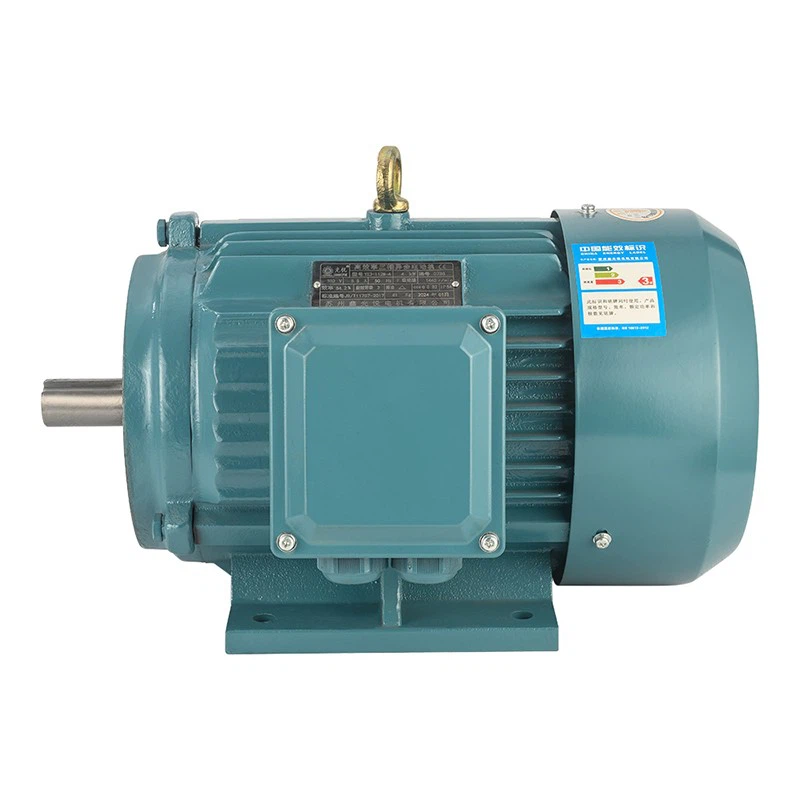
If you're still not sure which starting method is right for your YE2 - 80M2 - 4 1HP Three Phase Electric Motor, don't hesitate to reach out. We can help you analyze your specific situation and recommend the best solution. Whether you're a small business owner or an industrial engineer, we're here to assist you in getting the most out of your motor. Contact us to start the discussion and let's find the perfect starting method together.
References:
- "Electric Motors and Drives: Fundamentals, Types and Applications" by Austin Hughes and Bill Drury.
- "Electrical Power Systems Quality" by Roger C. Dugan, Mark F. McGranaghan, and Surya Santoso.