

In the realm of industrial motors, the IE4 Ultra High Efficiency Asynchronous Motor has emerged as a game - changer, offering unparalleled energy efficiency and performance. As a supplier of these advanced motors, I've witnessed firsthand the impact of various factors on their operation. One such critical factor is voltage fluctuation, which can significantly affect the performance of these motors.
Understanding the IE4 Ultra High Efficiency Asynchronous Motor
Before delving into the effects of voltage fluctuation, it's essential to understand what makes the IE4 Ultra High Efficiency Asynchronous Motor stand out. These motors are designed to meet the highest energy - efficiency standards, consuming less power while delivering high levels of performance. They are widely used in a variety of industrial applications, including pumps, compressors, and conveyors.
The IE4 motors feature advanced design and construction techniques, such as improved magnetic circuits and high - quality materials. These elements contribute to reduced losses, both in the stator and rotor, resulting in higher efficiency. For example, the use of low - loss electrical steel in the stator core minimizes eddy current losses, while optimized rotor designs enhance the motor's torque characteristics. You can learn more about our [IE4 Ultra High Efficiency Asynchronous Motor]( /three - phase - asynchronous - motor/ye3 - ye4 - high - efficiency - electric - motor/ie4 - ultra - high - efficiency - asynchronous - motor.html) on our website.
The Basics of Voltage Fluctuation
Voltage fluctuation refers to the rapid and repeated changes in the supply voltage. These fluctuations can occur due to various reasons, including grid instability, sudden changes in load demand, and faults in the power distribution system. In an industrial setting, large motors starting up or shutting down can cause significant voltage dips, while intermittent loads can lead to voltage spikes.

The standard voltage supply for most industrial motors is designed to operate within a specific range. For example, in a three - phase system, the nominal voltage might be 400V, with an acceptable tolerance of ± 10%. When the supply voltage deviates from this range, it can have a profound impact on the performance of the IE4 Ultra High Efficiency Asynchronous Motor.
Effects of Voltage Fluctuation on Motor Performance
1. Torque and Speed
The torque produced by an asynchronous motor is proportional to the square of the applied voltage. When the voltage drops below the rated value, the motor's torque output decreases significantly. This reduction in torque can lead to a decrease in the motor's speed, especially when the motor is operating under a heavy load. For instance, in a [Water Pump Electric Motor Winding Motor]( /three - phase - asynchronous - motor/ye3 - ye4 - high - efficiency - electric - motor/water - pump - electric - motor - winding - motor.html), a voltage dip can cause the pump to slow down, reducing the flow rate of water.
Conversely, when the voltage rises above the rated value, the motor's torque increases. However, this can also lead to an increase in the motor's speed, which may exceed the safe operating limits. Excessive speed can cause mechanical stress on the motor's components, leading to premature wear and tear.
2. Efficiency
Voltage fluctuation can have a negative impact on the efficiency of the IE4 Ultra High Efficiency Asynchronous Motor. When the voltage is lower than the rated value, the motor has to draw more current to maintain the same level of power output. This increase in current results in higher copper losses in the stator and rotor windings, reducing the motor's overall efficiency.
On the other hand, when the voltage is higher than the rated value, the magnetic losses in the motor's core increase. These losses are caused by hysteresis and eddy currents, which also reduce the motor's efficiency. In both cases, the motor consumes more energy than it would under normal voltage conditions, negating the benefits of its high - efficiency design.
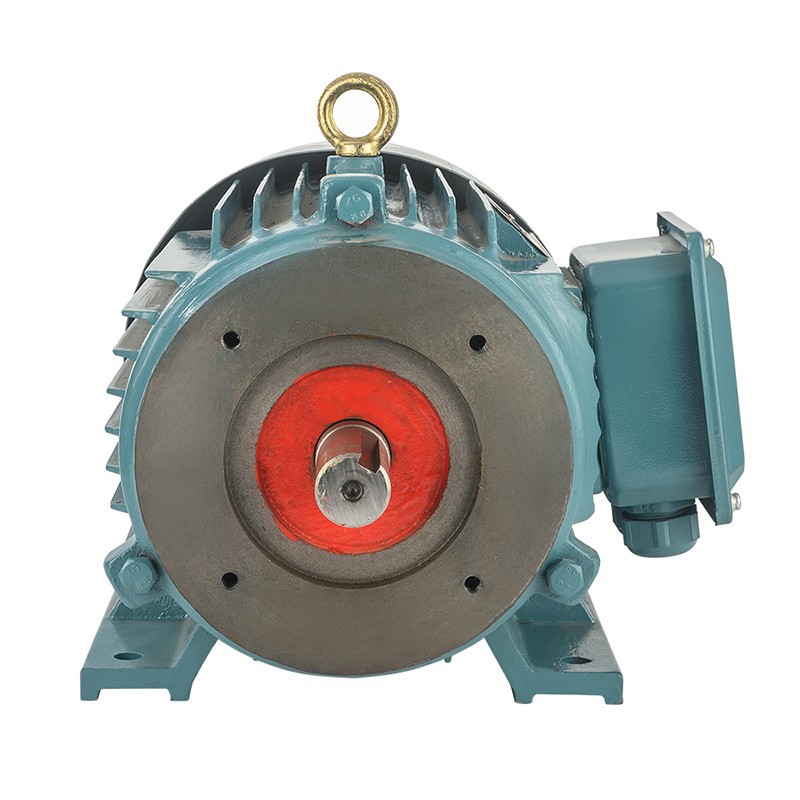
3. Temperature Rise
Voltage fluctuations can cause an increase in the motor's temperature. As mentioned earlier, a voltage dip leads to an increase in current, which in turn generates more heat in the motor's windings. Similarly, a voltage spike can cause an increase in magnetic losses, also contributing to a rise in temperature.
Excessive temperature rise can damage the motor's insulation, reducing its lifespan. Over time, the insulation may break down, leading to short - circuits and motor failure. In industrial applications, such as those using a [Squirrel Cage Three Phase Asynchronous Motor]( /three - phase - asynchronous - motor/ye3 - ye4 - high - efficiency - electric - motor/squirrel - cage - three - phase - asynchronous - motor.html), overheating can disrupt production processes and result in costly downtime.
4. Vibration and Noise
Voltage fluctuations can also cause the motor to vibrate and produce excessive noise. When the voltage is unstable, the motor's magnetic field becomes uneven, leading to unbalanced forces on the rotor. These unbalanced forces cause the motor to vibrate, which can damage the motor's bearings and other mechanical components.
In addition to vibration, the uneven magnetic field can also cause the motor to produce a humming or buzzing noise. This noise can be a nuisance in industrial environments and may indicate potential problems with the motor's operation.
Mitigating the Effects of Voltage Fluctuation
As a supplier of IE4 Ultra High Efficiency Asynchronous Motors, we understand the importance of mitigating the effects of voltage fluctuation. There are several strategies that can be employed to protect the motor from voltage - related issues:
1. Voltage Regulators
Voltage regulators can be used to maintain a stable voltage supply to the motor. These devices automatically adjust the voltage to keep it within the acceptable range. By using a voltage regulator, the motor can operate under more consistent conditions, reducing the risk of performance degradation and damage.

2. Soft Starters
Soft starters are another effective solution for dealing with voltage fluctuation. These devices gradually ramp up the voltage when starting the motor, reducing the inrush current and minimizing the impact on the power grid. Soft starters can also help to prevent voltage dips caused by large motors starting up, ensuring a more stable power supply.
3. Monitoring and Maintenance
Regular monitoring of the motor's operating conditions is crucial for detecting voltage - related issues early. By using sensors to measure voltage, current, temperature, and other parameters, any deviations from normal operating conditions can be identified and addressed promptly. Additionally, proper maintenance, such as lubricating bearings and checking the motor's insulation, can help to extend the motor's lifespan and improve its performance.
Conclusion
Voltage fluctuation is a significant factor that can affect the performance of IE4 Ultra High Efficiency Asynchronous Motors. It can lead to reduced torque, lower efficiency, increased temperature rise, vibration, and noise. As a supplier, we are committed to providing high - quality motors and solutions to mitigate the effects of voltage fluctuation.
If you are in the market for reliable and efficient motors, we invite you to explore our range of [IE4 Ultra High Efficiency Asynchronous Motors]( /three - phase - asynchronous - motor/ye3 - ye4 - high - efficiency - electric - motor/ie4 - ultra - high - efficiency - asynchronous - motor.html). Our team of experts is ready to assist you in selecting the right motor for your specific application and provide guidance on how to ensure its optimal performance. Contact us today to start a procurement discussion and discover how our motors can meet your industrial needs.
References
- Chapman, S. J. (2012). Electric Machinery Fundamentals. McGraw - Hill Education.
- Fitzgerald, A. E., Kingsley Jr, C., & Umans, S. D. (2003). Electric Machinery. McGraw - Hill Education.
- IEEE Standards Association. (2014). IEEE Standard for Test Procedures for Polyphase Induction Motors and Generators. IEEE Std 112 - 2014.


