

Hey there! I'm a supplier of single phase motors, and I've been in this business for quite a while. One question I often get asked is, "How does the material affect the performance of a single phase motor?" Well, I'm here to break it down for you in a way that's easy to understand.
First off, let's talk about the stator. The stator is a crucial part of a single phase motor, and the material it's made of can have a big impact on performance. Most stators are made of laminated steel. Why laminated steel? Well, it helps to reduce eddy current losses. Eddy currents are those annoying little currents that are induced in the stator when the magnetic field changes. These currents can cause heating and energy losses, which is bad news for the motor's efficiency. Laminated steel consists of thin layers of steel that are insulated from each other. This insulation reduces the flow of eddy currents, making the motor more efficient.
For example, if you're looking at our YCL Heavy Duty Two Capacitors Single Phase Motor, the stator is made of high - quality laminated steel. This allows the motor to run more efficiently, even under heavy loads. The better the quality of the laminated steel, the lower the eddy current losses, and the more power the motor can deliver without overheating.
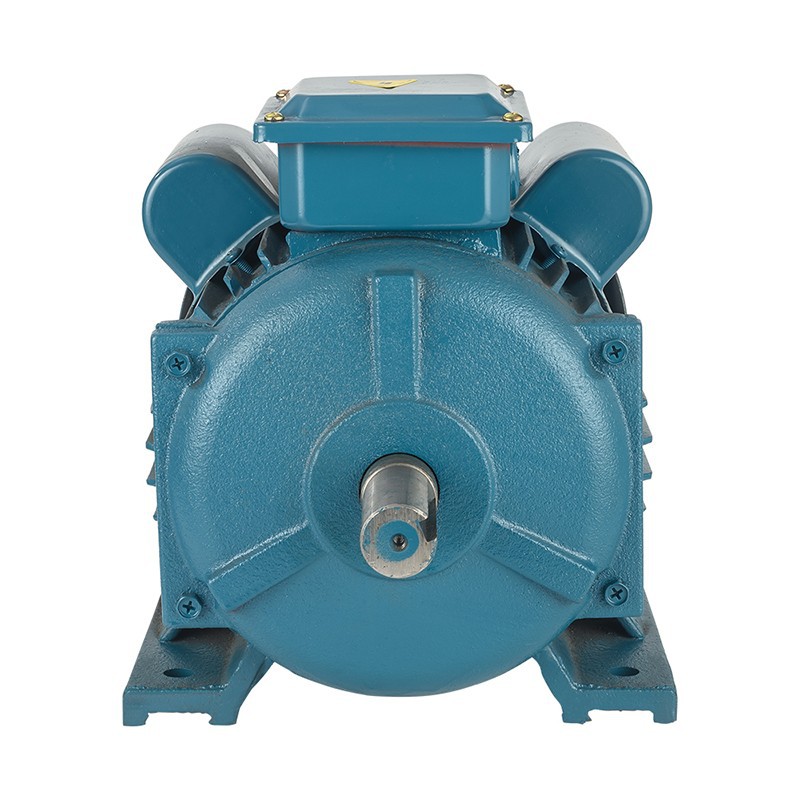

Next up is the rotor. The rotor is the part of the motor that rotates. There are different types of rotors, but a common one in single phase motors is the squirrel - cage rotor. The squirrel - cage rotor is typically made of aluminum or copper bars that are short - circuited at the ends by end rings.
Copper is a better conductor of electricity than aluminum. So, rotors made of copper can have lower resistance. Lower resistance means less power is lost as heat, and the motor can operate more efficiently. However, copper is more expensive than aluminum. That's why some manufacturers use aluminum rotors to keep costs down. But if you're looking for a high - performance motor, a copper rotor might be worth the extra investment. Our YY 220V 0.75KW 1.5KW Single Phase Motor offers both aluminum and copper rotor options, so you can choose based on your budget and performance requirements.
Now, let's talk about the capacitor. Capacitors are used in single phase motors to create a rotating magnetic field, which is necessary for the motor to start and run. The dielectric material inside the capacitor is what determines its performance.
There are different types of dielectric materials, such as paper, plastic film, and ceramic. Plastic film capacitors are very popular because they have good electrical properties, high reliability, and a long lifespan. They can handle high voltages and have low losses. Ceramic capacitors, on the other hand, are smaller in size and can be used in applications where space is limited. But they may not have the same level of performance as plastic film capacitors in some cases.
In our Hot Selling YL Single Phase Asynchronous Motor, we use high - quality plastic film capacitors. These capacitors ensure a stable and strong rotating magnetic field, which helps the motor start smoothly and run efficiently.
The insulation material is also important. The windings in the stator and rotor need to be insulated to prevent short - circuits. Insulation materials need to have good electrical insulation properties, as well as the ability to withstand high temperatures.
Common insulation materials include varnish, enamel, and fiberglass. Varnish is a simple and cost - effective insulation material. It can be applied to the windings easily. Enamel is a more advanced insulation material that provides better protection against moisture and mechanical damage. Fiberglass is often used in high - temperature applications because it can withstand very high temperatures without losing its insulation properties.
If the insulation material is of poor quality, it can break down over time, leading to short - circuits and motor failure. That's why we always use high - quality insulation materials in our motors to ensure long - term reliability.
Another factor to consider is the bearing material. The bearings support the rotating shaft of the motor. They need to be able to handle the load and reduce friction.
Most bearings are made of steel, but there are also other materials like ceramic. Ceramic bearings have some advantages over steel bearings. They are lighter, have lower friction, and can withstand higher temperatures. However, they are also more expensive. Steel bearings are a more common choice because they are cost - effective and can handle most applications.
In our motors, we carefully select the bearing material based on the motor's design and intended use. For high - speed or high - load applications, we might use ceramic bearings to improve performance and reliability.
The housing material of the motor also plays a role. The housing protects the internal components of the motor from dust, moisture, and mechanical damage.
Common housing materials include cast iron, aluminum, and plastic. Cast iron is very strong and durable. It can provide good protection for the motor, but it is also heavy. Aluminum is lighter than cast iron and has good heat - dissipation properties. Plastic is the lightest option and is often used in small - sized motors. It is also corrosion - resistant.
We choose the housing material based on the motor's size, application, and customer requirements. For example, if the motor is going to be used in a harsh environment, a cast - iron housing might be the best choice.
In conclusion, the material used in a single phase motor has a significant impact on its performance. From the stator and rotor to the capacitor, insulation, bearings, and housing, each component's material affects how well the motor runs, how efficient it is, and how reliable it is over time.
If you're in the market for a single phase motor and want to learn more about how the materials can affect your specific needs, don't hesitate to reach out. We're here to help you choose the right motor for your application. Whether you need a motor for a small household appliance or a heavy - duty industrial application, we have the expertise and the products to meet your requirements. Let's start a conversation about your motor needs and find the perfect solution together.
References
- "Electric Machinery Fundamentals" by Stephen J. Chapman
- "Motor and Drive Technology Handbook" by Mark A. Polka


