

As a supplier of High Efficiency IE3 Explosion - proof Motors, I've witnessed firsthand the importance of understanding how motor efficiency changes with frequency. In this blog, I'll delve into the technical aspects of this relationship, share practical insights, and highlight the significance for various industrial applications.
The Basics of High Efficiency IE3 Explosion - proof Motors
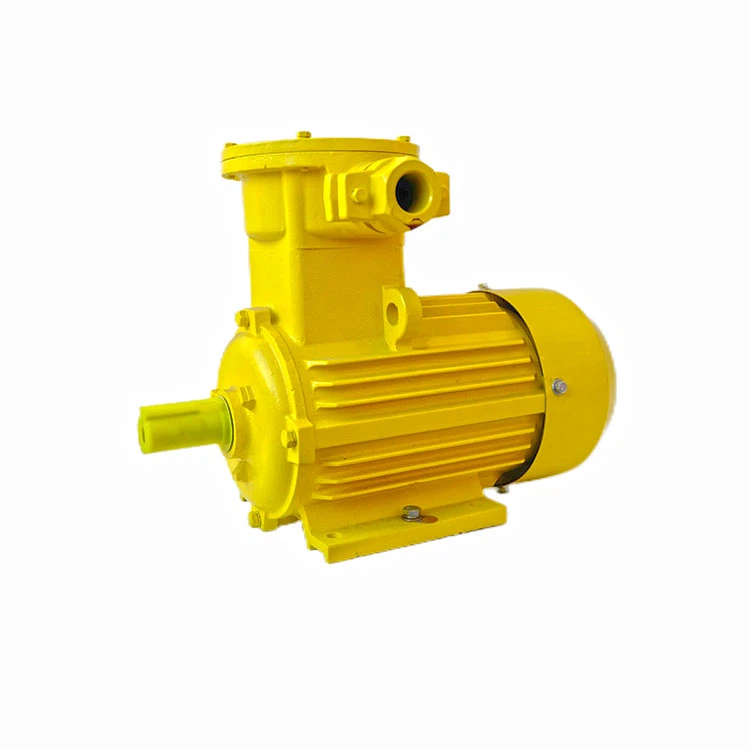
High Efficiency IE3 Explosion - proof Motors are designed to operate safely in hazardous environments where explosive gases, vapors, or dusts may be present. These motors comply with strict safety standards and are engineered to prevent the ignition of potentially explosive atmospheres. The IE3 classification indicates a high level of energy efficiency, which translates to lower energy consumption and reduced operating costs over the motor's lifespan.
The High Efficiency IE3 Explosion - proof Motor is a popular choice for industries such as oil and gas, chemical processing, mining, and food and beverage, where safety and energy efficiency are paramount. These motors are typically three - phase asynchronous motors, which means they operate based on the principle of electromagnetic induction.
The Relationship between Motor Efficiency and Frequency
The efficiency of a motor is defined as the ratio of the mechanical power output to the electrical power input. In an ideal world, a motor would convert all the electrical energy it consumes into mechanical energy, resulting in 100% efficiency. However, in reality, there are always losses due to factors such as electrical resistance, magnetic hysteresis, and mechanical friction.
The frequency of the electrical supply has a significant impact on the efficiency of a High Efficiency IE3 Explosion - proof Motor. In general, the efficiency of an induction motor is highest at its rated frequency, which is typically 50 Hz or 60 Hz depending on the region. As the frequency deviates from the rated frequency, the motor's efficiency can decrease.
At Lower Frequencies
When the frequency of the electrical supply is lower than the rated frequency, the magnetic flux in the motor's core increases. This can lead to increased iron losses, which are caused by magnetic hysteresis and eddy currents in the core. As a result, the motor's efficiency decreases. Additionally, at lower frequencies, the motor may experience reduced torque output, which can affect its performance in applications where high torque is required.
For example, if a YBX3 Three Phase Explosion Proof Motor is designed to operate at 50 Hz and is supplied with a 40 Hz power source, its efficiency will likely be lower than when it is operating at its rated frequency. The motor may also run hotter due to the increased losses, which can further reduce its lifespan.
At Higher Frequencies
When the frequency of the electrical supply is higher than the rated frequency, the motor's speed increases. While this may seem beneficial in some applications, it can also lead to increased losses. At higher frequencies, the skin effect becomes more pronounced, which causes the electrical current to flow closer to the surface of the conductor. This increases the effective resistance of the conductor and results in higher copper losses.
Moreover, the increased speed can also lead to increased mechanical losses due to higher friction and windage. As a result, the efficiency of the motor decreases at higher frequencies. For instance, if a YBX4 Flameproof Three Phase Asynchronous Motor is designed for 60 Hz operation and is supplied with a 70 Hz power source, its efficiency will likely drop, and it may experience additional wear and tear.
Practical Considerations for Industrial Applications
In industrial applications, it's common to use variable frequency drives (VFDs) to control the speed of High Efficiency IE3 Explosion - proof Motors. VFDs allow the frequency of the electrical supply to the motor to be adjusted, which in turn allows the motor's speed to be controlled. While VFDs offer many benefits, such as energy savings and precise speed control, they also introduce additional complexity when it comes to motor efficiency.
When using a VFD, it's important to select a motor that is compatible with the VFD's operating range. The motor should be able to operate efficiently at the frequencies and speeds required by the application. Additionally, the VFD should be properly sized and configured to ensure that it provides the motor with the appropriate electrical supply.
For example, in a pumping application, the flow rate of the pump can be adjusted by changing the speed of the motor using a VFD. By operating the motor at a lower speed when the full flow rate is not required, energy savings can be achieved. However, it's important to ensure that the motor's efficiency remains within an acceptable range at the reduced speed and frequency.
Case Studies
Let's consider a real - world example of a chemical processing plant that uses High Efficiency IE3 Explosion - proof Motors to drive various pumps and mixers. The plant initially operated the motors at their rated frequencies without any speed control. However, due to fluctuating process requirements, the motors often ran at full speed even when not necessary, resulting in high energy consumption.
To address this issue, the plant installed VFDs on the motors. By adjusting the frequency of the electrical supply to the motors based on the process requirements, the plant was able to reduce energy consumption by up to 30%. However, during the initial implementation, they noticed that the efficiency of some motors decreased at certain frequencies.
After conducting a detailed analysis, it was found that the motors were not properly sized for the VFDs. By replacing some of the motors with ones that were better matched to the VFD's operating range, the plant was able to improve the overall efficiency of the motor - driven systems and achieve even greater energy savings.

Conclusion and Call to Action
Understanding how the efficiency of High Efficiency IE3 Explosion - proof Motors changes with frequency is crucial for industrial applications. By carefully considering the relationship between frequency and efficiency, and by using appropriate control strategies such as VFDs, significant energy savings can be achieved while maintaining the safety and reliability of the motor - driven systems.
If you're in the market for High Efficiency IE3 Explosion - proof Motors or need advice on motor selection and application, I encourage you to reach out to us. We have a team of experts who can help you choose the right motor for your specific needs and ensure that it operates efficiently in your application. Contact us today to start a conversation about your motor requirements and explore how we can help you optimize your energy consumption and improve your operational efficiency.
References
- Chapman, S. J. (2012). Electric Machinery Fundamentals. McGraw - Hill.
- Fitzgerald, A. E., Kingsley, C., & Umans, S. D. (2012). Electric Machinery. McGraw - Hill.
- National Electrical Manufacturers Association (NEMA). (2016). Motor and Generator Standards. NEMA.


