

Hey there! As a supplier of YCT YZR electric motors, I often get asked if these motors can be used in high - precision applications. Well, let's dive right into it and find out.
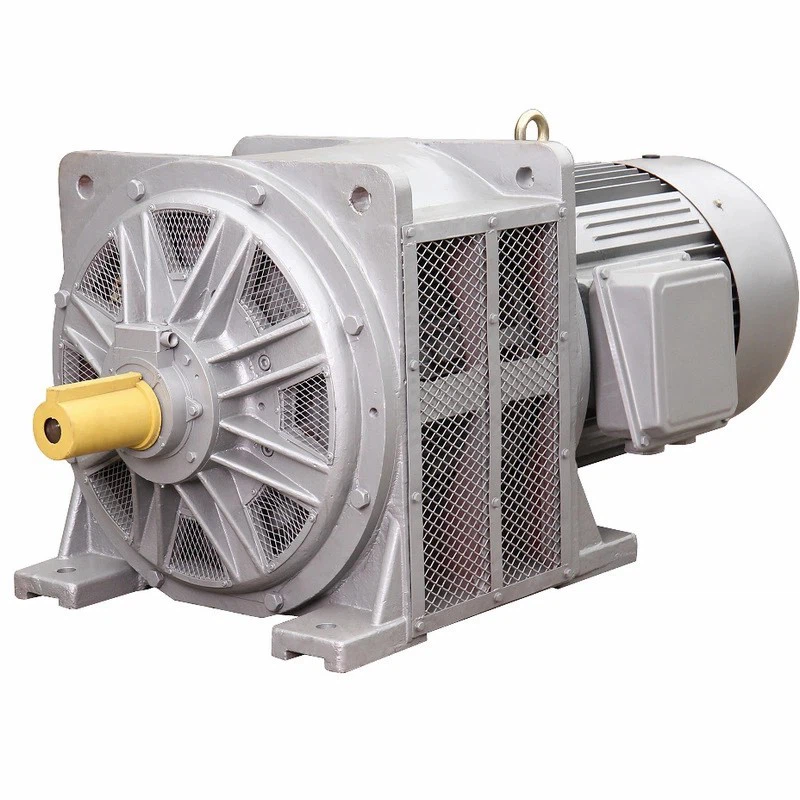
First off, let's understand what YCT YZR electric motors are. YCT motors are Electromagnetic Speed - adjustable Induction Motor. They work on the principle of electromagnetic induction to control the speed. The speed adjustment is achieved by changing the excitation current of the electromagnetic slip clutch. On the other hand, YZR motors are designed for crane and metallurgical applications, known for their high starting torque and good overload capacity.
Now, when it comes to high - precision applications, there are a few key factors we need to consider: speed control accuracy, torque stability, and response time.
Speed Control Accuracy
In high - precision applications, the ability to control the speed precisely is crucial. For example, in CNC machines, a slight deviation in speed can lead to inaccurate cuts and poor - quality products. YCT motors offer a certain degree of speed control. The electromagnetic speed - adjustable feature allows for relatively smooth speed changes. However, compared to some high - end servo motors, their speed control accuracy might be a bit limited. Servo motors can achieve extremely high levels of speed control accuracy, often within a few revolutions per minute.
Let's take the YCT200 - 4A Electromagnetic Speed 3 Phase Motor as an example. It has a speed regulation range, but the accuracy might be affected by factors such as load changes and power supply fluctuations. When the load on the motor increases, the speed might drop slightly, and it takes some time for the motor to adjust back to the set speed.
But don't count YCT motors out just yet. With proper control systems and feedback mechanisms, we can improve the speed control accuracy. For instance, by using a closed - loop control system that continuously monitors the motor speed and adjusts the excitation current accordingly, we can minimize the speed deviations.
Torque Stability
Torque stability is another important aspect of high - precision applications. In robotics, for example, a stable torque output is necessary to ensure smooth and accurate movements. YZR motors are known for their high starting torque, which is great for applications that require a lot of force to start. However, during continuous operation, maintaining a stable torque can be a challenge.
The torque of YZR motors can be affected by factors like temperature and magnetic saturation. As the motor operates, the temperature rises, which can cause changes in the magnetic properties of the motor components. This, in turn, can lead to fluctuations in the torque output. To address this issue, we can use advanced cooling systems and high - quality magnetic materials. These measures can help to keep the temperature under control and maintain a more stable magnetic field, resulting in better torque stability.
Response Time
Response time refers to how quickly the motor can adjust to changes in the input signal. In high - precision applications, a fast response time is essential. For example, in automated assembly lines, the motor needs to start, stop, and change speed rapidly to keep up with the production rhythm.
YCT and YZR motors generally have a slower response time compared to servo motors. The electromagnetic speed - adjustment mechanism in YCT motors involves some mechanical and electrical delays. When a change in speed is commanded, it takes a certain amount of time for the electromagnetic clutch to adjust the speed. Similarly, YZR motors, which are designed for heavy - duty applications, might not be as responsive as motors specifically built for high - speed and high - precision operations.
However, through technological improvements and optimization of the motor design, we can reduce the response time. Using high - performance control circuits and improving the mechanical structure of the motor can make it more responsive to input signals.

Applications Where YCT YZR Motors Can Shine
Despite the challenges in high - precision applications, there are still many scenarios where YCT YZR motors can be a great choice.
In some industrial fans and pumps, a certain level of speed control is required, but the precision requirements are not as stringent as in CNC machines or robotics. YCT motors can provide a cost - effective solution for these applications. Their speed - adjustable feature allows for energy savings by adjusting the fan or pump speed according to the actual demand.
YZR motors are also well - suited for crane and hoist applications. Although these applications might not require the same level of precision as some high - tech industries, they do need high starting torque and good overload capacity. YZR motors can handle heavy loads and start smoothly, making them ideal for lifting and moving large objects.
Conclusion
So, can YCT YZR electric motors be used in high - precision applications? The answer is it depends. While they may not offer the same level of precision as some specialized high - end motors, with the right control systems and design improvements, they can be adapted to meet the requirements of certain high - precision applications.
If you're looking for a cost - effective solution with some level of speed control and torque capacity, our YCT YZR electric motors could be a great option. Whether you're in the industrial fan, pump, crane, or other related industries, we have the expertise and products to meet your needs.
If you're interested in learning more about our YCT YZR electric motors or want to discuss how they can be used in your specific application, feel free to reach out. We're here to help you make the right choice for your business.
References
- "Electric Motor Handbook" - A comprehensive guide on electric motor principles and applications.
- Industry research reports on high - precision motor applications.


