

As a supplier of Energy Saving Complete Copper 380V Motors, I often encounter inquiries from customers regarding the motor's compatibility with low - voltage situations. This is a crucial question that has a significant impact on the practical application and performance of the motor. In this blog, I will delve into the technical aspects to analyze whether our Energy Saving Complete Copper 380V Motor can be used in low - voltage scenarios.
Technical Specifications of Energy Saving Complete Copper 380V Motor
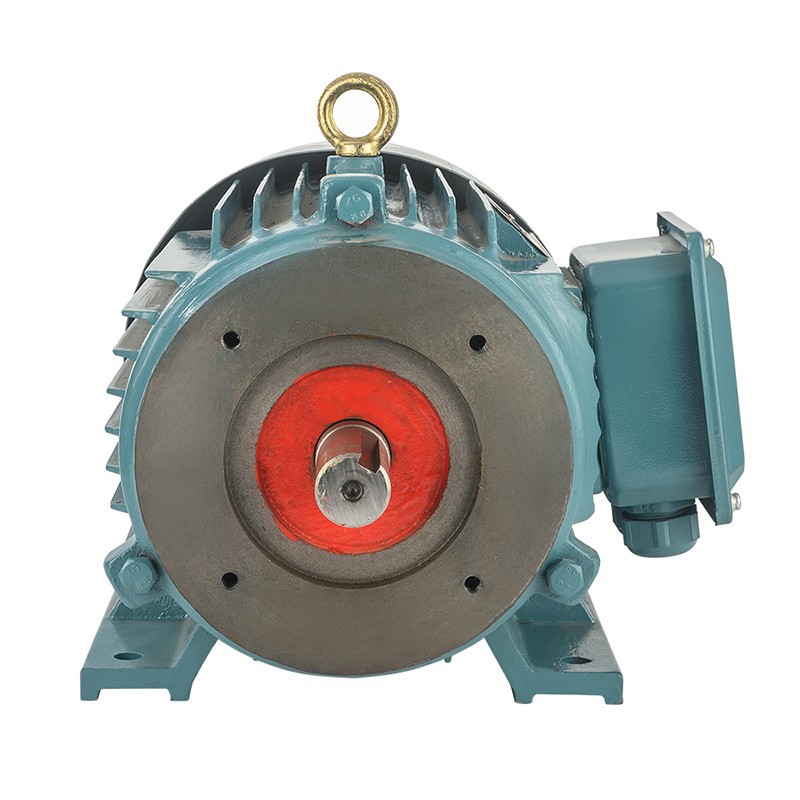
Our Energy Saving Complete Copper 380V Motor is designed with high - quality copper windings. Copper has excellent electrical conductivity, which significantly reduces energy loss during the operation of the motor. The 380V rating indicates the standard operating voltage under which the motor can achieve its optimal performance.
The motor's design is based on the principles of electromagnetic induction. When a three - phase 380V power supply is applied, a rotating magnetic field is generated in the stator. This rotating magnetic field interacts with the rotor, causing the rotor to rotate and convert electrical energy into mechanical energy. The efficiency of this conversion is one of the key advantages of our motor, as the complete copper windings minimize resistance and heat generation, thus saving energy.
Challenges of Using 380V Motors in Low - Voltage Situations
-
Insufficient Torque Generation
Torque is the rotational force produced by the motor. In a low - voltage situation, the magnetic field strength generated in the stator is weakened. According to the formula for torque in an induction motor, (T = k \times \Phi \times I \times \cos\varphi), where (T) is torque, (\Phi) is the magnetic flux, (I) is the current, and (\cos\varphi) is the power factor. When the voltage is low, the magnetic flux (\Phi) decreases. As a result, the motor may not be able to generate enough torque to drive the load. For example, if the motor is used to drive a Water Pump Electric Motor Winding Motor, it may not be able to pump water effectively, leading to a decrease in the overall system performance. -
Overheating and Motor Damage
When the voltage is lower than the rated value, the motor will draw more current to try to maintain its operation. According to Ohm's law (I=\frac{V}{R}), in an inductive load like a motor, a decrease in voltage (V) will cause an increase in current (I) if the impedance (R) remains relatively constant. The increased current will lead to more heat generation in the copper windings. Since the motor is designed to operate at a specific temperature range, continuous overheating can damage the insulation of the windings, reducing the motor's lifespan and potentially causing a short - circuit, which may lead to a complete failure of the motor. -
Reduced Efficiency
The efficiency of an induction motor is optimized at its rated voltage. In a low - voltage situation, the increase in current and the decrease in torque result in a lower power factor. The power factor is a measure of how effectively the motor converts electrical power into mechanical power. A lower power factor means that more electrical energy is wasted as heat, and the overall efficiency of the motor drops significantly. This goes against the energy - saving feature of our Energy Saving Complete Copper 380V Motor.
Possible Solutions and Adaptations
-
Voltage Boosting Devices
One possible solution is to use voltage boosting devices such as transformers. A step - up transformer can increase the low - voltage input to the rated 380V for the motor. However, this approach requires additional equipment and installation costs. Moreover, the transformer itself also consumes some energy, which may slightly reduce the overall energy - saving effect. -
Motor Redesign
In some cases, it may be possible to redesign the motor to make it more suitable for low - voltage operation. For example, adjusting the number of turns in the copper windings or changing the core material can modify the motor's electrical characteristics. However, this is a complex and costly process that requires in - depth knowledge of motor design and manufacturing.
Case Studies
In some industrial applications where the power supply is unstable and may experience low - voltage conditions, customers have tried using our 380V motors. In one case, a factory that uses a Horizontal Foot Mounting YE3 Asynchronous Motor to drive a conveyor belt encountered low - voltage problems. Initially, the motor showed signs of reduced speed and increased heat generation. After installing a voltage regulator, the motor's performance improved, but there was still a slight decrease in efficiency compared to the normal 380V operation.
Compatibility with Low - Voltage - Tolerant Loads
There are some loads that are more tolerant of low - voltage conditions. For example, some fans or small - scale ventilation systems may still be able to operate to some extent in low - voltage situations. These loads usually require less torque, and a small reduction in speed may not significantly affect their functionality. However, it is important to note that even for these low - torque loads, continuous operation in low - voltage conditions can still lead to long - term damage to the motor.
Conclusion
In general, our Energy Saving Complete Copper 380V Motor is not designed for direct use in low - voltage situations. The challenges of insufficient torque, overheating, and reduced efficiency make it difficult for the motor to perform optimally. However, with the use of voltage - boosting devices or in some cases where the load is relatively tolerant of low - voltage, it may be possible to adapt the motor to such conditions.
If you are considering using our motor in a situation where the voltage may be unstable or low, I highly recommend consulting with our technical team. We have a wealth of experience in motor applications and can provide you with the most suitable solutions. Whether you need a Water Pump Electric Motor Winding Motor, an IE4 Ultra High Efficiency Asynchronous Motor, or a Horizontal Foot Mounting YE3 Asynchronous Motor, we can offer professional advice and support.
If you are interested in purchasing our motors or discussing your specific requirements, please feel free to contact us. We look forward to the opportunity to work with you and provide you with high - quality energy - saving motor solutions.
References
- Fitzgerald, A. E., Kingsley, C., & Umans, S. D. (2003). Electric Machinery. McGraw - Hill.
- Chapman, S. J. (2012). Electric Machinery Fundamentals. McGraw - Hill.


